
LUPA (Low Utilization Payment Adjustment)
LUPA, or Low Utilization Payment Adjustment, is a Medicare reimbursement rule under the Patient-Driven Groupings Model (PDGM). It applies when a 30-day period has fewer skilled visits than the case-mix threshold, so Medicare pays per visit instead of the full period rate.
Definition
LUPA, or Low Utilization Payment Adjustment, is a Medicare reimbursement rule under the Patient-Driven Groupings Model (PDGM). It applies when a 30-day period has fewer skilled visits than the case-mix threshold, so Medicare pays per visit instead of the full period rate.
Why it matters
LUPA (Low Utilization Payment Adjustment) is part of the Revenue Cycle vocabulary used across home health operations, documentation, and revenue cycle. Understanding it helps clinicians, QA leads, and administrators stay aligned on care quality and compliance.
Home Health Documentation Playbook
The complete guide to OASIS-E, Medicare compliance, PDGM, and AI-assisted documentation. Learn how top agencies reduce documentation time without sacrificing compliance.
Related terms
Listen While You Read
Conversations on revenue cycle
Episodes from Inside Home Health that put LUPA (Low Utilization Payment Adjustment) in operational context.
 Ep 15
Ep 15Ep 15 · Jun 8, 2026
The Biggest Mistake Healthcare Makes About Nurses
 Luke AdamsWatch
  Ep 23
Ep 23Ep 23 · Aug 17, 2026
The Hidden Spreadsheet Error That's Causing the Nursing Shortage | Robert Wingo
 Robert Wingo, BSN, RN, NI-BCWatch
  Ep 6
Ep 6Ep 6 · Mar 30, 2026
What Makes OASIS Documentation So DIFFICULT?
 Kathy DuckettWatch
Related Blogs
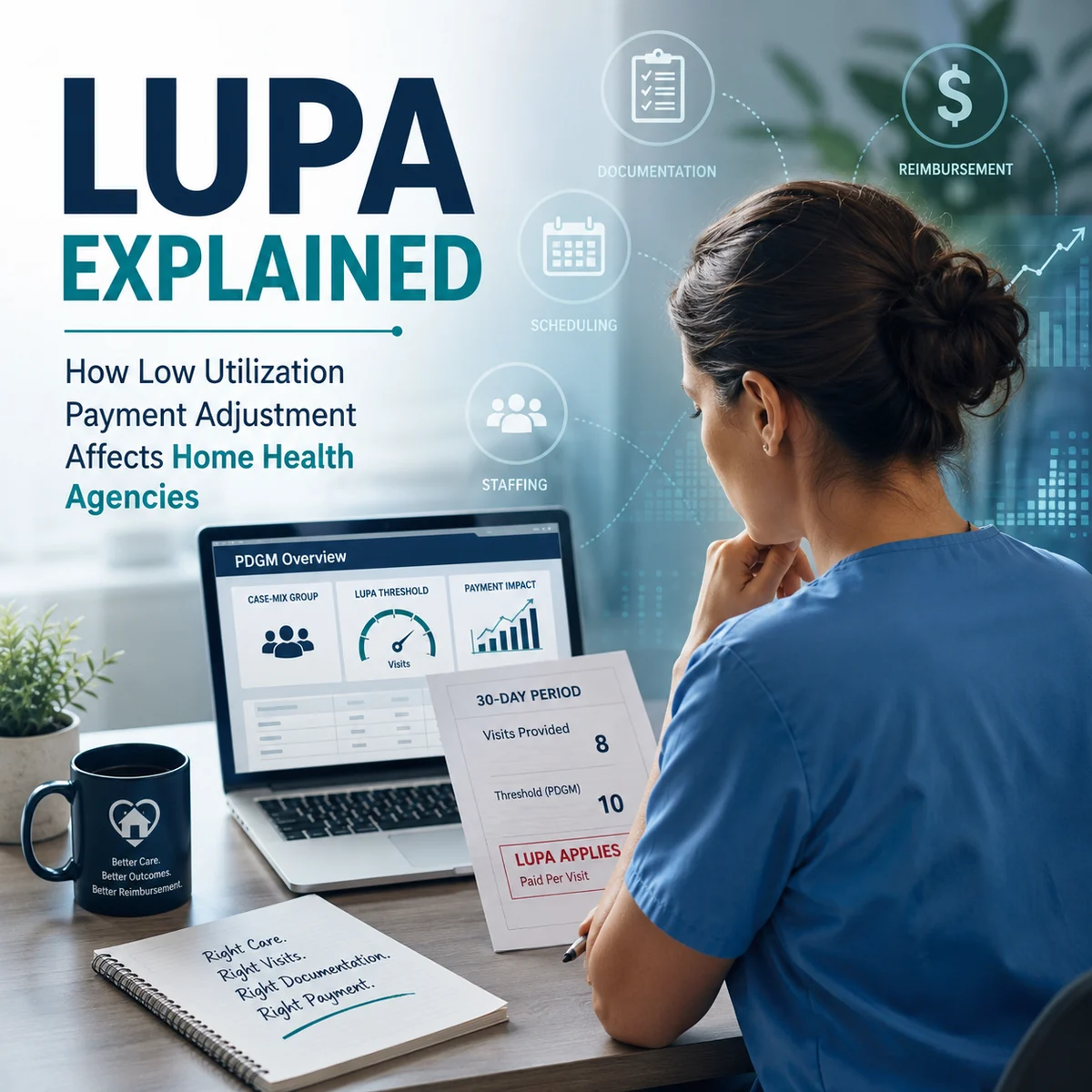
LUPA Explained: How Low Utilization Payment Adjustment Affects Home Health Agencies
LUPA (Low Utilization Payment Adjustment) kicks in when a 30-day home health period falls below its PDGM visit threshold, shifting payment from the case-mix-adjusted 30-day rate to per-visit. This guide explains how thresholds work, what causes avoidable LUPAs, and how to manage LUPA risk without chasing visits.

Common OASIS Documentation Mistakes That Lead to Payment Delays
Common OASIS documentation mistakes, such as incomplete assessments, incorrect diagnosis coding, inaccurate Section GG scoring, medication and homebound-status errors, weak skilled-need documentation, and missing physician signatures, are among the biggest causes of home health payment delays. Because OASIS data drives PDGM reimbursement, most of these errors are preventable with point-of-care charting, strong QA, and AI-powered documentation validation.
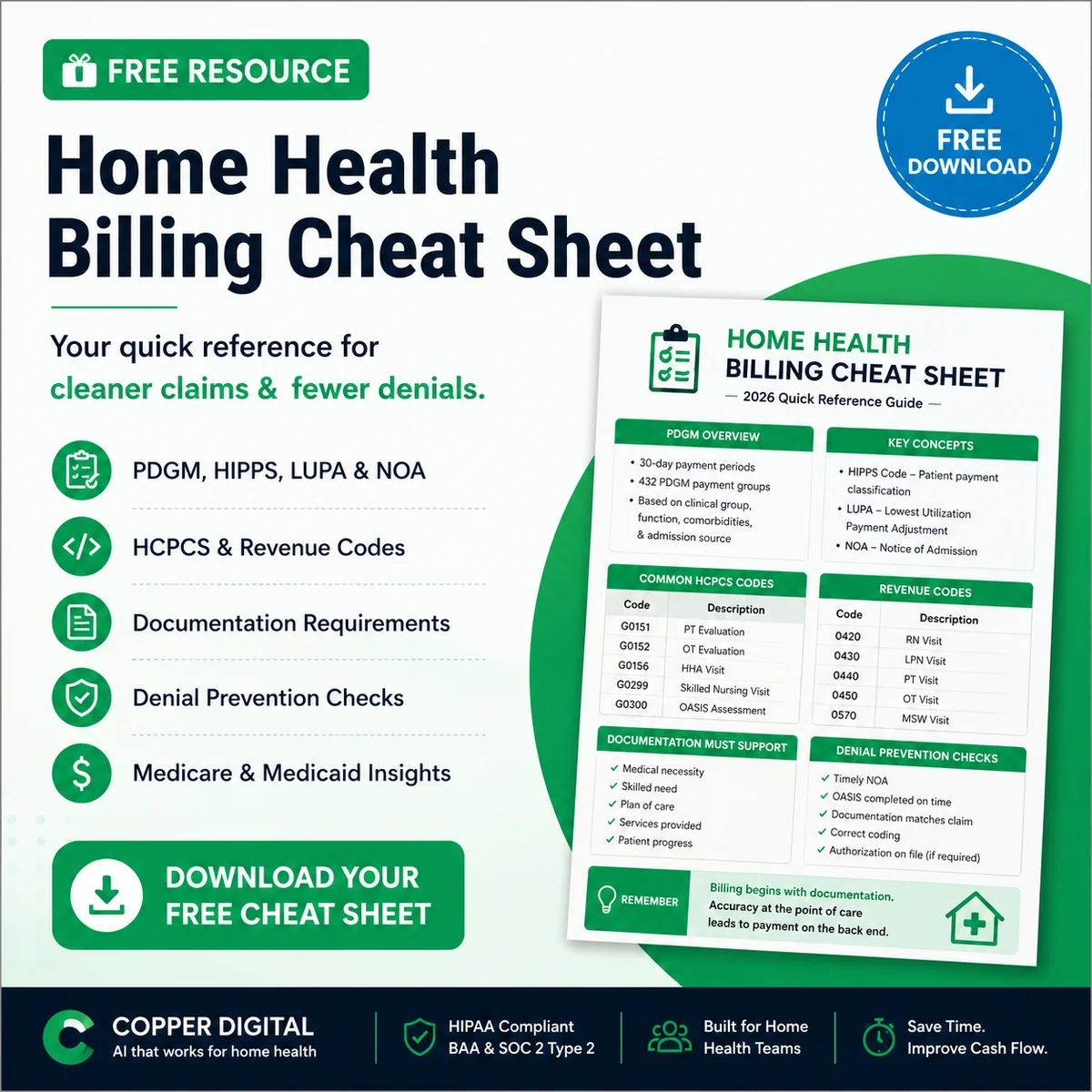
Free Home Health Billing Cheat Sheet
Home health billing gets complicated fast: PDGM, HIPPS, OASIS, NOA, LUPA, HCPCS and revenue codes, and payer rules all have to line up with the documentation. This guide walks through the essentials and gives you a free, downloadable cheat sheet your billing and clinical teams can actually use.

Why OASIS Documentation Is Burning Out Your Nurses
OASIS documentation is the CMS-required Outcome and Assessment Information Set that home health nurses complete for Medicare patients. With more than 100 data elements and a Start of Care assessment that takes 60 to 90 minutes, it often follows nurses home as after-hours 'pajama time,' making it a leading cause of home health nurse burnout. AI-powered documentation with human-in-the-loop review can cut charting time and give nurses their evenings back.