
Healthcare AI Trust: Why Great Care Technology Fails Without Earning It
Healthcare AI fails when users don't trust it. Successful healthcare technology must be transparent, reliable, easy to use, protect patient data, fit naturally into caregiving workflows, and strengthen, not replace, the human relationships at the center of care.

Key Takeaways
- Trust, not features, determines whether healthcare AI is adopted.
- Transparency, reliability, ease of use, and data protection build clinician and caregiver trust.
- Human-in-the-loop AI reassures users that technology supports care, not replaces it.
- The best care technology creates more human moments, not fewer.
💡 Healthcare AI fails when users don't trust it. Successful healthcare technology must be transparent, reliable, easy to use, protect patient data, fit naturally into caregiving workflows, and strengthen, not replace, the human relationships at the center of care.
Artificial intelligence is transforming healthcare faster than ever before. Healthcare organizations are deploying AI for documentation, clinical decision support, scheduling, patient engagement, and home health workflows.
Yet despite remarkable advances in technology, many care technology products are quietly abandoned after implementation.
The reason isn't always poor software. It's trust.
In a recent episode of the Inside Home Health podcast, Care Tech Trust Strategist Jeanette Yates shared a perspective that many healthcare technology companies overlook:
Care technology rarely fails because it's poorly built. It fails because it never earns the trust of the people expected to use it.
That single insight changes how healthcare organizations should think about AI adoption, product design, and digital transformation.
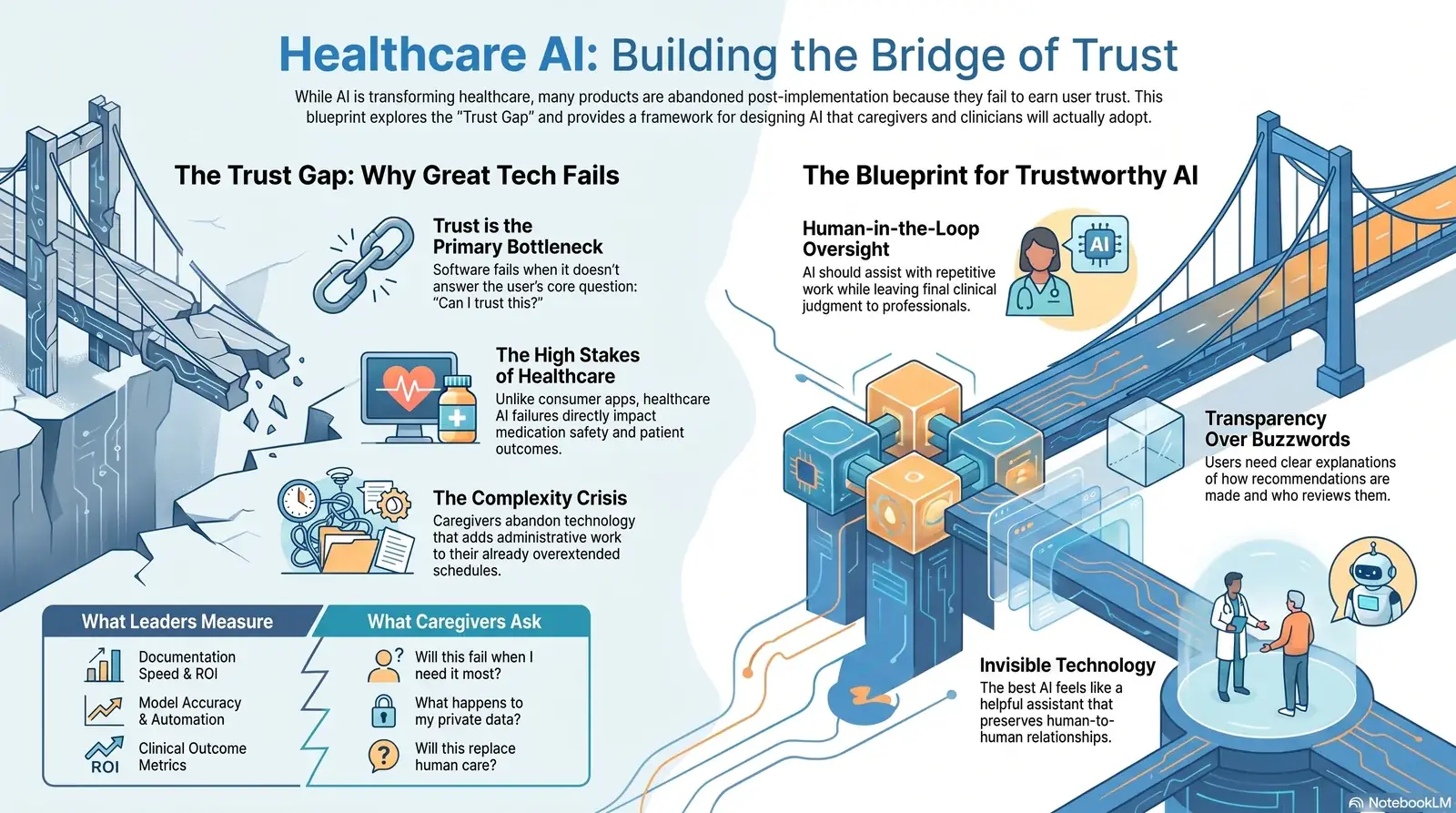
Trust is the bridge between healthcare AI and the people expected to use it.
Healthcare AI Has a Trust Problem, Not Just a Technology Problem
When healthcare leaders evaluate AI adoption, conversations often focus on:
- Accuracy.
- Automation.
- Documentation speed.
- Return on investment.
- Clinical outcomes.
Those metrics matter. But caregivers, nurses, patients, and families evaluate something different.
They ask:
- Can I trust this?
- Will this actually help me?
- Will it fail when I need it most?
- What happens to my data?
- Will this replace human care?
Technology succeeds only after those questions are answered. Without trust, adoption never happens.
Why Trust Matters More in Healthcare Than Any Other Industry
If your grocery delivery app crashes, you lose groceries. If a healthcare AI system fails, the consequences are dramatically different.

In healthcare, the stakes behind every AI decision are exponentially higher.
Healthcare decisions affect:
- Medication safety.
- Patient outcomes.
- Care coordination.
- Clinical documentation.
- Family communication.
- Emergency response.
The stakes are exponentially higher, and that changes how users evaluate technology. People don't simply want software that works.
They need software they can depend on during life's most vulnerable moments.
The Hidden Challenges Family Caregivers Face
Millions of family caregivers make life-changing healthcare decisions every day. Many are simultaneously:
- Working full-time jobs.
- Raising children.
- Coordinating appointments.
- Managing medications.
- Communicating with clinicians.
- Navigating insurance.
- Supporting aging parents.
Technology should reduce this burden. Instead, many digital tools unintentionally create more complexity.
When healthcare AI requires extensive onboarding, complicated interfaces, or additional administrative work, caregivers often abandon it, even if the technology itself performs well.
Trust Starts Long Before AI Makes a Recommendation
Trust isn't simply about model accuracy. It begins much earlier.
Healthcare users evaluate trust based on questions like these.
Does the product actually understand my situation?
Caregivers want technology built by people who understand real healthcare experiences, not hypothetical workflows.
Is the technology reliable?
If users invest time learning a platform, they expect it to work consistently. One broken promise can permanently damage confidence.
Is it easy to use?
Healthcare professionals don't want another complicated platform. Simple, intuitive workflows inspire confidence.
Complex interfaces create hesitation.
Why Healthcare AI Adoption Depends on Transparency
One of the fastest ways to lose trust is through vague communication. Many organizations claim to use 'ethical AI' or 'transparent AI.' Few explain what those phrases actually mean.
Users increasingly want answers to practical questions:
- How does the AI make recommendations?
- Who reviews the output?
- Is there always a human involved?
- What happens to patient data?
- What safeguards exist if something goes wrong?
Transparency reduces uncertainty, and reducing uncertainty builds trust.
Human-in-the-Loop AI Builds Confidence
One of the strongest themes throughout the discussion was the importance of keeping clinicians involved. Healthcare professionals don't necessarily oppose AI.
They oppose losing control.
Successful healthcare AI should:
- Draft documentation.
- Reduce repetitive work.
- Organize information.
- Assist decision-making.
But final clinical judgment should remain with trained professionals. Human oversight reassures clinicians, caregivers, and patients that technology supports care rather than replacing it.
This is why compliance and human-in-the-loop review sit at the center of responsible healthcare AI.
Why Simplicity Wins in Healthcare Technology
Healthcare startups often try to solve every problem at once. The result is feature overload.
Caregivers don't need twenty new capabilities. They need one important problem solved exceptionally well.
Successful healthcare AI products typically focus on:
- Faster documentation.
- Better communication.
- Easier scheduling.
- Medication reminders.
- Care coordination.
Clear value creates trust. Trust encourages adoption.
Adoption creates long-term success.
The Emotional Side of Healthcare AI
Technology conversations usually revolve around productivity. Caregiving revolves around emotion.
Family caregivers experience:
- Burnout.
- Anxiety.
- Decision fatigue.
- Responsibility.
- Fear.
- Guilt.
AI cannot eliminate these emotions. However, thoughtful technology can reduce unnecessary administrative burden, allowing caregivers to spend more meaningful time with loved ones.
The goal isn't replacing caregiving. The goal is to protect the relationship at the heart of caregiving.
Care Technology Should Create More Human Moments
One of the most powerful ideas from the discussion is that technology should give caregivers their relationships back. When caregiving becomes entirely focused on documentation, scheduling, medications, logistics, and administrative tasks, families lose opportunities to simply spend time together.
Healthcare AI should remove friction, not human connection. The best care technology creates more space for conversations, presence, and compassion.
Privacy vs. Safety: The Healthcare AI Tradeoff
Healthcare organizations frequently frame privacy as an all-or-nothing decision. Reality is more nuanced.
Patients often exchange some privacy for greater safety. Examples include:
- Fall detection systems.
- Medication monitoring.
- Remote patient monitoring.
- Home health sensors.
- AI-powered alerts.
The important question isn't whether data is collected. It's whether organizations clearly explain:
- Why it's collected.
- How it's protected.
- Who can access it.
- How long it's stored.
Trust grows when users understand the value exchange.
Family Caregiving Is Never Just One User
Healthcare technology often assumes a single user. Family caregiving rarely works that way.
A care ecosystem may include:
- Parents.
- Adult children.
- Spouses.
- Siblings.
- Professional caregivers.
- Nurses.
- Physicians.
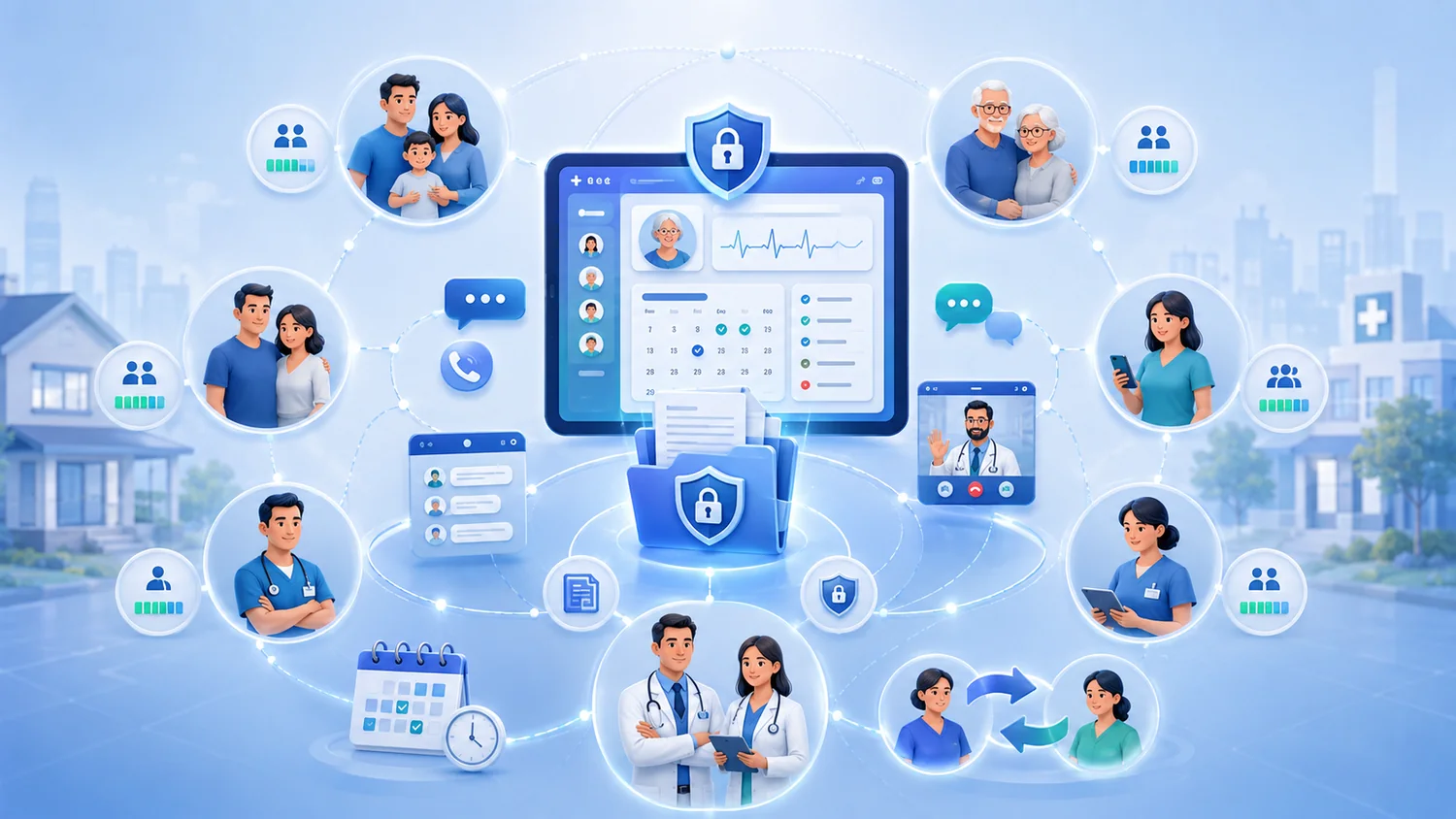
Real caregiving is a network, so trustworthy technology has to reflect real family dynamics.
Each person requires different information and different levels of access. Consumer-centered healthcare technology should support:
- Role-based permissions.
- Shared care coordination.
- Secure document sharing.
- Communication workflows.
- Flexible caregiver transitions.
Trust increases when technology reflects real family dynamics.
What Healthcare AI Companies Should Stop Promising
Many healthcare marketing messages overpromise. Claims like 'Eliminate caregiver burnout,' 'Prevent every fall,' or 'Solve care coordination forever' can actually reduce trust.
Healthcare users understand complexity. They're more likely to believe companies that promise:
- Better efficiency.
- Reduced administrative work.
- Improved communication.
- Smarter workflows.
- More time for patient care.
Realistic expectations create lasting credibility.
Designing Healthcare AI Around Trust
Healthcare organizations building AI solutions should ask different product questions. Instead of asking how intelligent the AI is, ask:
- Does it reduce cognitive burden?
- Does it simplify existing workflows?
- Does it fit naturally into care delivery?
- Does it strengthen clinician confidence?
- Does it preserve human relationships?
- Does it explain itself clearly?
Trust becomes a product feature, not merely a marketing message.
A Blueprint for Trustworthy Healthcare AI
Organizations building healthcare AI can improve adoption by following several principles.
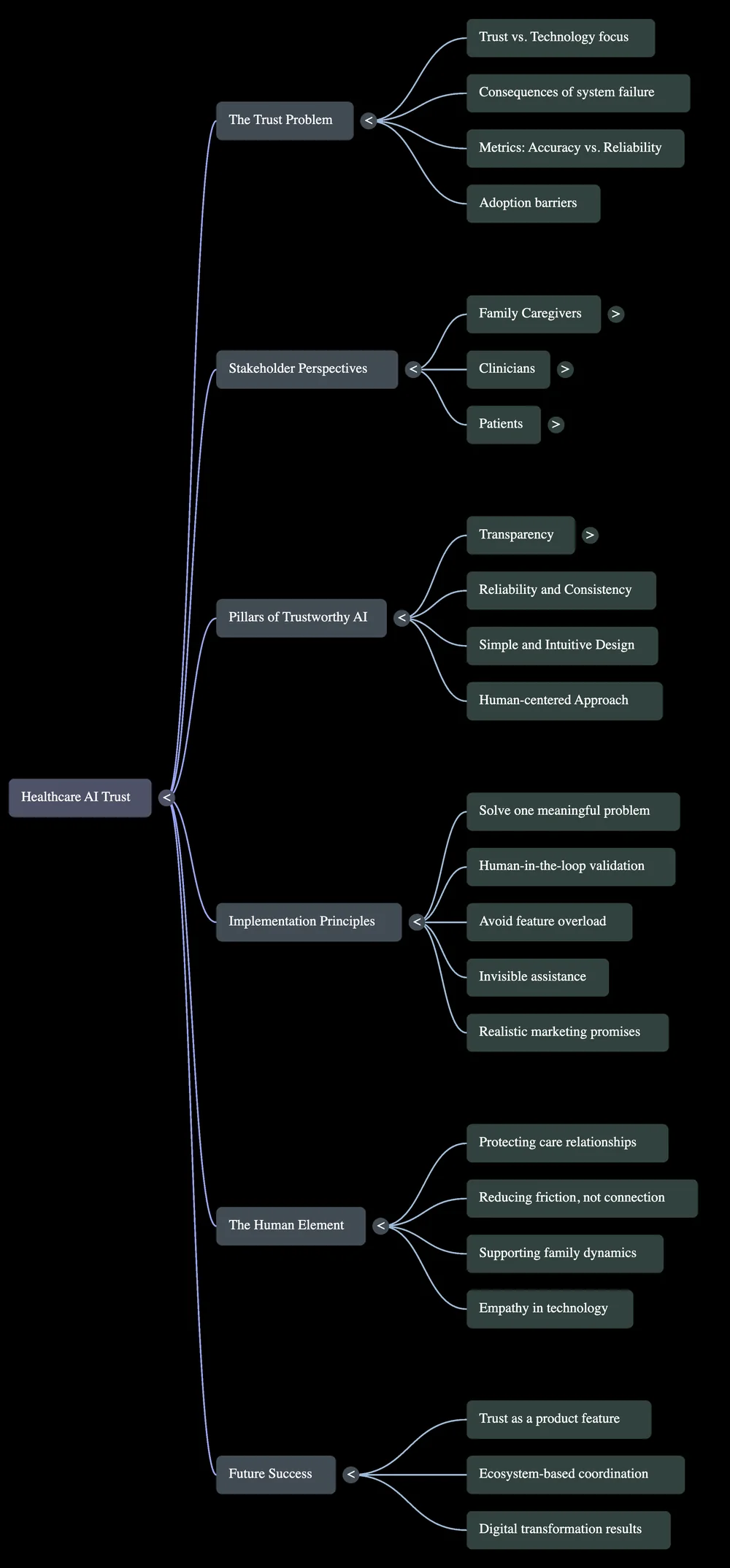
The building blocks of trustworthy healthcare AI, from one meaningful problem to nearly invisible technology.
Start with one meaningful problem
Avoid trying to replace entire workflows immediately.
Design for real caregivers
Observe how people actually provide care, not how you imagine they do.
Keep humans in control
AI should assist, not replace, clinical judgment.
Explain how AI works
Transparency builds confidence.
Respect patient data
Privacy protections should be obvious, not hidden inside policies.
Make technology nearly invisible
The best healthcare AI feels like a helpful assistant, not another task.
The Future of Healthcare AI Will Belong to Trusted Products
Healthcare has never been only about technology. It has always been about relationships.
Artificial intelligence will undoubtedly improve documentation, automate administrative work, and streamline clinical operations. But organizations that earn lasting adoption will be those that recognize something deeper.
People don't invite AI into healthcare because it's intelligent. They invite it because they trust it.
Trust, not technology, will determine the next generation of healthcare innovation.
The takeaway: trust, not technology, decides which healthcare AI actually gets used.
🤝 Building healthcare AI that clinicians and caregivers actually trust? At Copper Digital, we design AI solutions with human oversight, workflow-first thinking, and real clinical collaboration, helping healthcare organizations improve efficiency without compromising trust, transparency, or patient care. Talk to our team, or explore AI tools for home health nurses and pricing.
What Should I Document? 100 OASIS Situations Home Health Nurses Face Every Day
100 real OASIS scenarios, worked end to end — clinical situation, common mistake, better approach, and key takeaway. Built around OASIS-E2 (effective April 1, 2026) to turn what you assess into accurate, defensible documentation.
Bottom Line
Care technology usually fails not because it's poorly built but because it never earns the trust of the caregivers, clinicians, and patients expected to use it.

Watch the Full Conversation
Building Healthcare AI Without Trust Is a Mistake
Arvind Sarin and Jeanette Yates on why care technology fails when it doesn't earn trust, and what human-centered healthcare AI has to do differently.

Jeanette Yates is a Care Tech Trust Strategist and speaker who guides caregivers, healthcare organizations, and care-technology teams toward safe, human-centered technology. A family caregiver since age nine, she focuses on why care technology succeeds or fails based on trust, and on building healthcare AI that protects the human relationships at the center of care.
Frequently asked
Frequently asked questions
Trust determines whether clinicians, caregivers, and patients adopt healthcare AI solutions. Even highly accurate AI systems fail if users don't believe they're reliable, transparent, or safe.
Join the conversation
Leave a comment
No comments yet. Be the first to share your thoughts.
Related reading
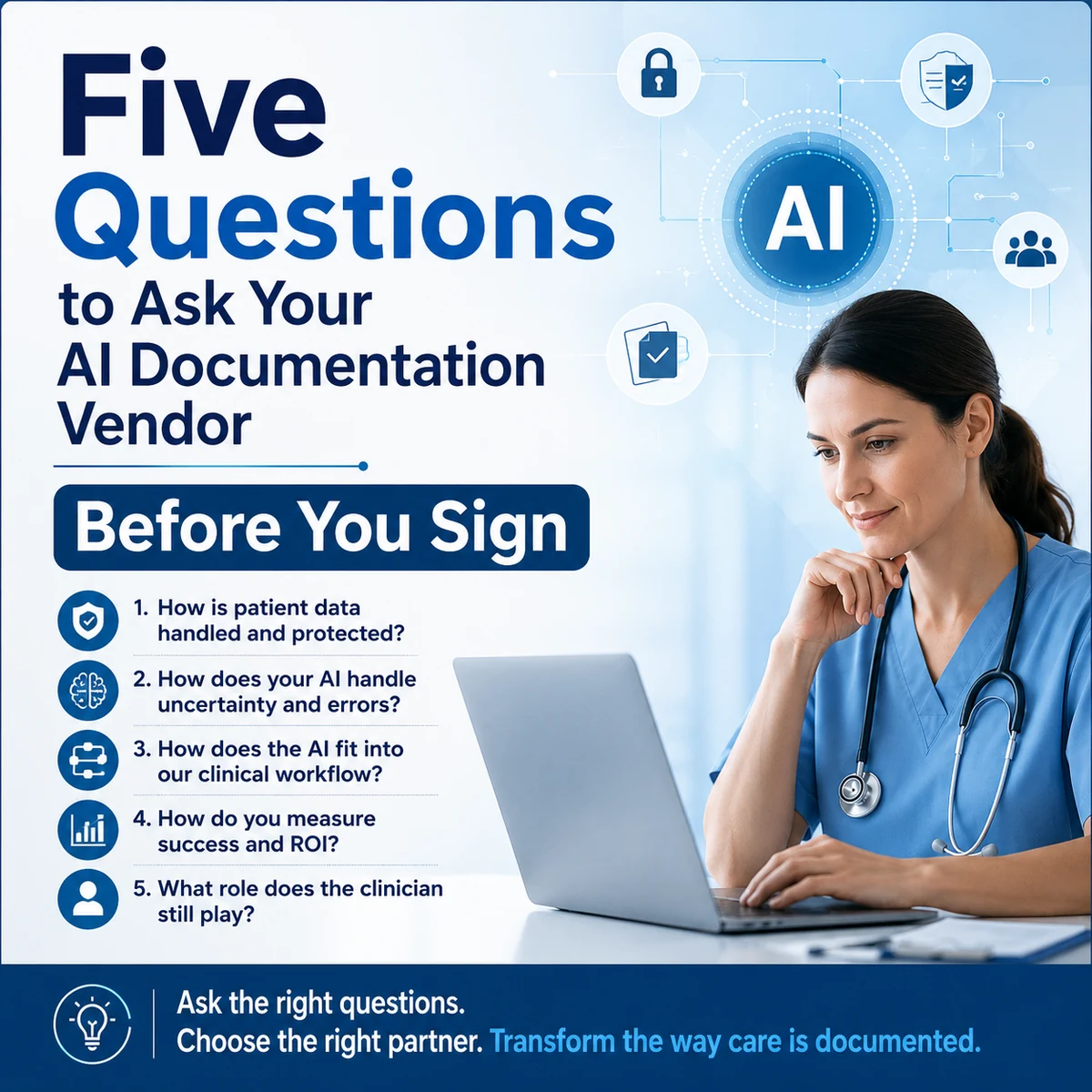
Five Questions to Ask Your AI Documentation Vendor Before You Sign
Almost every AI documentation vendor can show an impressive demo, but a demo doesn't tell you how the technology behaves inside your real clinical workflow. This guide gives five questions to ask before you sign, covering data handling, hallucinations, workflow fit, measurable ROI, and clinician control, plus demo red flags and a six-area vendor evaluation framework.

How Ambient AI Is Changing Clinical Documentation
Ambient AI passively listens to patient-clinician conversations and automatically generates structured clinical documentation, using speech recognition, NLP, and large language models to capture symptoms, diagnoses, medications, and plans. It reduces after-hours charting and burnout while the clinician reviews and approves every note. In home health, it works best paired with an AI documentation agent that understands OASIS and referral workflows.
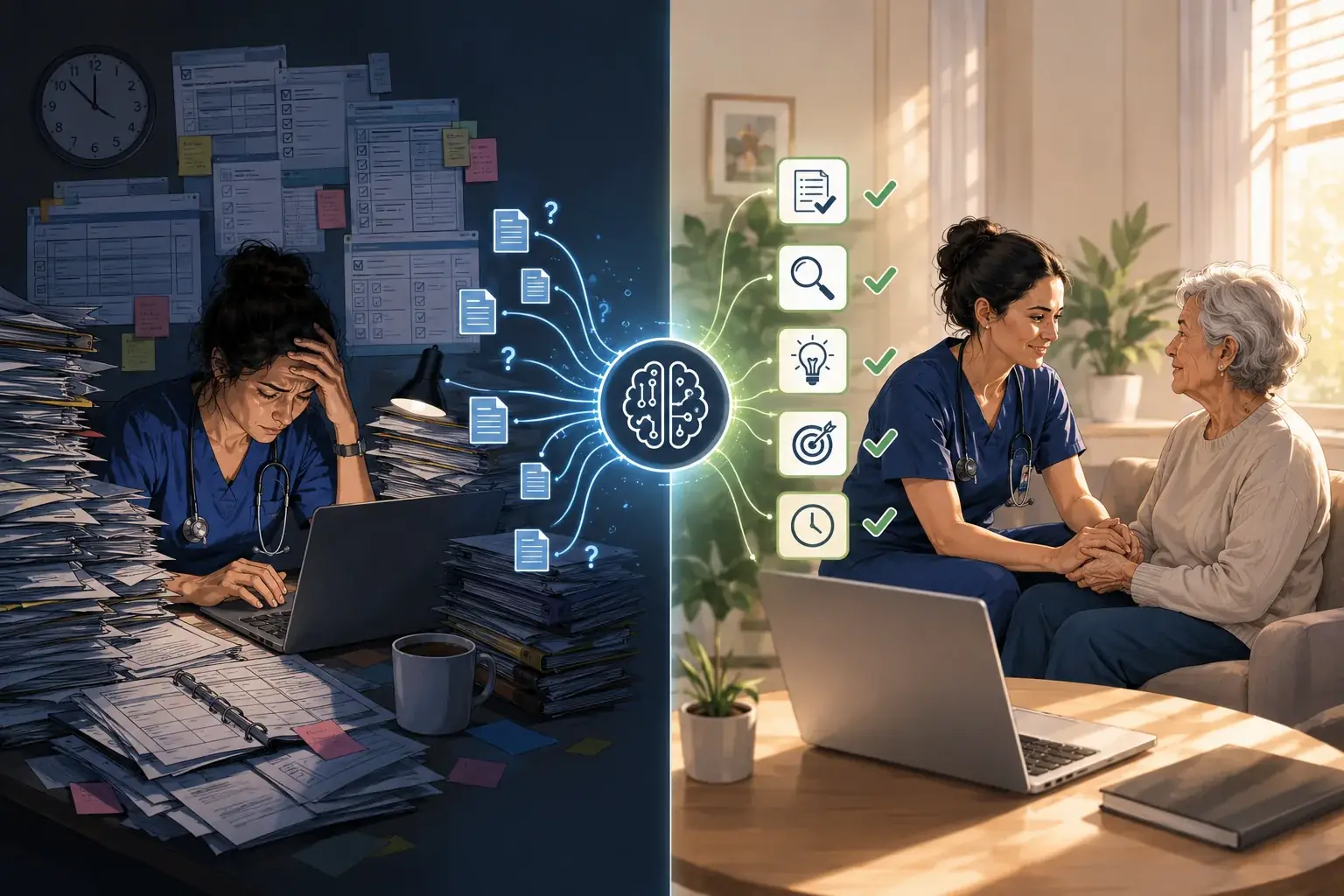
Why Most Healthcare AI Fails: It's Rarely a Technology Problem
Healthcare AI projects usually fail because organizations implement AI before clearly defining the problem they're trying to solve. Success depends on understanding clinical workflows, involving frontline users, aligning business incentives, establishing governance, and designing around patients, not simply deploying more advanced technology.