
5 Biggest Changes to Medicare in 2026
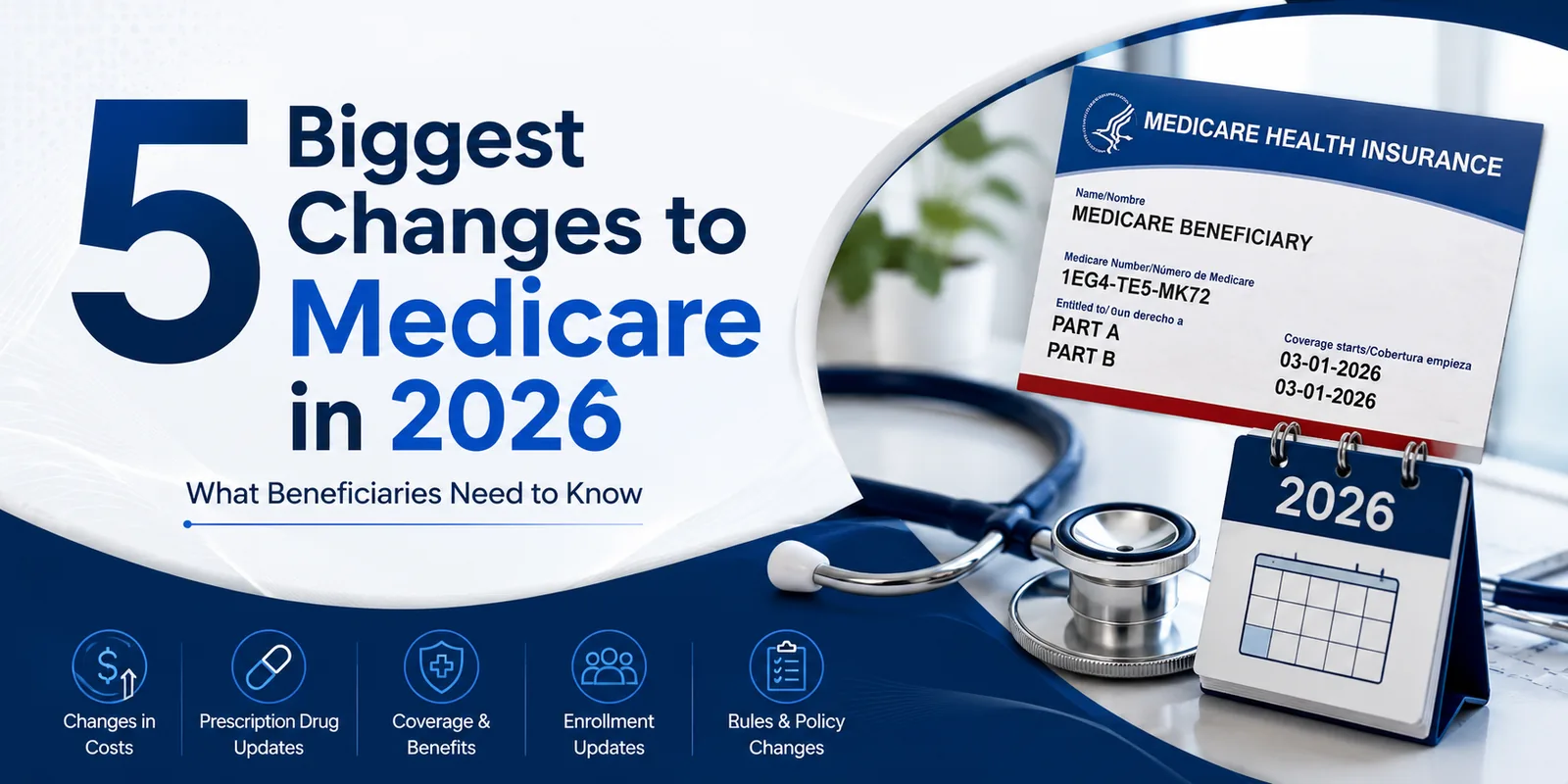
From a new Medicare Part D out-of-pocket cap to negotiated prices on the most expensive prescription drugs, 2026 brings major Medicare changes designed to improve affordability, alongside new prior authorization requirements and shifting Medicare Advantage options that beneficiaries need to understand before open enrollment.
Key Takeaways
- Medicare Part D's annual out-of-pocket cap increases to $2,100.
- Prices for 10 high-cost prescription drugs are being reduced through Medicare drug price negotiations.
- The Medicare Prescription Payment Plan now includes automatic renewal.
- Original Medicare introduces a Part B prior authorization pilot program in six states.
- Medicare beneficiaries will have a special opportunity to switch Medicare Advantage plans if the provider directory information was inaccurate.
💡 Quick Answer: The 5 biggest Medicare changes in 2026 are a higher Part D out-of-pocket cap of $2,100, negotiated lower prices on 10 high-cost prescription drugs, automatic renewal of the Medicare Prescription Payment Plan, a new Part B prior authorization pilot in six states, and a special enrollment opportunity for Medicare Advantage members affected by inaccurate provider directories.
If you're enrolled in Medicare or helping a loved one navigate it, 2026 brings several important changes that could impact your healthcare costs, prescription medications, and plan choices.
From a new Medicare Part D out-of-pocket cap to lower prices on some of the most expensive prescription drugs, these updates are designed to improve affordability and transparency for millions of Americans. However, some changes, such as new prior authorization requirements and fewer Medicare Advantage options, may also create new challenges for beneficiaries.
1. Medicare Part D's Out-of-Pocket Maximum Increases to $2,100
One of the biggest Medicare changes in 2026 affects prescription drug costs.
In 2025, Medicare introduced a historic $2,000 annual cap on out-of-pocket prescription expenses under Medicare Part D. Beginning in 2026, that cap increases slightly to $2,100 per year. Once beneficiaries reach this limit, their Part D plan pays 100% of covered medication costs for the remainder of the year.
Why This Matters
Before these reforms, some Medicare beneficiaries spent thousands of dollars annually on medications because there was no meaningful cap on drug expenses.
The new limit provides:
- Greater predictability in healthcare expenses
- Better financial protection for seniors with chronic illnesses
- Lower risk of medication non-adherence due to costs
- Improved budgeting for fixed-income households
While the increase from $2,000 to $2,100 is relatively small, beneficiaries should still review their annual medication costs and plan accordingly.
2. Lower Prices for 10 Medicare Prescription Drugs
Perhaps the most anticipated Medicare change in 2026 is the implementation of negotiated prices for 10 high-cost prescription drugs under the Medicare Drug Price Negotiation Program.
The Inflation Reduction Act gave Medicare the authority to negotiate drug prices directly with manufacturers for the first time in history. Lower prices for the first 10 medications became effective on January 1, 2026.
Some of the affected medications include:
| Drug | Approximate Savings |
|---|---|
| Eliquis | 56% |
| Enbrel | 67% |
| Entresto | 53% |
| Farxiga | 68% |
| Januvia | 79% |
| Jardiance | 66% |
| Xarelto | 62% |
These medications are commonly prescribed for:
- Diabetes
- Heart failure
- Blood clots
- Psoriasis
- Cardiovascular disease
Millions of Medicare beneficiaries are expected to see lower out-of-pocket costs because of these negotiated prices. Additional drug negotiations are already planned for 2027 and beyond.
3. Automatic Renewal for the Medicare Prescription Payment Plan
The Medicare Prescription Payment Plan was introduced in 2025 to help beneficiaries spread their prescription costs over monthly payments instead of paying large amounts upfront at the pharmacy.
The program remains voluntary in 2026, but there is one significant change: if you enrolled in 2025, you will automatically remain enrolled in 2026 unless you opt out.
This change reduces administrative burden and ensures continuity for beneficiaries who rely on monthly payment arrangements.
Why It Matters
Many seniors face high prescription expenses at the beginning of the year because of deductibles and medication costs.
The payment plan can help:
- Improve medication adherence
- Reduce financial stress
- Eliminate large upfront pharmacy bills
- Make budgeting easier for retirees on fixed incomes
4. Original Medicare Introduces Prior Authorization in Six States
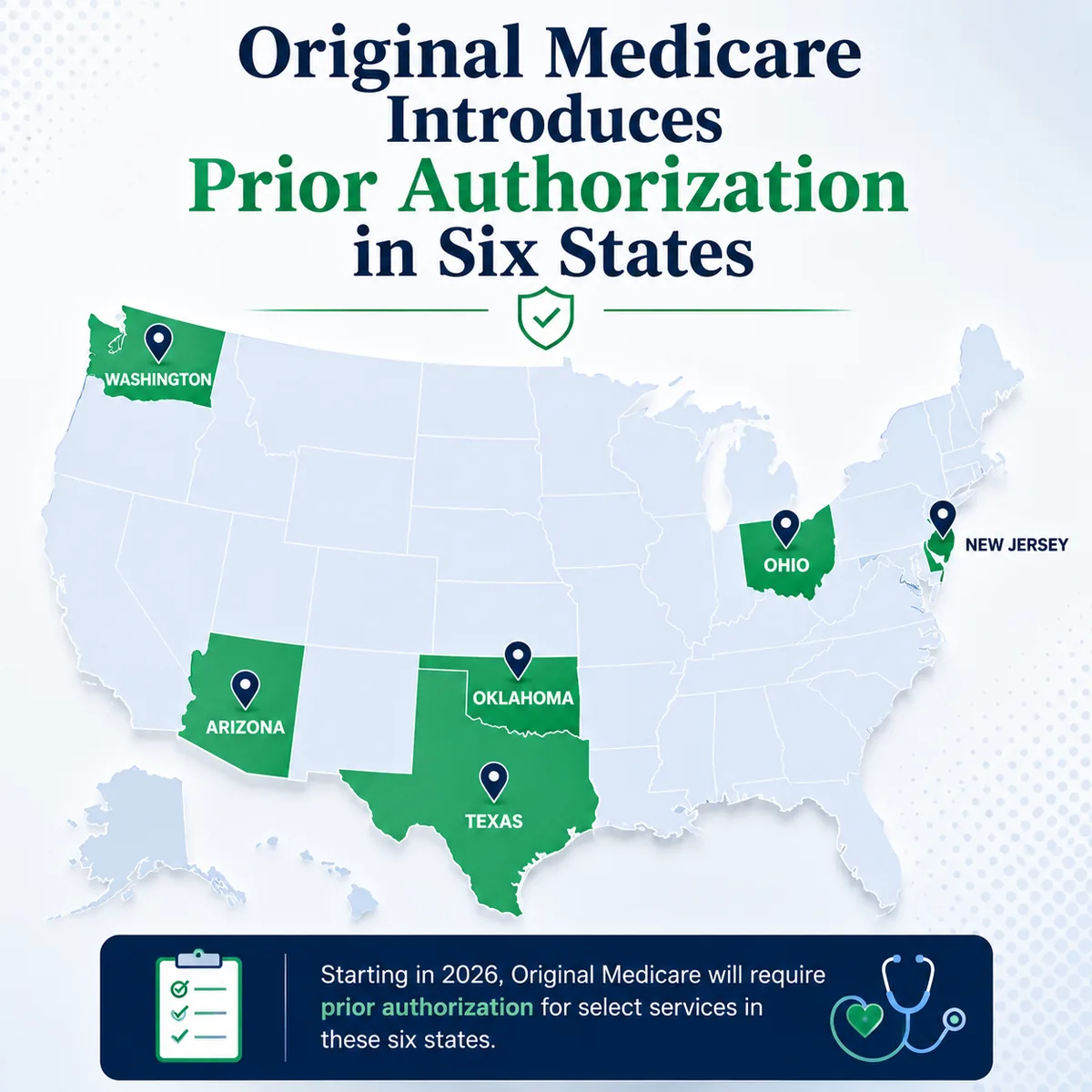
Starting in 2026, Original Medicare will require prior authorization for select services in six states: Arizona, New Jersey, Ohio, Oklahoma, Texas, and Washington.
One of the most controversial Medicare updates in 2026 is the introduction of prior authorization requirements for certain Medicare Part B services.
Beginning in January 2026, Original Medicare beneficiaries in the following states may need prior authorization for selected medical services:
- Arizona
- New Jersey
- Ohio
- Oklahoma
- Texas
- Washington
The six-year pilot program targets procedures and services considered vulnerable to fraud, waste, or unnecessary utilization.
Potential Impacts
Supporters argue that prior authorization may reduce unnecessary spending and fraud.
Critics worry that it could:
- Delay patient care
- Increase administrative burden
- Create confusion for beneficiaries
- Add paperwork for physicians and healthcare providers
For Medicare beneficiaries living in these states, understanding whether a service requires prior approval will become increasingly important. For home health agencies, the added paperwork is one more reason documentation burden and clean, timely records matter more than ever.
5. Medicare Advantage Beneficiaries Get a New Special Enrollment Opportunity
The Medicare Plan Finder now includes provider directories to help beneficiaries determine whether their doctors and hospitals participate in a specific Medicare Advantage plan.
However, provider directories can occasionally contain errors.
Beginning in 2026, beneficiaries who relied on inaccurate directory information and discover their preferred providers are not actually in-network may qualify for a Special Enrollment Period (SEP) that allows them to change plans.
Why This Matters
Network restrictions remain one of the biggest frustrations among Medicare Advantage members.
This new policy provides additional consumer protection by allowing beneficiaries to:
- Switch to another Medicare Advantage plan.
- Return to Original Medicare.
- Select a plan that includes their physicians and hospitals.
This change could help thousands of seniors avoid unexpected healthcare disruptions.
Other Medicare Changes to Watch in 2026
Although not part of the "top five" list, several additional Medicare developments are worth monitoring:
Higher Part B Premiums and Deductibles
Medicare Part B monthly premiums increased to approximately $202.90 in 2026, nearly 10% higher than the previous year.
Fewer Medicare Advantage Options
Beneficiaries may have fewer Medicare Advantage plans to choose from in some regions as insurers adjust to changing reimbursement and cost pressures.
Continued Drug Price Negotiations
An additional 15 medications are already being negotiated for lower prices beginning in 2027.
What Should Medicare Beneficiaries Do Now?
As open enrollment approaches, experts recommend that beneficiaries:
- Review all Medicare notices carefully.
- Compare Part D and Medicare Advantage plans annually.
- Verify provider networks before enrolling.
- Review prescription formularies.
- Understand new prior authorization requirements.
- Take advantage of lower prescription drug pricing opportunities.
Healthcare costs and coverage options continue to evolve, and reviewing your plan every year has never been more important. You can compare plans and check provider networks directly through the official Medicare Plan Finder at Medicare.gov, and read the program details at CMS.gov.
The Bottom Line
The biggest Medicare changes in 2026 focus on two major goals:
- Making prescription drugs more affordable.
- Improving transparency and cost control.
However, new prior authorization rules and changing Medicare Advantage options also mean beneficiaries need to become more proactive when selecting and managing their healthcare coverage.
Whether you're enrolled in Original Medicare or Medicare Advantage, understanding these updates can help you avoid unexpected expenses and make better healthcare decisions in 2026.
🚀 For home health agencies navigating these changes: new Part B prior authorization and tighter Medicare Advantage networks put even more weight on accurate, timely documentation. Copper Digital's AI Documentation Agent captures the visit and drafts notes and OASIS-E in real time, with a nurse reviewing and approving every record before it reaches billing. Explore AI tools for home health nurses, or book a demo.
🎓 Want to understand how CMS, Medicare, and Medicaid actually fit together? Our Home Health Mastermind Skool community includes the course Ecosystem of Home Health and Post-Acute Care, which breaks down the payment and policy landscape that sits behind every change above, module by module.
Course modules include:
- Introduction to CMS
- Medicare: The Complete Breakdown
- Medicaid: The 70% Giant
- Medicare Advantage & Home Health
- International Healthcare Comparisons
Bottom Line
The biggest Medicare changes in 2026 focus on making prescription drugs more affordable and improving cost transparency, but new prior authorization rules and shifting Medicare Advantage options mean beneficiaries need to review their coverage more proactively than ever.

The Copper Clinical Team brings together nurses and clinical documentation specialists focused on home health, OASIS accuracy, Medicare policy, and human-in-the-loop AI. They write about the rules, reimbursement, and workflows shaping how agencies and beneficiaries navigate a changing Medicare landscape.
Frequently asked
Frequently asked questions
The biggest Medicare changes in 2026 include a higher Part D out-of-pocket cap, lower prices for 10 prescription drugs, automatic renewal of the Medicare Prescription Payment Plan, a new Part B prior authorization pilot, and a special enrollment opportunity for Medicare Advantage members affected by provider directory errors.
Join the conversation
Leave a comment
Related reading
OASIS-E1 vs OASIS-E2: A Complete Side-by-Side Comparison for Home Health Agencies
Wondering what changed between OASIS-E1 and OASIS-E2? OASIS-E2 is an incremental update, not a redesign. The framework, five time points, and PDGM methodology stay the same, while CMS refines Section GG, cognitive and behavioral items, SDOH, and SPADEs. This guide compares both versions side by side and gives you a transition plan and checklist.

Common OASIS Documentation Mistakes That Lead to Payment Delays
Common OASIS documentation mistakes, such as incomplete assessments, incorrect diagnosis coding, inaccurate Section GG scoring, medication and homebound-status errors, weak skilled-need documentation, and missing physician signatures, are among the biggest causes of home health payment delays. Because OASIS data drives PDGM reimbursement, most of these errors are preventable with point-of-care charting, strong QA, and AI-powered documentation validation.

If AI Cannot Handle a Nurse Having a Bad Day, It Does Not Belong in Healthcare
AI is advisory. The nurse's judgment is sacred. Susie Branagan, RN, who calls herself AI's clinical conscience, on applying Just Culture to AI, the real danger of hallucinations in home health, trauma-informed design, and why deploying technology into a broken culture only gives it more efficient ways to do harm.