
The Hidden Cost of Late Nursing Documentation
Late nursing documentation is far more than an administrative inconvenience. Delayed charting increases patient safety risks, creates handoff gaps, triggers claim denials and undercoding, raises legal and audit exposure, and accelerates nurse burnout and turnover, costing healthcare organizations millions. Most delays happen because nurses lack time to chart in real time, and AI and point-of-care documentation tools can give that time back.

Key Takeaways
- Delayed charting creates EHR gaps that increase medication errors, missed deterioration, and handoff confusion.
- Under the principle 'if it isn't documented, it didn't happen,' late entries create legal and audit-trail exposure.
- Incomplete and late documentation drives claim denials, undercoding, and lost Medicare reimbursement.
- After-hours 'pajama time' charting is a leading cause of nurse burnout and turnover.
- AI documentation with human-in-the-loop review helps nurses chart in real time and take less work home.
💡 Late nursing documentation is one of healthcare's most expensive hidden problems. Delayed charting increases patient safety risks, creates handoff gaps, triggers claim denials and undercoding, raises legal and audit exposure, and accelerates nurse burnout and turnover, costing organizations millions. Most delays happen because nurses lack time to chart in real time, and AI plus point-of-care documentation tools can give that time back.
Late nursing documentation is often viewed as an administrative inconvenience. In reality, delayed charting is one of healthcare's most expensive and dangerous operational problems.
When nurses postpone documentation until the end of their shift or, worse, until they get home, the consequences extend far beyond paperwork.
Late nursing documentation can:
- Increase patient safety risks
- Create gaps in continuity of care
- Trigger insurance claim denials
- Expose clinicians and organizations to legal liability
- Accelerate nurse burnout and turnover
- Cost healthcare organizations millions in lost productivity and revenue
Studies consistently show that nurses spend a significant portion of their day documenting care instead of delivering it. In home health, clinicians often spend additional hours completing documentation after patient visits, turning charting into an unofficial second shift.
The result is a hidden cost that impacts everyone: patients, clinicians, and healthcare organizations.
Why Does Late Nursing Documentation Happen?
Nurses do not intentionally delay documentation. Most documentation delays happen because clinicians are balancing:
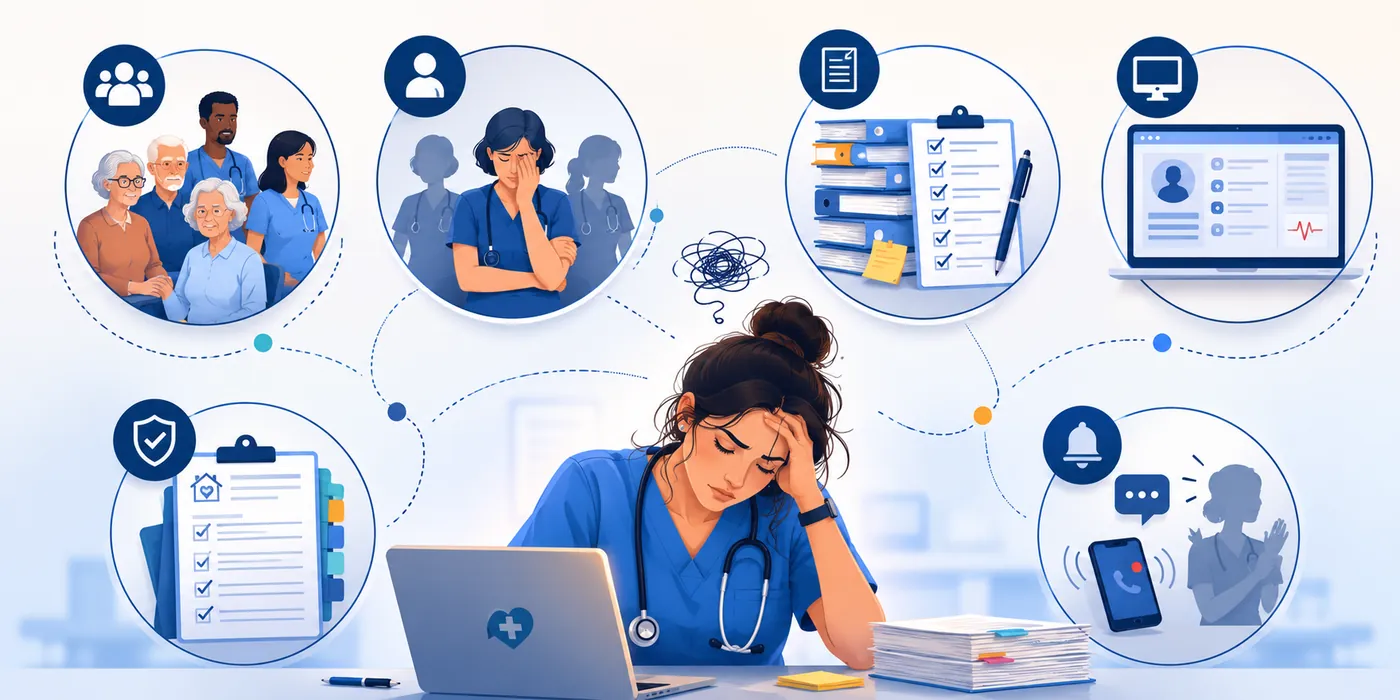
Nurses don't delay documentation on purpose. They run out of time between patient volume, EHR complexity, and interruptions.
- High patient volumes
- Staffing shortages
- Increasing administrative requirements
- Complex Electronic Health Records (EHRs)
- OASIS documentation requirements
- Frequent interruptions during shifts
Many nurses simply don't have enough time to document in real time. Unfortunately, delayed charting creates a domino effect of problems.
1. Patient Safety Risks Increase Significantly
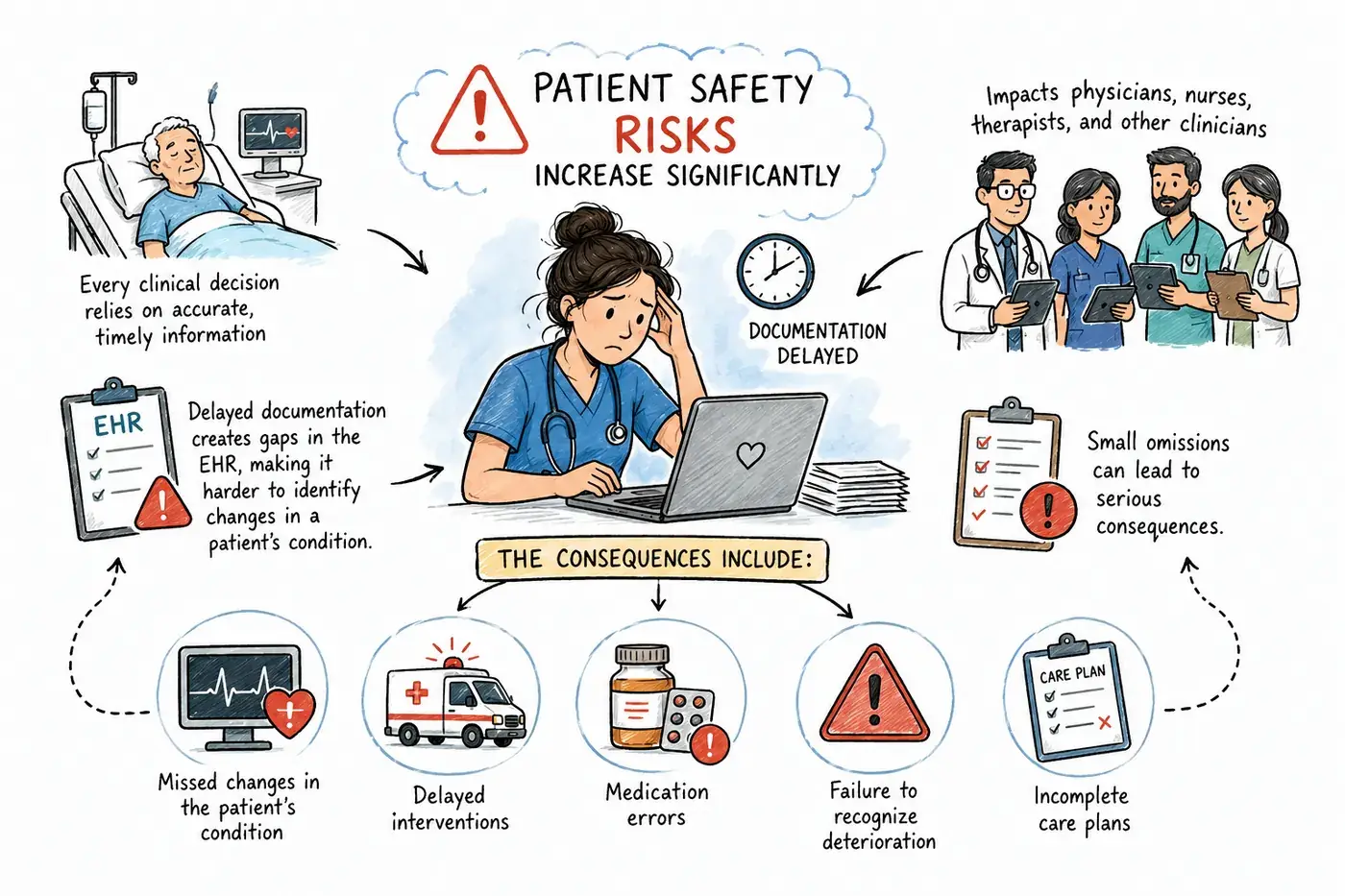
Every clinical decision relies on timely information, so gaps in the record put patient safety at risk.
Late nursing documentation is one of the biggest hidden threats to patient safety in healthcare. Every clinical decision relies on accurate, timely information, and when nurses are unable to document assessments, interventions, or patient responses in real time, critical details can be lost. Delayed nursing documentation creates gaps in the Electronic Health Record (EHR), making it harder for physicians, nurses, therapists, and other clinicians to identify changes in a patient's condition. Even small omissions can lead to medication errors, delayed interventions, or missed signs of deterioration.
Studies consistently show that timely nursing documentation improves care coordination and patient outcomes. However, increasing administrative demands and staffing shortages often force nurses to delay charting until the end of a shift or after they leave the patient's bedside. The longer the delay, the greater the likelihood of incomplete or inaccurate documentation. In both acute care and home health settings, late nursing documentation can directly impact patient safety and compromise the quality of care being delivered.
The consequences include:
- Missed changes in the patient's condition
- Delayed interventions
- Medication errors
- Failure to recognize deterioration
- Incomplete care plans
2. Delayed Documentation Creates Dangerous Handoff Gaps
Continuity of care depends heavily on accurate and timely nursing documentation. Every shift change, patient transfer, and multidisciplinary handoff relies on the information contained within the medical record. When nursing documentation is delayed, incoming clinicians may lack the context they need to make informed decisions about patient care. These informational gaps can create confusion, duplicate work, and increase the risk of patient harm.
Nursing documentation delays are particularly problematic because healthcare delivery is highly collaborative. Physicians, case managers, therapists, and other clinicians all depend on nurses to document assessments and interventions promptly. In home health settings, delayed charting can disrupt care coordination between field clinicians, intake teams, and billing departments. Missing information can affect treatment plans, medication management, and even reimbursement.
Real-time documentation ensures that everyone caring for the patient is working from the same information, reducing communication errors and improving clinical outcomes.
3. 'If It Isn't Documented, It Didn't Happen'
In nursing, the record is the proof, so if care isn't documented, it can be treated as if it never happened.
The phrase 'If it isn't documented, it didn't happen' is one of the most important legal principles in nursing. Nursing documentation serves as the official record of patient care and provides evidence that assessments, interventions, and treatments were performed appropriately. When nurses delay charting, they increase the risk that critical details will be forgotten or questioned later.
Late nursing documentation can become particularly problematic during malpractice claims, regulatory investigations, and internal audits. Attorneys and compliance teams often scrutinize documentation timestamps and look for inconsistencies in the patient record. Even when excellent care was provided, incomplete or delayed charting can create the appearance that care was not delivered properly.
Because nursing documentation has legal, clinical, and financial implications, healthcare organizations place significant emphasis on timely and accurate charting practices.
4. Late Entries Create Audit Trail Concerns
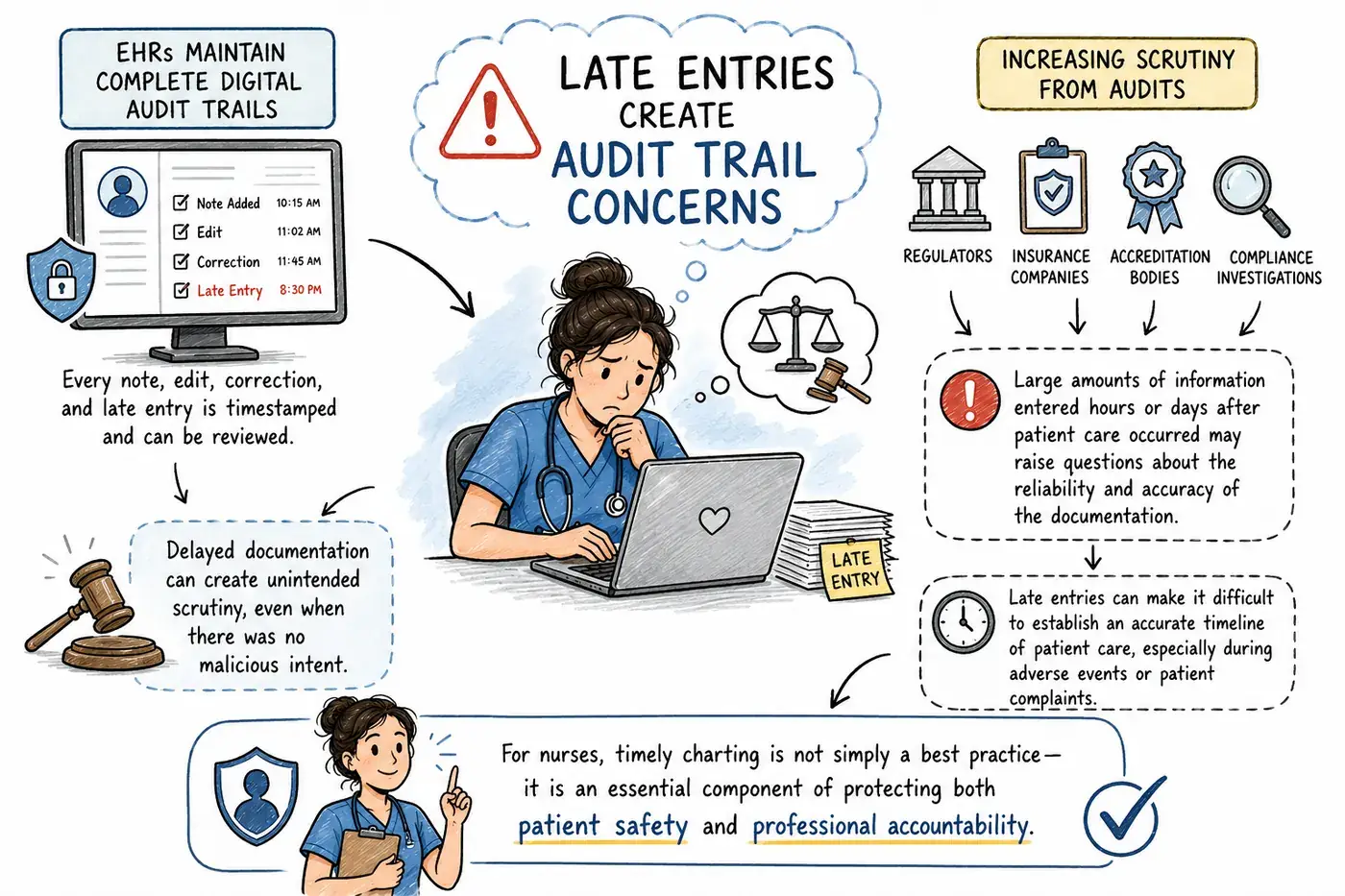
EHRs timestamp every entry, so charting hours or days later can draw unintended audit scrutiny.
Modern Electronic Health Records are designed to maintain complete digital audit trails that track every action taken within a patient's chart. Every note, edit, correction, and late entry is timestamped and can be reviewed during legal proceedings, compliance investigations, or payer audits. As a result, delayed nursing documentation can create unintended scrutiny, even when there was no malicious intent.
Healthcare organizations are increasingly subject to audits from regulators, insurance companies, and accreditation bodies. Large amounts of information entered hours or days after patient care occurred may raise questions about the reliability and accuracy of the documentation. Late entries can also make it difficult to establish an accurate timeline of patient care, especially during adverse events or patient complaints.
For nurses, this means that timely charting is not simply a best practice; it is an essential component of protecting both patient safety and professional accountability.
5. Claim Denials and Revenue Loss Increase
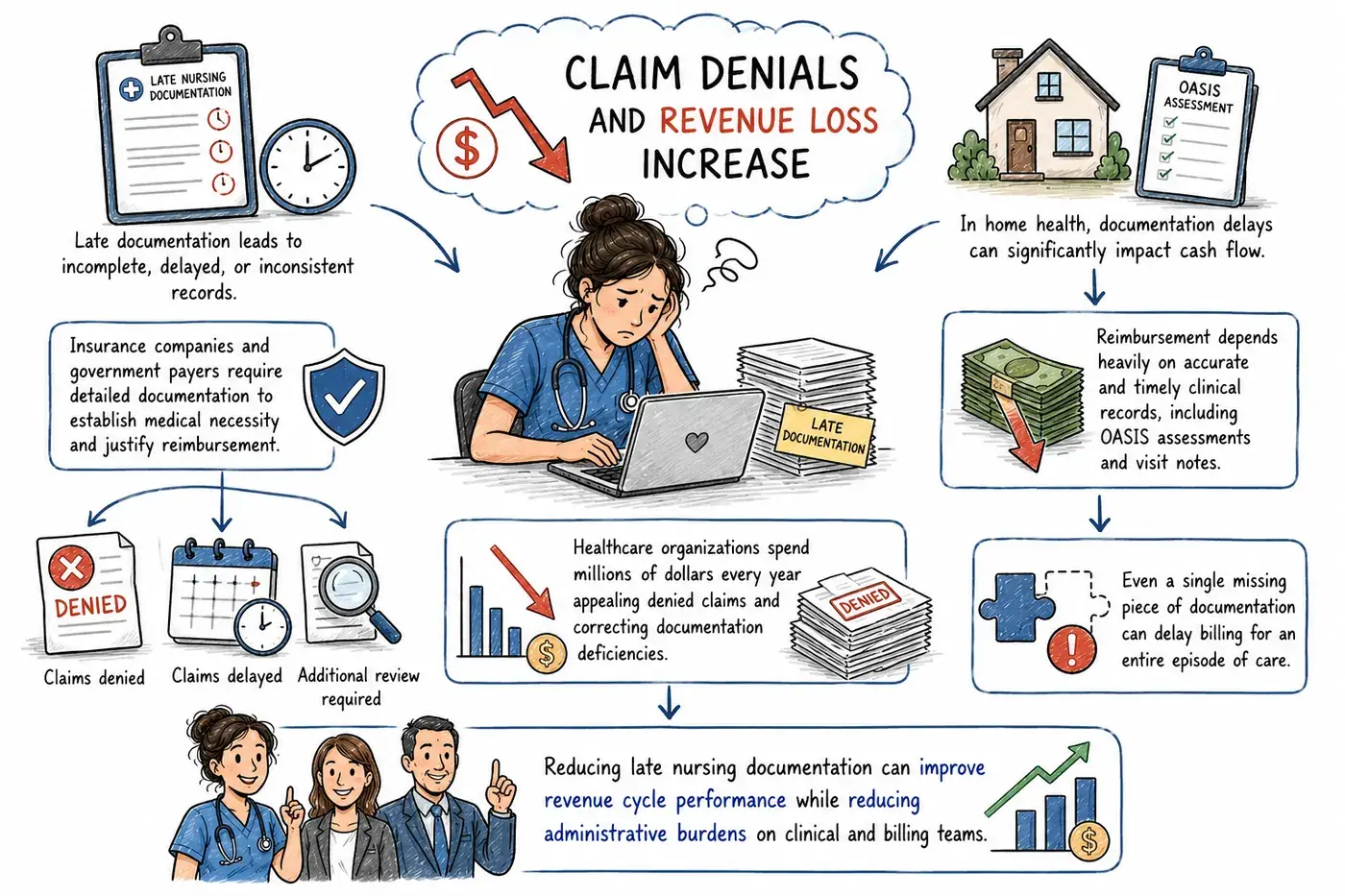
Payers require detailed documentation to justify reimbursement, so late records mean denied and delayed claims.
Late nursing documentation has a direct impact on the financial health of healthcare organizations. Insurance companies and government payers require detailed documentation to establish medical necessity and justify reimbursement. When documentation is incomplete, delayed, or inconsistent, claims are more likely to be denied, delayed, or subjected to additional review.
In home health, documentation delays can significantly impact cash flow because reimbursement depends heavily on accurate and timely clinical records, including OASIS assessments and visit notes. Even a single missing piece of documentation can delay billing for an entire episode of care. Many of these issues overlap with the common OASIS documentation mistakes that lead to payment delays.
Healthcare organizations spend millions of dollars every year appealing denied claims and correcting documentation deficiencies. Reducing late nursing documentation can improve revenue cycle performance while reducing administrative burdens on clinical and billing teams.
6. Undercoding Leads to Lower Reimbursement
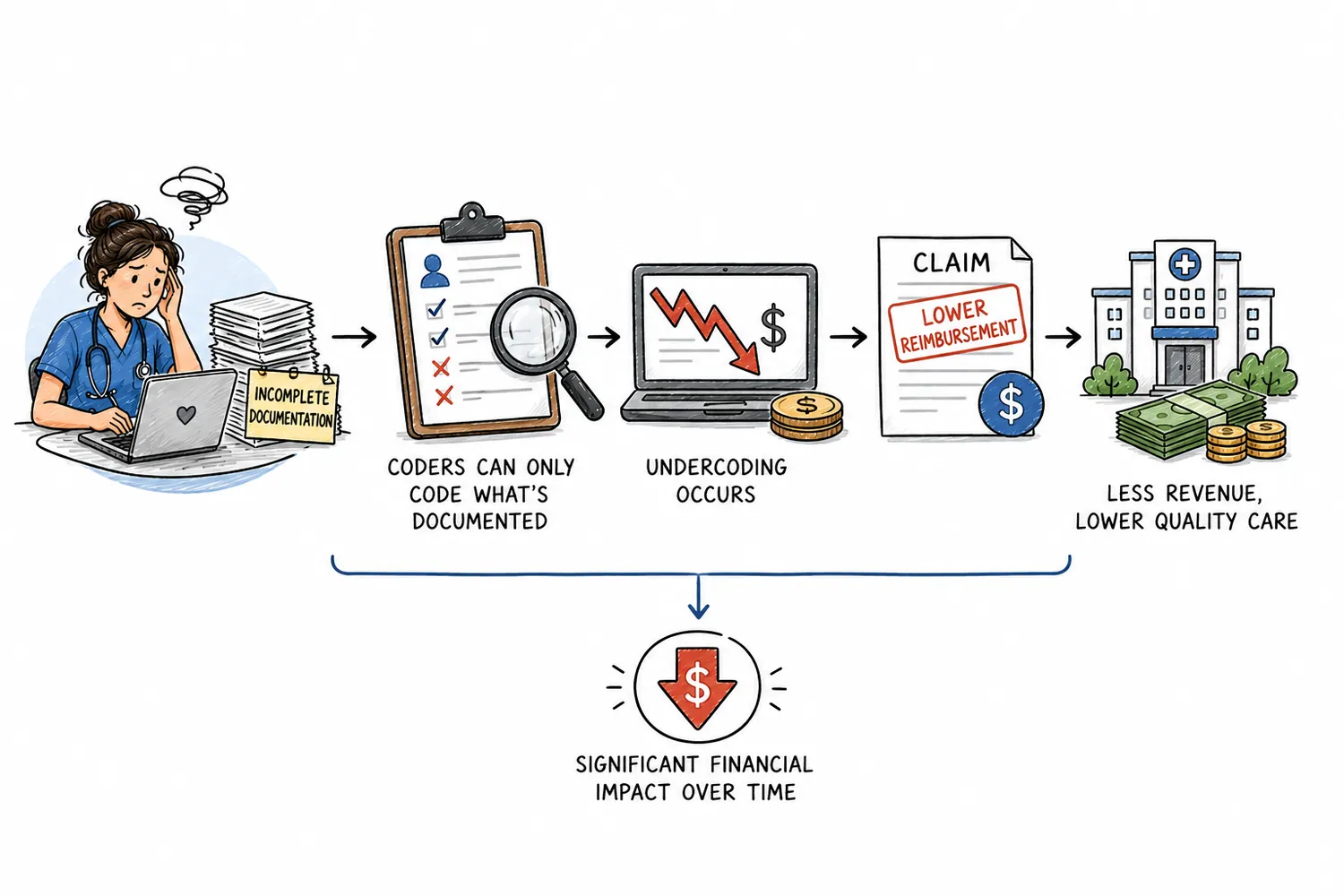
Coders can only code what is documented, so rushed charting quietly leads to undercoding and lost revenue.
Incomplete nursing documentation often results in undercoding, one of the most overlooked causes of lost healthcare revenue. Coding teams can only code what is documented in the patient record. If clinical complexity, comorbidities, functional limitations, or skilled interventions are not clearly documented, healthcare organizations may receive lower reimbursement than they are entitled to receive.
This issue is especially important in home health and value-based care models where documentation directly influences payment calculations. Delayed nursing documentation frequently results in rushed charting, causing important details to be omitted or generalized.
Over time, undercoding can create significant financial losses and make it difficult for healthcare organizations to accurately measure patient acuity and care needs.
7. The Documentation Paradox Fuels Burnout
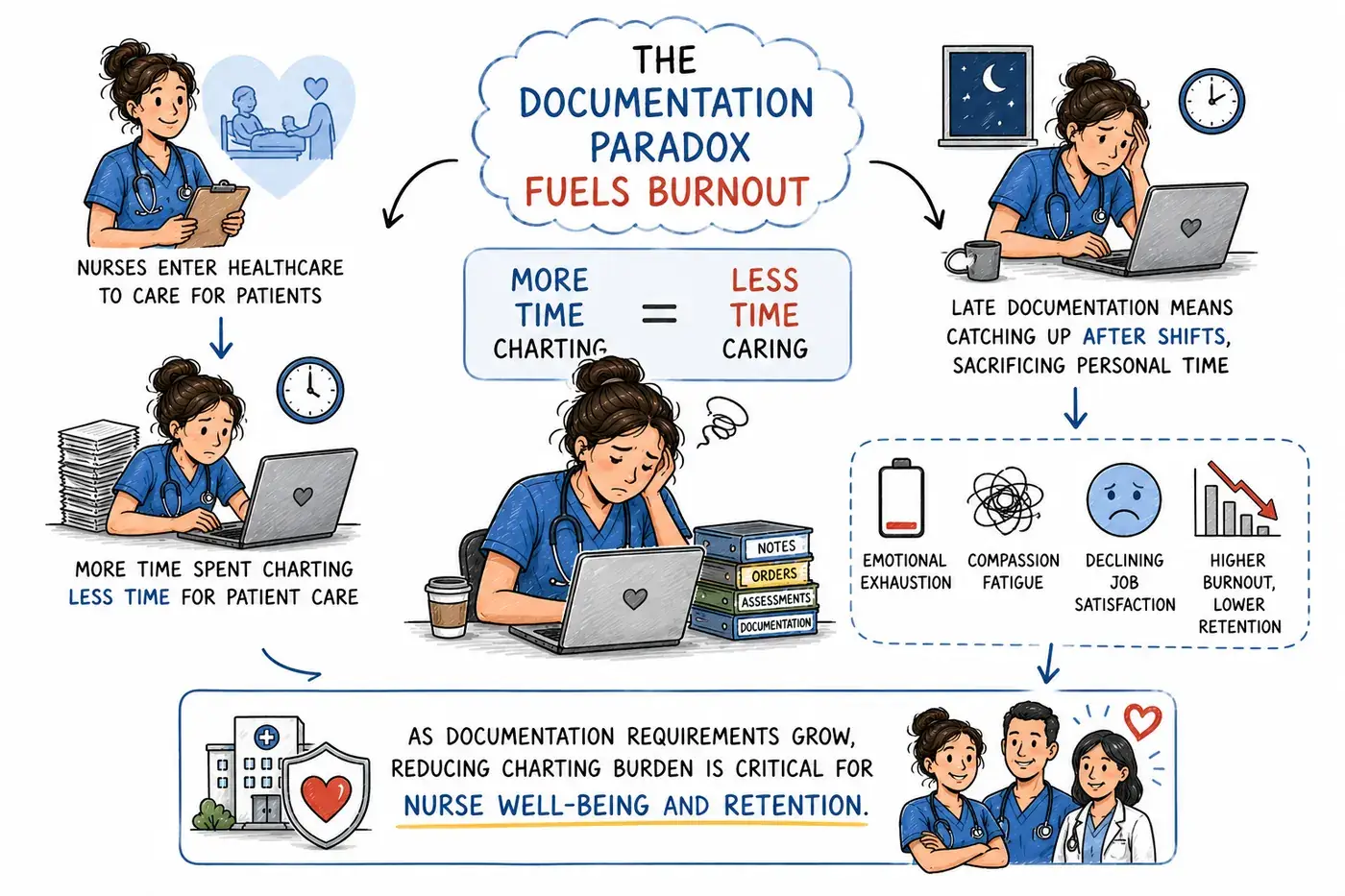
The documentation paradox: more time charting means less time caring, and it fuels burnout.
Nurses enter healthcare to care for patients, not to spend hours in front of a computer screen. Unfortunately, increasing documentation requirements have created what many clinicians call the 'Documentation Paradox': the more time nurses spend charting, the less time they have for direct patient care.
Late nursing documentation often means nurses must catch up on charting after their shifts end, sacrificing personal time and increasing emotional exhaustion. This growing administrative burden contributes significantly to nurse burnout, compassion fatigue, and declining job satisfaction.
As healthcare organizations continue to add regulatory and documentation requirements, finding ways to reduce charting burden has become critical for improving nurse well-being and retention.
8. After-Hours Charting Destroys Work-Life Balance
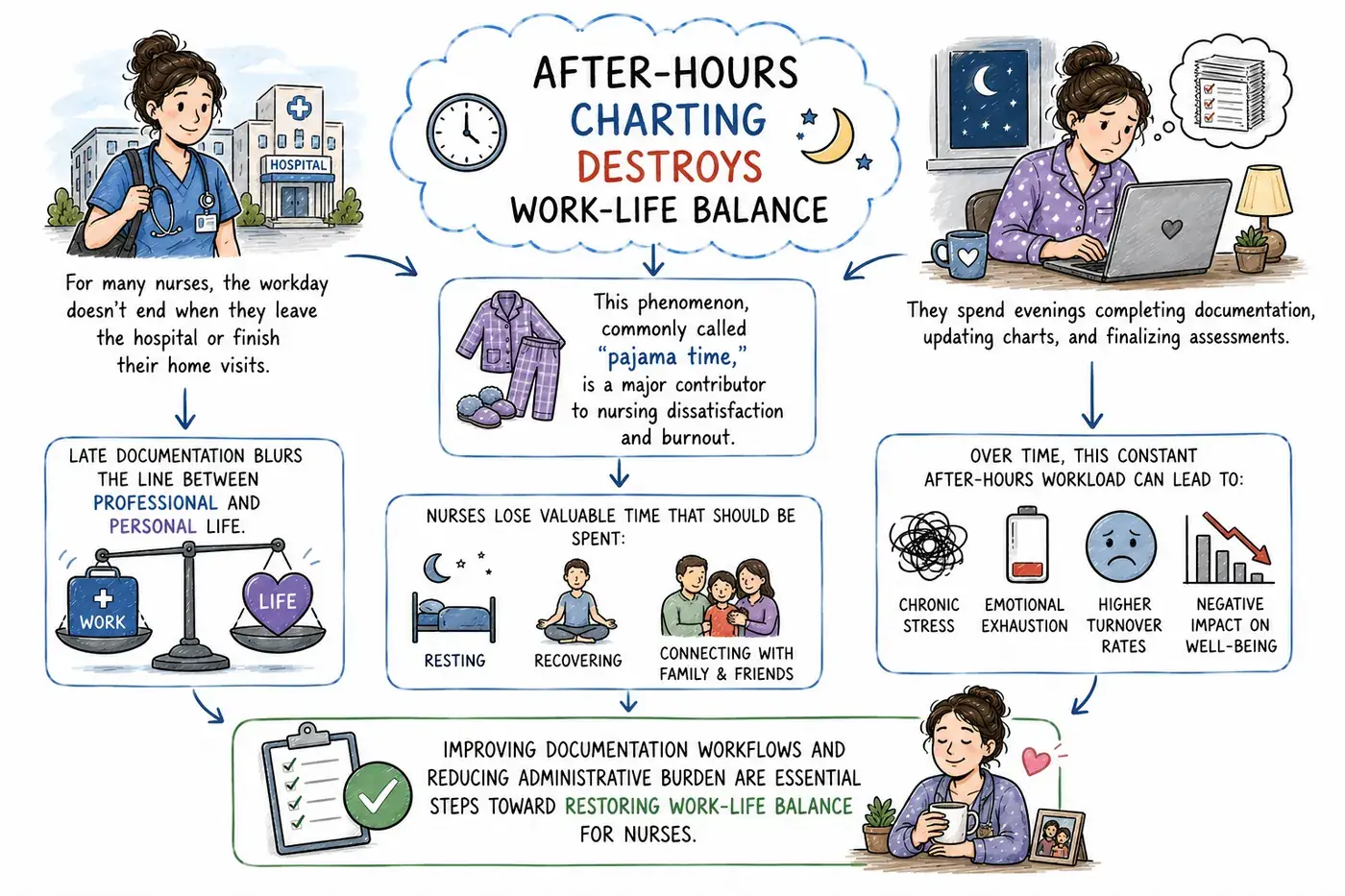
Pajama time blurs the line between work and home, and over time it leads to chronic stress and turnover.
For many nurses, the workday doesn't end when they leave the hospital or finish their home visits. Instead, they spend evenings completing documentation, updating charts, and finalizing assessments. This phenomenon, commonly called 'pajama time,' has become one of the biggest contributors to nursing dissatisfaction and burnout.
Late nursing documentation blurs the line between professional and personal life. Nurses lose valuable time that should be spent resting, recovering, and connecting with family and friends. Over time, this constant after-hours workload can lead to chronic stress, emotional exhaustion, and higher turnover rates.
Improving documentation workflows and reducing administrative burden are essential steps toward restoring work-life balance for nurses.
9. Documentation Burden Drives Nurse Turnover
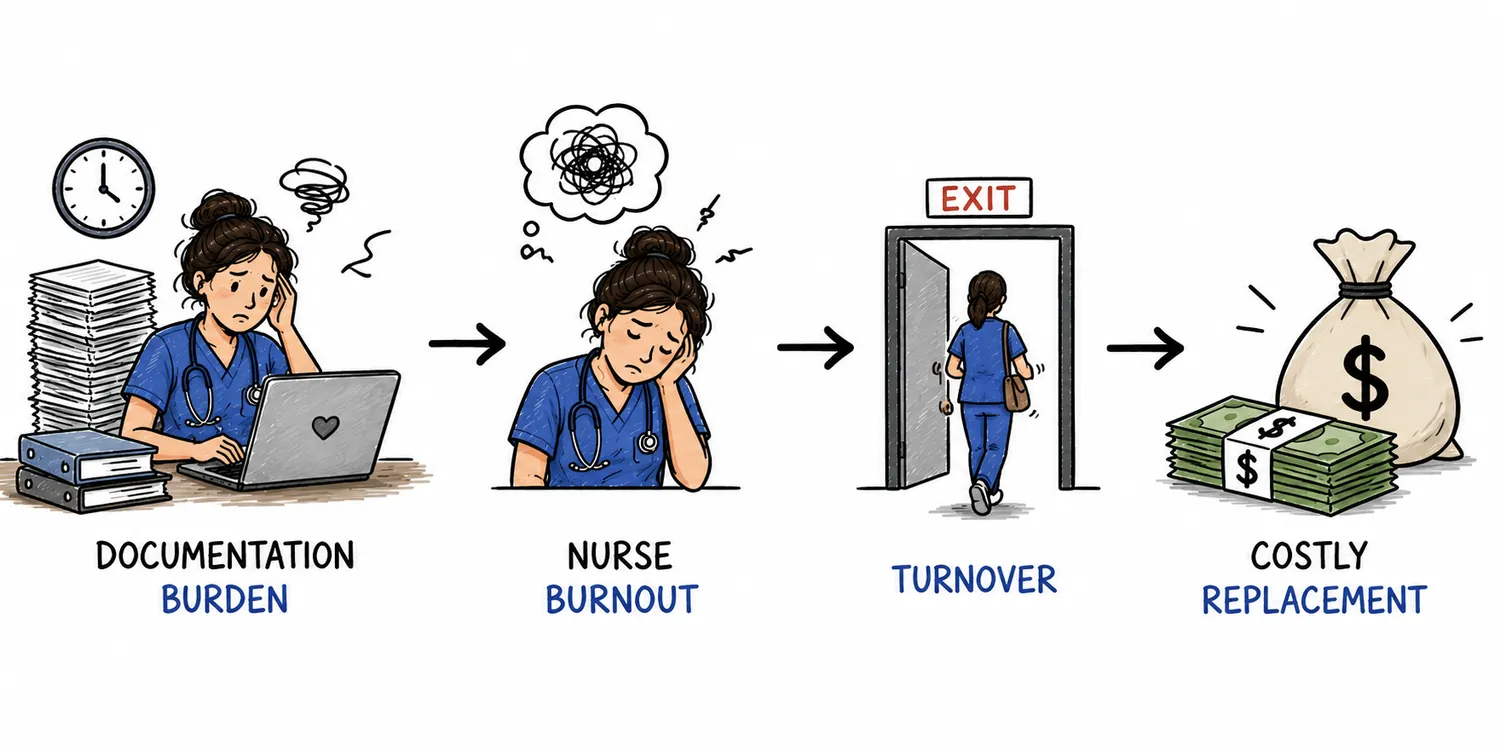
The path from documentation burden to burnout to turnover, and each departure carries a substantial replacement cost.
The nursing shortage is closely linked to the documentation burden. Numerous studies have shown that administrative tasks and excessive charting requirements are major contributors to burnout and resignation among nurses. When clinicians spend more time documenting than caring for patients, job satisfaction declines significantly.
Late nursing documentation compounds these frustrations because nurses often feel they are working a second shift just to keep up with paperwork. Many experienced nurses cite documentation burden as one of the primary reasons they leave bedside care entirely.
The cost of replacing a nurse can be substantial, making documentation efficiency not only a workforce issue but also a major financial concern for healthcare organizations.
10. The Organizational Cost Is Far Greater Than Most Leaders Realize
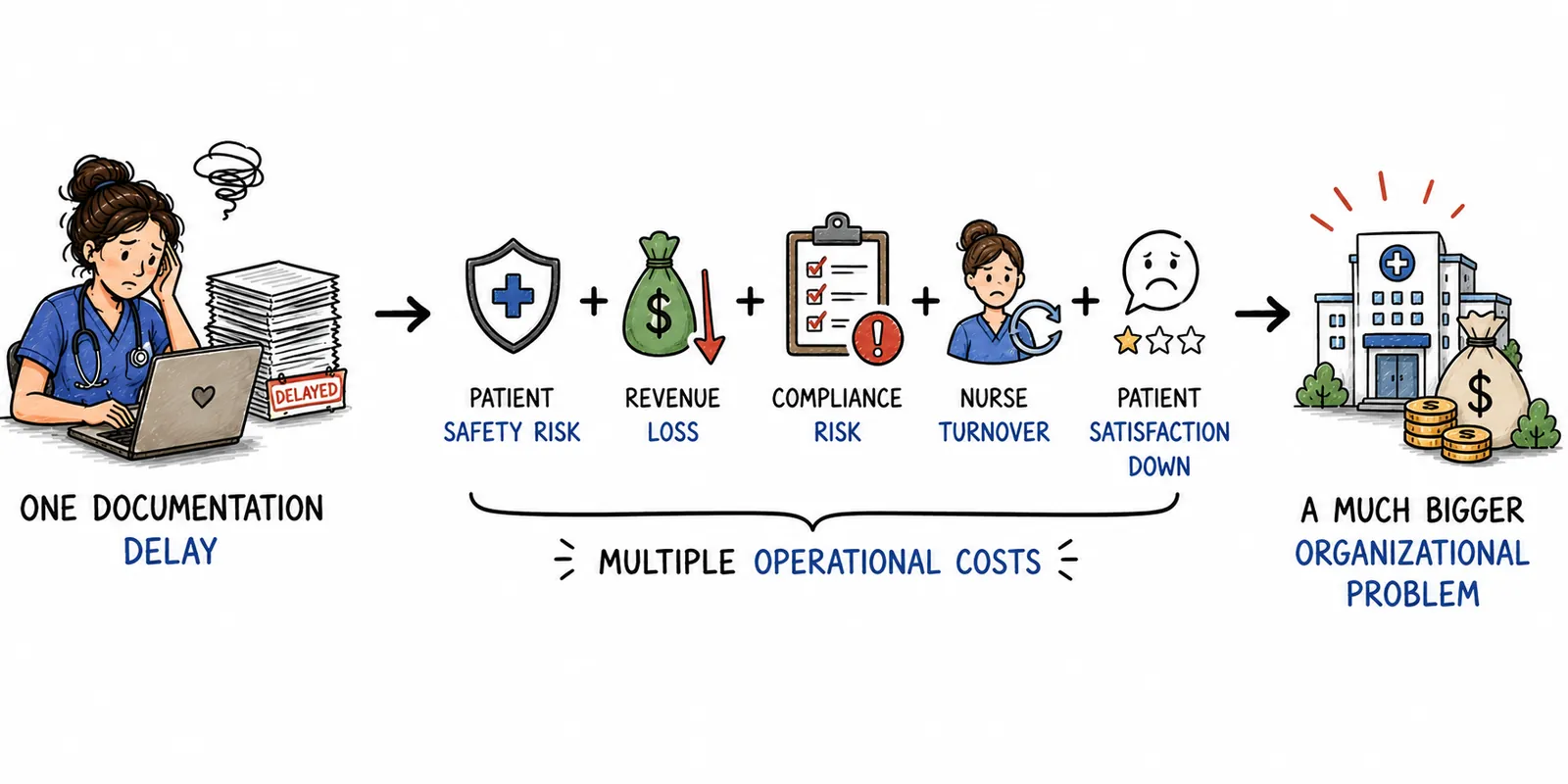
One documentation delay compounds into multiple operational costs and a much bigger organizational problem.
The hidden cost of late nursing documentation extends far beyond delayed notes and administrative inconvenience. Documentation delays affect every aspect of healthcare operations, including patient safety, revenue cycle performance, compliance, workforce retention, and organizational culture.
Healthcare leaders often underestimate the cumulative impact of nursing documentation delays. Lost reimbursement, claim denials, increased audit risk, nurse turnover, and declining patient satisfaction all carry significant financial consequences. At the same time, nurses continue to experience increasing levels of stress and burnout due to growing documentation demands.
Addressing late nursing documentation requires more than simply asking nurses to chart faster. It requires investments in better workflows, improved technology, and systems that allow clinicians to spend more time caring for patients and less time chasing paperwork.
How Technology Can Help Reduce Documentation Delays
Healthcare organizations are increasingly adopting:
- AI documentation tools
- Ambient AI
- Voice documentation solutions
- Mobile charting platforms
- Point-of-care documentation tools
The goal is simple: give nurses more time with patients and less time with paperwork. Solutions like ambient AI documentation and AI documentation agents, paired with a human-in-the-loop review, help nurses capture information in real time. By reducing documentation burden, healthcare organizations can improve:
- Patient safety
- Documentation quality
- Revenue cycle performance
- Nurse retention
- Work-life balance
Final Thoughts
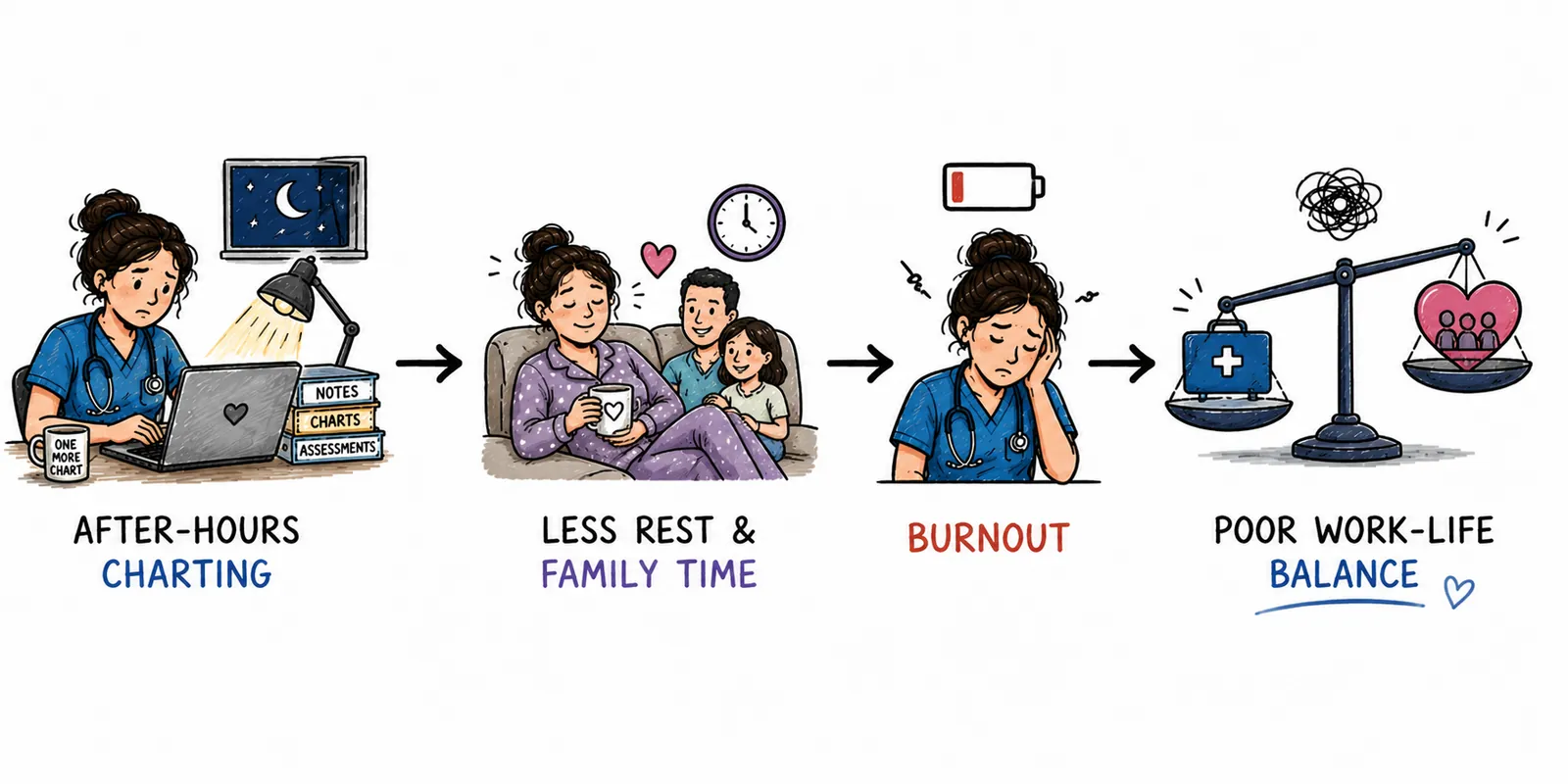
Every minute spent catching up on charting is a minute taken from rest, family, and recovery.
Late nursing documentation is not merely an administrative issue. It is a patient safety issue, a financial issue, a workforce issue, and increasingly, a retention issue.
The hidden cost of delayed charting impacts everyone involved in healthcare delivery. As documentation requirements continue to grow, healthcare leaders must find ways to reduce administrative burden and help nurses document accurately, efficiently, and in real time.
Because every minute spent catching up on charting is a minute taken away from patient care, recovery, family, and rest.
🚀 Give your nurses their time back. Copper Digital's AI Documentation Agent captures the visit by voice, photo, or tap, drafts notes and OASIS-E in real time, and flags gaps, with a nurse reviewing and approving every record before it reaches billing. Explore AI tools for home health nurses, or book a demo.
🎓 Go deeper with peers. Join our Home Health Mastermind Skool community for training on documentation workflows, OASIS accuracy, compliance, and practical strategies to reduce charting burden and protect both revenue and clinician well-being.
Bottom Line
Late nursing documentation is not just an administrative delay: it raises patient-safety, legal, audit, and revenue risk while accelerating nurse burnout and turnover.

The Copper Clinical Team brings together nurses and clinical documentation specialists focused on home health, OASIS accuracy, and human-in-the-loop AI. They write about the tools and workflows helping clinicians reduce administrative burden and grow their careers.
Frequently asked
Frequently asked questions
The 7 C's of nursing documentation are clear, concise, complete, correct, current, consistent, and confidential. Following these principles improves documentation quality and reduces legal and compliance risks.
Join the conversation
Leave a comment
Related reading

The Biggest Documentation Challenges Home Health Nurses Face
Home health nurses face heavy documentation challenges: delayed point-of-care charting, excessive administrative time, clunky EHRs, OASIS complexity, strict reimbursement rules, working in isolation, endless QA corrections, and after-hours charting that drives burnout. Reducing documentation burden is now essential for clinician retention, patient outcomes, and agency financial performance.

Can AI Help Reduce Nurse Burnout?
Nurses now spend nearly as much time documenting care as delivering it, and the result is unprecedented burnout. AI can help, but only when it is designed to support nurses rather than replace them. This guide breaks down how AI reduces cognitive load, ambient documentation, predictive deterioration detection, human-in-the-loop safety, and what it means for retention and home health.
Why OASIS Documentation Is Burning Out Your Nurses
OASIS documentation is the CMS-required Outcome and Assessment Information Set that home health nurses complete for Medicare patients. With more than 100 data elements and a Start of Care assessment that takes 60 to 90 minutes, it often follows nurses home as after-hours 'pajama time,' making it a leading cause of home health nurse burnout. AI-powered documentation with human-in-the-loop review can cut charting time and give nurses their evenings back.