
Can AI Help Reduce Nurse Burnout?
Nurses now spend nearly as much time documenting care as delivering it, and the result is unprecedented burnout. AI can help, but only when it is designed to support nurses rather than replace them. This guide breaks down how AI reduces cognitive load, ambient documentation, predictive deterioration detection, human-in-the-loop safety, and what it means for retention and home health.
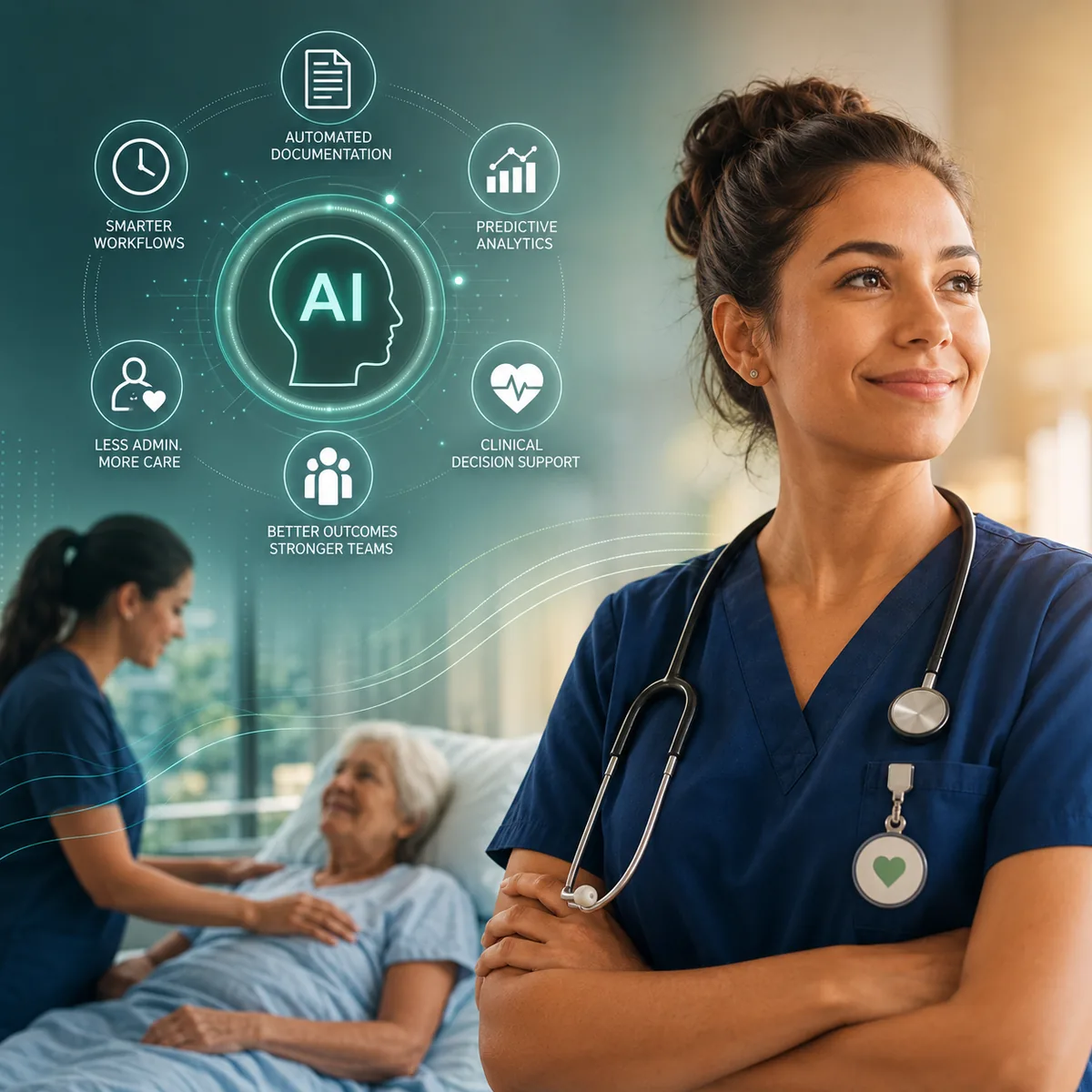
Key Takeaways
- AI helps reduce nurse burnout by eliminating repetitive administrative work, not by replacing clinical judgment.
- The greatest benefit of AI is reducing cognitive load so nurses regain the attention that patient care requires.
- Ambient AI and intelligent documentation tools let nurses spend more time with patients and less time charting after hours.
- Predictive AI can support earlier detection of patient deterioration while keeping nurses in control.
- Human-in-the-loop AI ensures nurses review, approve, and remain accountable for every clinical decision.
- AI alone won't solve the nursing shortage, but it can improve retention by removing a top driver of burnout: excessive documentation.
💡 Quick Answer: AI helps reduce nurse burnout by automating documentation, streamlining workflows, supporting clinical decision-making, and reducing administrative burden. Rather than replacing nurses, AI allows clinicians to spend more time with patients and less time on paperwork.
Nurses have always worked under pressure. But today's challenge isn't simply caring for patients.
It's caring for patients while managing an ever-growing list of administrative responsibilities: documentation, electronic health records (EHRs), medication reconciliation, care coordination, compliance, quality reporting, insurance requirements, and constant interruptions.
Many nurses now spend nearly as much time documenting care as they do delivering it. The result is a profession experiencing unprecedented levels of burnout, and healthcare leaders around the world are now asking an important question: can AI help reduce nurse burnout?
The answer is increasingly yes, but only when AI is designed to support nurses rather than replace them.
Burnout Isn't Just About Long Hours
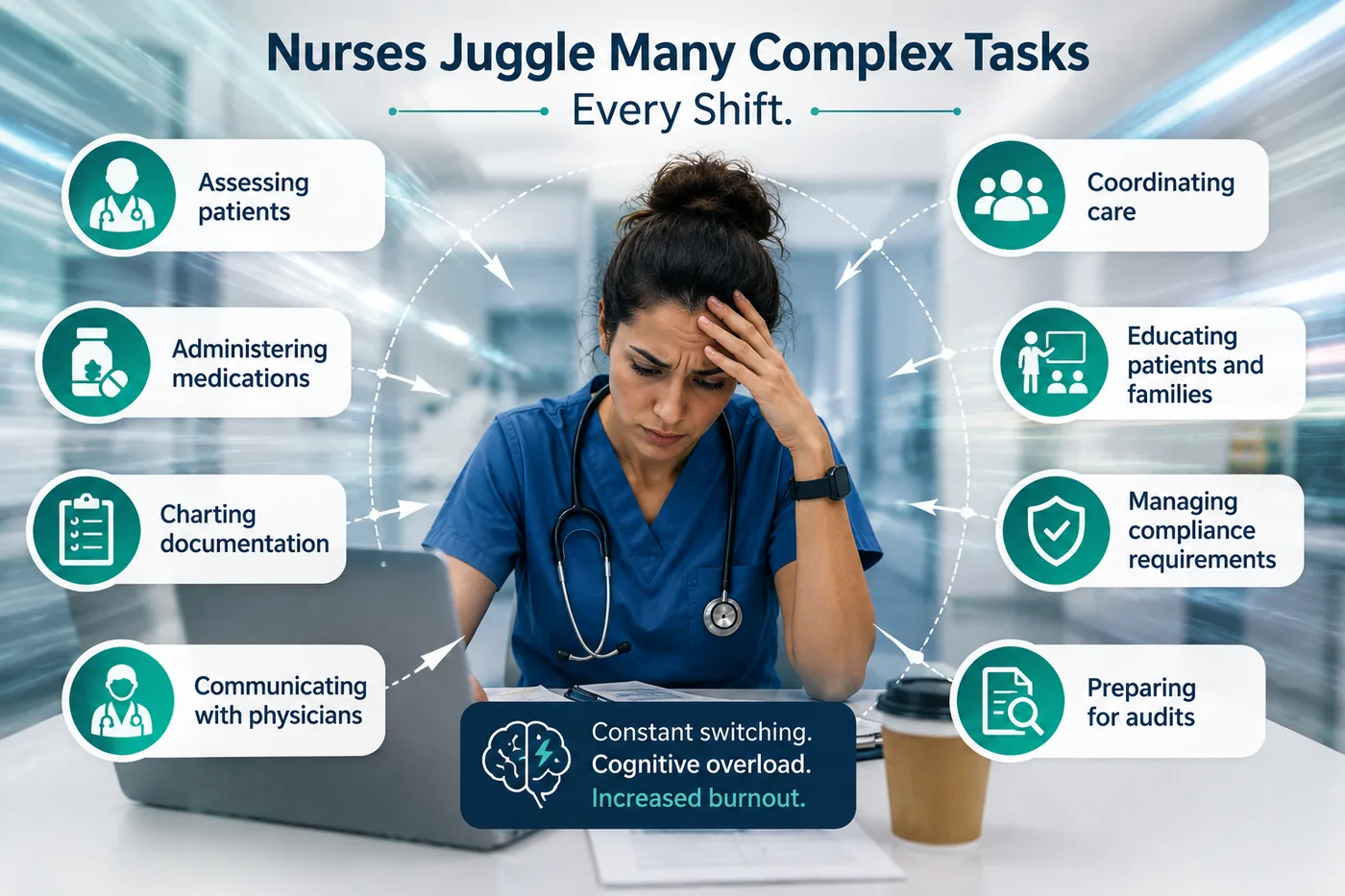
Every shift asks nurses to switch between competing cognitive demands, and that constant context switching is exhausting.
Burnout is often blamed on staffing shortages, overtime, or difficult patients. While those factors certainly matter, experienced nurses describe something deeper: cognitive overload.
Every shift requires nurses to constantly switch between multiple complex tasks: assessing patients, administering medications, charting documentation, communicating with physicians, coordinating care, educating patients and families, managing compliance requirements, and preparing for audits. Every interruption forces the brain to refocus.
Every new screen demands another decision. Over time, this constant context switching becomes mentally exhausting.
Burnout isn't simply about working longer. It's about carrying too many competing cognitive demands at once.
Documentation Has Become Nursing's "Second Shift"
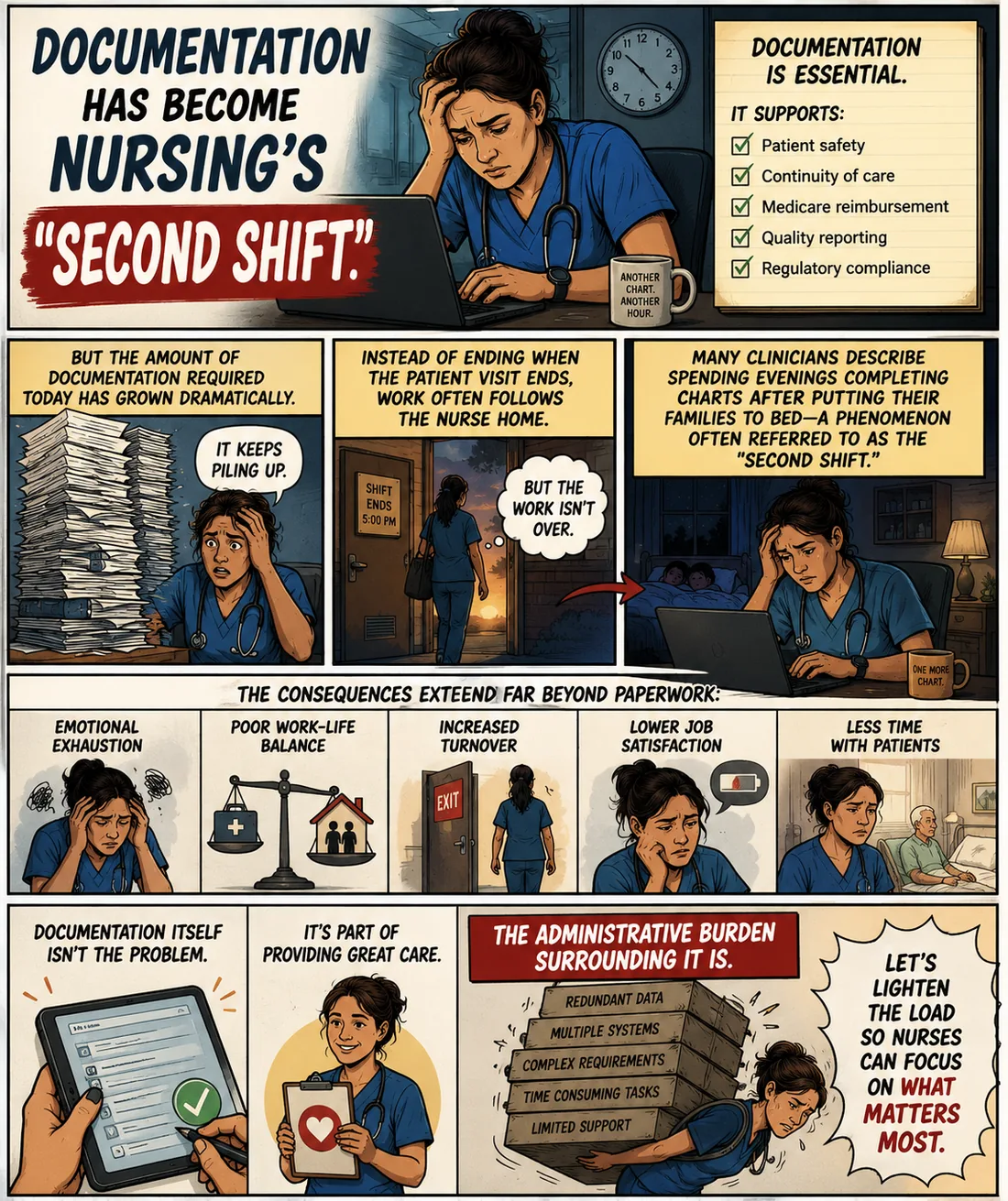
Documentation itself isn't the problem, the administrative burden surrounding it is. For many nurses it has become an unpaid second shift.
Documentation is essential. It supports patient safety, continuity of care, Medicare reimbursement, quality reporting, and regulatory compliance.
But the amount of documentation required today has grown dramatically.
Instead of ending when the patient visit ends, work often follows the nurse home. Many clinicians describe spending evenings completing charts after putting their families to bed, a phenomenon often referred to as the "second shift." The consequences extend far beyond paperwork: emotional exhaustion, poor work-life balance, increased turnover, lower job satisfaction, and less time with patients.
Documentation itself isn't the problem. The administrative burden surrounding it is.
AI for Nurses Should Reduce Cognitive Load, Not Replace Clinical Judgment
One of the biggest misconceptions about healthcare AI is that it's trying to replace nurses. It isn't.
The most effective AI solutions are designed to remove repetitive administrative work, not clinical expertise.
Modern AI for nurses can generate documentation from voice conversations, create structured visit notes, summarize patient encounters, identify missing documentation, suggest complete narratives, organize clinical information, reduce duplicate charting, and support compliance workflows.
Instead of spending valuable time typing, nurses can spend more time observing, listening, educating, and caring for patients. Simply put: AI should replace documentation, not nursing judgment.
AI Gives Nurses Back Their Cognitive Space
Perhaps the greatest benefit of AI isn't speed. It's attention.
Clinical AI strategist and former bedside nurse Jennifer Ngure describes nursing intuition as pattern recognition built through thousands of patient encounters, not magic.
Experienced nurses often recognize subtle warning signs before vital signs or laboratory results change. They notice slight changes in skin color, differences in breathing, changes in speech, altered behavior, family concerns, and subtle cognitive decline.
These observations don't always fit neatly into structured documentation, yet they frequently make the difference between early intervention and a medical emergency.
When AI removes administrative distractions, nurses regain the cognitive space needed to make these life-saving observations.
Can AI Help Detect Patient Deterioration Earlier?
Artificial intelligence is already transforming clinical decision support. Modern AI systems analyze vital signs, laboratory trends, medication history, nursing assessments, and historical patient data to identify subtle patterns that may indicate patient deterioration hours before traditional warning systems.
Several health systems are already piloting predictive AI models that alert clinicians when patients may be at risk for complications such as falls, sepsis, or rapid deterioration. Importantly, these tools don't replace nursing assessment.
They depend on high-quality nursing documentation and experienced clinicians to interpret the findings. AI amplifies nursing expertise; it doesn't replace it.
How Is Ambient AI Changing Nursing Documentation?
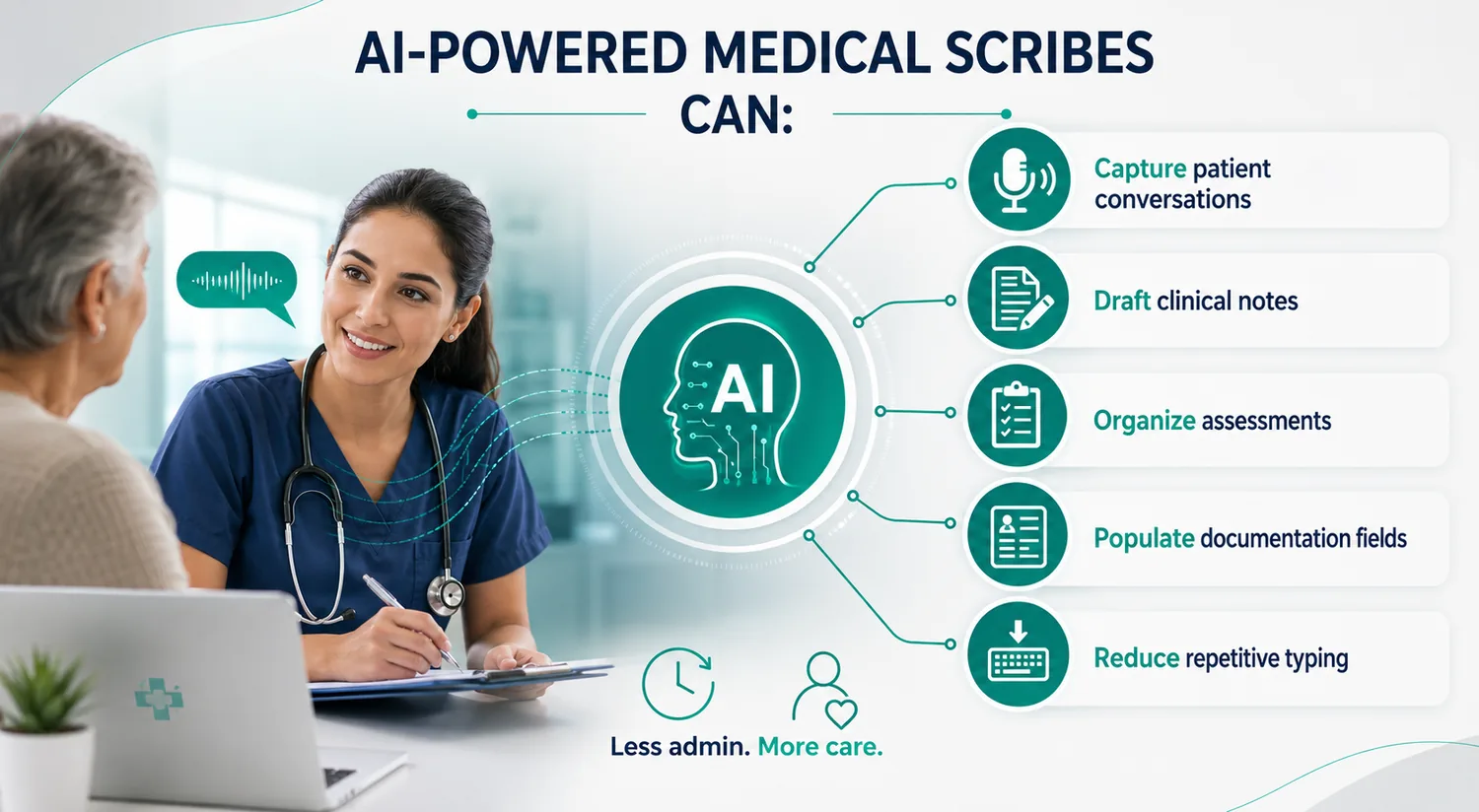
Ambient AI medical scribes work quietly in the background so clinicians can stay engaged with patients instead of the keyboard.
One of the fastest-growing innovations in healthcare is Ambient AI. Unlike traditional documentation systems, Ambient AI listens to clinician-patient conversations (with appropriate consent), understands clinical context, and automatically generates structured documentation.
These AI-powered medical scribes can capture patient conversations, draft clinical notes, organize assessments, populate documentation fields, and reduce repetitive typing. Instead of spending hours entering information into an EHR, nurses can remain engaged with patients while AI handles much of the documentation process.
This shift allows technology to quietly work in the background while clinicians stay focused on care.
AI Alone Won't Solve the Nursing Shortage
Artificial intelligence is not a cure for the nursing workforce crisis. Jennifer Ngure highlights an important reality: many new graduate nurses leave the profession within their first few years because they're overwhelmed, under-supported, and expected to perform before they've developed confidence and clinical judgment.
Technology cannot replace mentorship. It cannot replace healthy workplace culture.
It cannot replace experienced preceptors. But AI can remove unnecessary administrative work so experienced nurses have more time to teach, mentor, and support the next generation of clinicians.
Reducing burnout is one step toward improving nurse retention.
Why Home Health Nurses May Benefit Even More
Home health presents a unique challenge. Unlike hospitals, home health nurses often care for the same patients for weeks or months.
That continuity allows clinicians to notice subtle changes that technology alone may never detect.
They recognize changes in mobility, appetite, cognition, medication adherence, caregiver stress, the home environment, and emotional well-being. These observations are often the earliest indicators that something isn't right.
AI should protect that relationship, not interrupt it. By reducing documentation burden, home health nurses can spend more time observing patients and less time completing paperwork after hours.
Human-in-the-Loop: The Future of Healthcare AI
Successful healthcare AI follows one essential principle: human in the loop. That means AI drafts documentation, nurses review it, nurses approve it, nurses make every clinical decision, and nurses remain accountable for patient care.
Technology becomes an intelligent assistant, not the decision-maker. This balance preserves patient safety while dramatically reducing administrative workload.
Can AI Improve Nurse Retention?
Burnout remains one of the leading reasons nurses leave the profession. Healthcare organizations often focus heavily on recruitment while overlooking the daily frustrations causing experienced clinicians to walk away.
Reducing unnecessary administrative work can improve job satisfaction, documentation quality, work-life balance, time with patients, staff engagement, and retention. AI alone won't solve the nursing shortage, but it can remove one of the biggest contributors to burnout: excessive documentation.
The Future of AI in Nursing
Healthcare leaders shouldn't ask, "Can AI replace nurses?" They should ask, "How can AI help nurses spend more time being nurses?"
The future belongs to technology that strengthens, not replaces, clinical expertise. The best AI will quietly handle repetitive administrative tasks while giving clinicians something increasingly rare: time.
Time to observe. Time to listen.
Time to educate. Time to think.
Time to care.
As Jennifer Ngure reminds us, the moments that change patient outcomes often happen long before a monitor alarms or lab values become abnormal. They happen when an experienced nurse notices something isn't right.
The future of healthcare isn't about replacing that intuition. It's about giving nurses more opportunities to use it.
🎧 Listen to the full conversation. This article draws on clinical AI strategist Jennifer Ngure's episode of the Inside Home Health podcast, Why Nurses Stop Using AI Tools After 90 Days, on why AI tools fail in the first 90 days after go-live and what it takes to make adoption actually stick on the floor. Watch it below.
🚀 See what less documentation feels like. Copper Digital's AI Documentation Agent captures the visit by voice, photo, or tap and drafts notes and OASIS-E in real time, with a nurse reviewing and approving every record before it reaches billing. Explore AI tools for home health nurses, or book a demo.
🎓 Go deeper with peers. Join our Home Health Mastermind Skool community for training on documentation workflows, OASIS accuracy, compliance, and practical strategies to reduce charting burden and protect clinician well-being.
Final Thoughts
Healthcare has never needed nurses more than it does today. But supporting nurses means doing more than hiring more staff.
It means removing the barriers that prevent them from practicing at the top of their profession.
Artificial intelligence cannot replace compassion, experience, advocacy, or intuition. What it can do is eliminate unnecessary administrative work so nurses can focus on the moments that matter most.
Because the future of healthcare isn't about replacing nurses with AI. It's about using AI to help nurses care for patients the way they always wanted to.
Home Health Documentation Playbook
The complete guide to OASIS-E, Medicare compliance, PDGM, and AI-assisted documentation. Learn how top agencies reduce documentation time without sacrificing compliance.
Bottom Line
AI reduces nurse burnout not by replacing nurses but by removing the administrative burden around care, giving clinicians back the time, attention, and cognitive space to do what only they can do.

Jennifer Ngure is a clinical AI strategist and nursing informatics leader who started at the bedside as a registered nurse. She helps health systems move from AI pilot to frontline adoption through workforce readiness, governance, and clinician-centered implementation.
Frequently asked
Frequently asked questions
Yes. AI helps reduce nurse burnout by automating documentation, reducing repetitive administrative tasks, streamlining workflows, and allowing nurses to spend more time providing direct patient care.
Join the conversation
Leave a comment
No comments yet. Be the first to share your thoughts.
Related reading
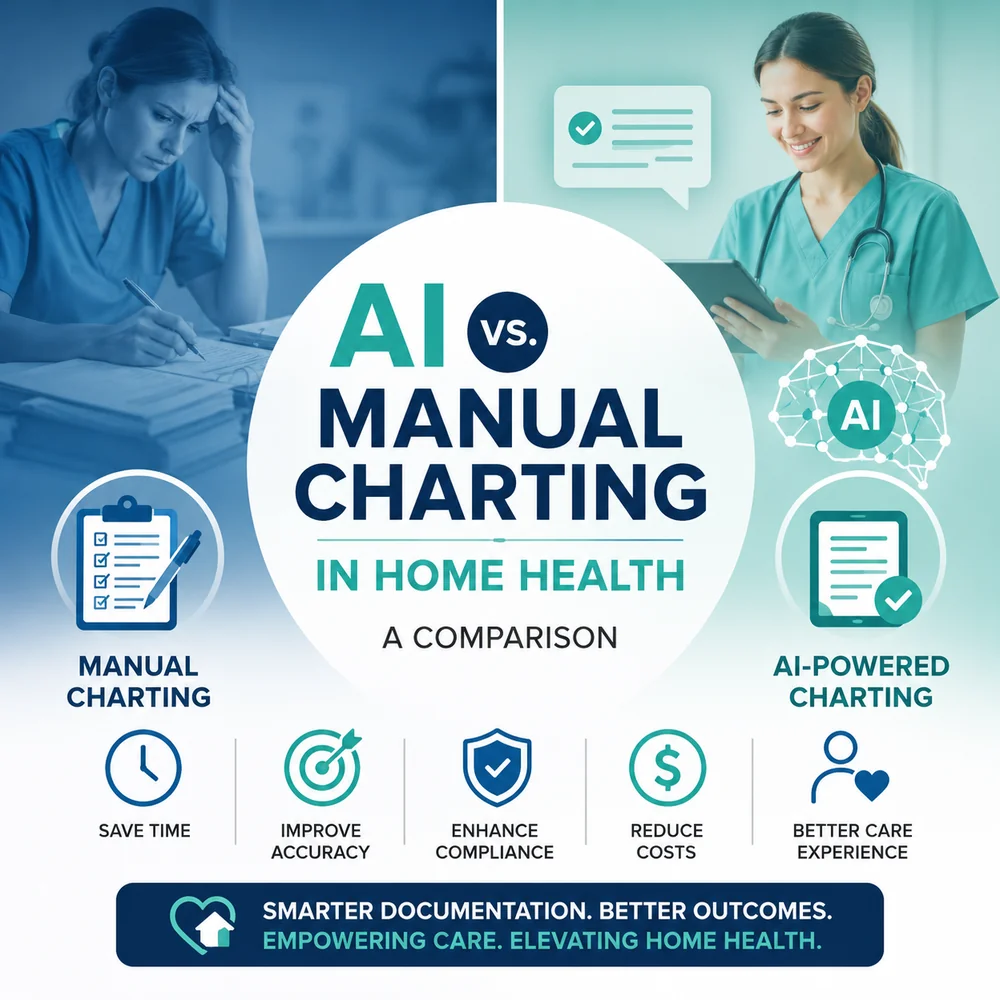
AI vs. Manual Charting in Home Health: An Honest Comparison
Manual charting has been the home health standard for decades, but AI-assisted documentation is changing how notes get done. This honest comparison weighs both across time, accuracy, compliance, cost, clinician experience, and patient care, and explains why the best workflows combine AI efficiency with clinician judgment.
Home Health Documentation Workflow: What Actually Slows Nurses Down?
Home health documentation is one of the biggest administrative burdens clinicians carry, but it is rarely slow for the reasons people assume. The problem usually isnt the nurse, its the workflow surrounding the note: medication reconciliation, OASIS, duplicate entry across disconnected systems, interruptions, and after-hours charting. Here is what actually slows nurses down and how to fix it.
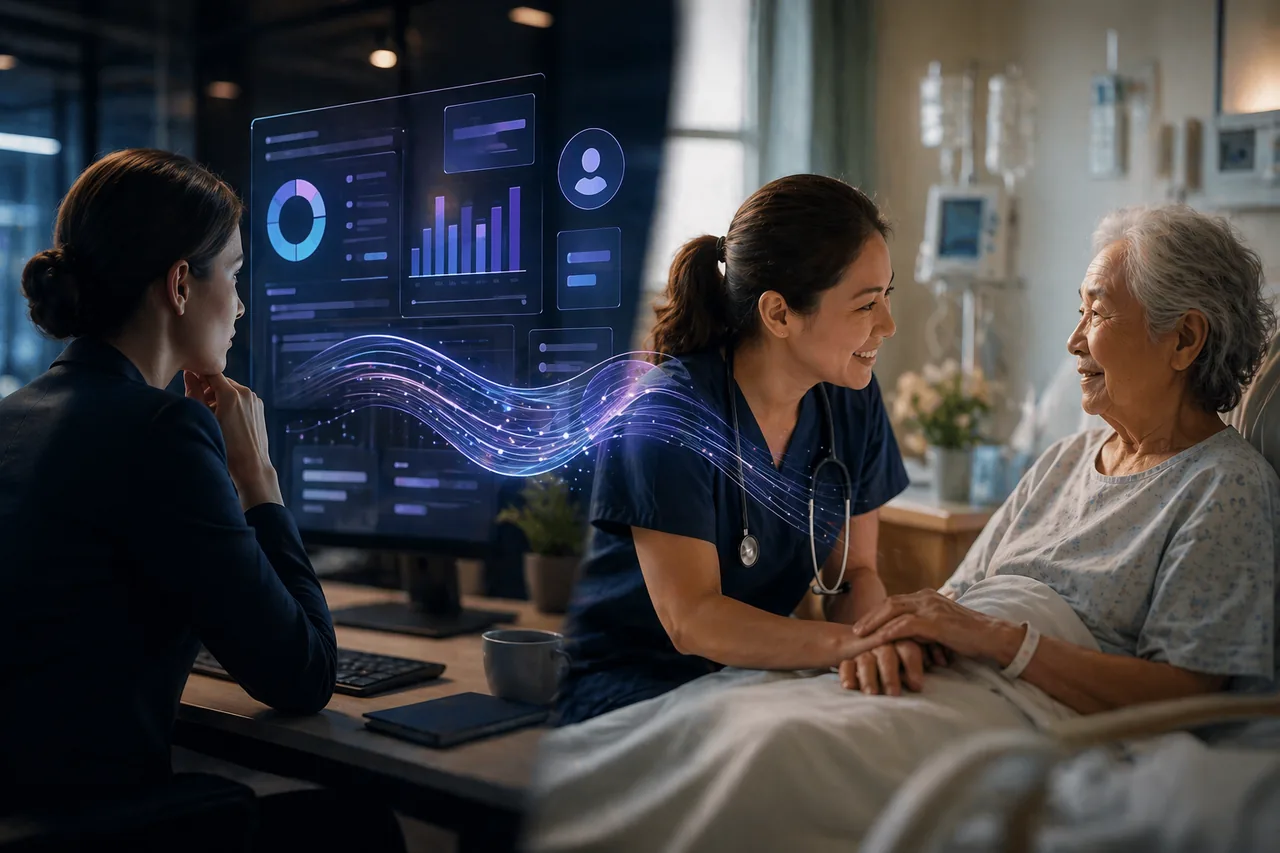
The Most Powerful Skill in Nursing No One Trains
Clinical intuition is not a mystical gift. It is pattern recognition operating faster than conscious thought, and it flags patient deterioration before the monitors catch up. Critical care nurse Desiree Paige on why the system silences the most powerful skill in nursing, and why reducing documentation burden is a patient safety intervention.