
How Ambient AI Is Changing Clinical Documentation
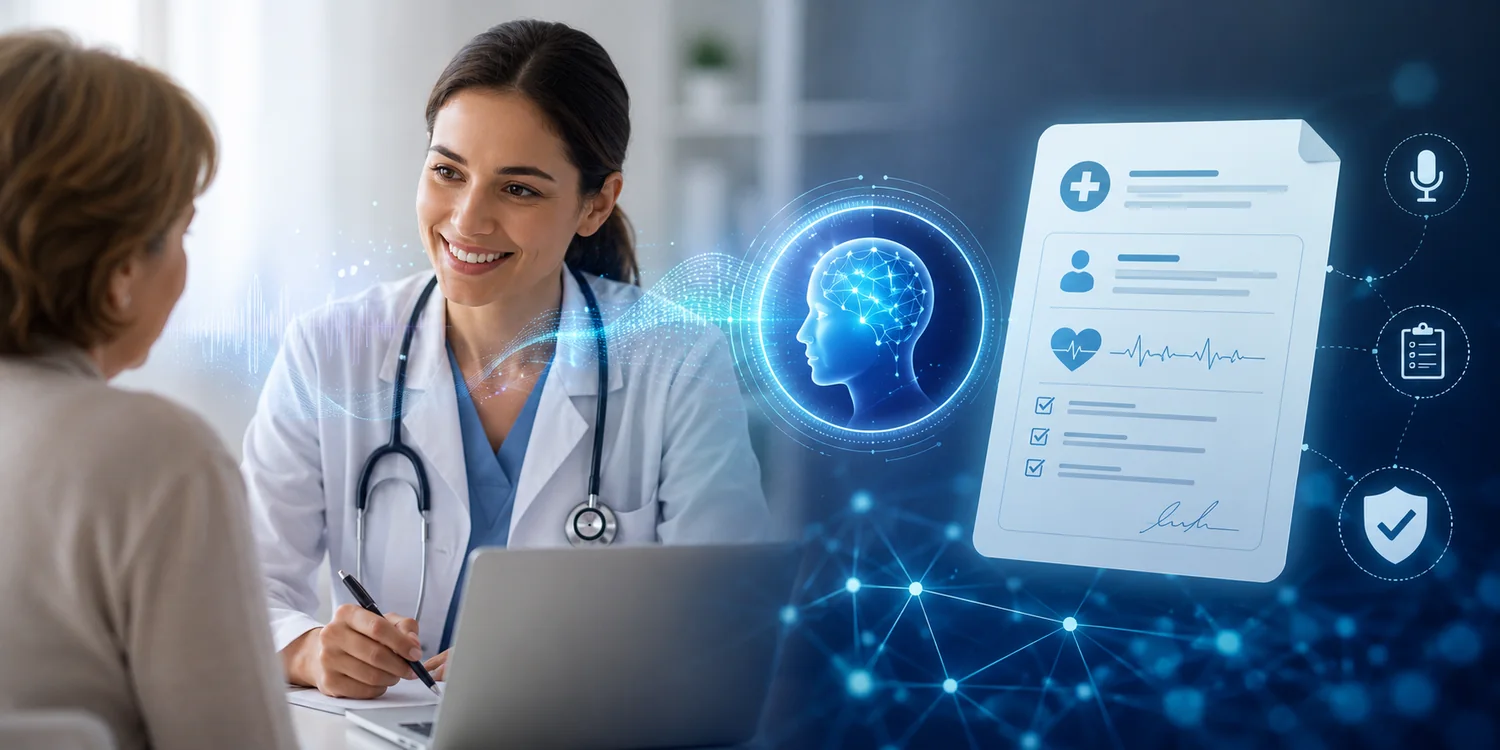
Ambient AI passively listens to patient-clinician conversations and automatically generates structured clinical documentation, using speech recognition, NLP, and large language models to capture symptoms, diagnoses, medications, and plans. It reduces after-hours charting and burnout while the clinician reviews and approves every note. In home health, it works best paired with an AI documentation agent that understands OASIS and referral workflows.
Key Takeaways
- Ambient AI goes beyond transcription to understand clinical context and generate structured notes.
- It reduces documentation burden, improves patient engagement, and cuts after-hours charting.
- Human oversight remains essential for accuracy, safety, and compliance.
- In home health, ambient AI works best paired with an agent that understands OASIS and referrals.
💡 Ambient AI passively listens to patient-clinician conversations and automatically generates structured clinical documentation. Using speech recognition, NLP, and large language models, it captures symptoms, diagnoses, medications, and plans, reducing after-hours charting and burnout while the clinician reviews and approves every note. In home health, it works best paired with an AI documentation agent that understands OASIS and referral workflows.
For decades, healthcare has struggled with one persistent problem:
Clinicians spend too much time documenting and not enough time caring for patients.
Whether it's physicians staying late to finish notes, nurses charting after 9 PM, or home health clinicians spending weekends completing OASIS assessments, documentation has become one of the biggest contributors to burnout.
A growing number of healthcare organizations are now turning to Ambient AI to solve this problem.
Instead of asking clinicians to manually type every note or spend hours completing documentation after the visit ends, Ambient AI quietly works in the background, capturing conversations, understanding context, and generating structured clinical notes automatically.
The goal isn't to replace clinicians.
The goal is to give them their time back.
What Is Ambient AI?
Ambient AI is technology that passively listens to patient-clinician conversations and automatically generates structured clinical documentation.
Unlike traditional speech-to-text tools, Ambient AI does much more than transcribe words. It uses technologies such as:
- Automated Speech Recognition (ASR)
- Natural Language Processing (NLP)
- Large Language Models (LLMs)
- Clinical reasoning algorithms
to understand:
- Symptoms
- Diagnoses
- Medications
- Assessments
- Treatment plans
- Follow-up instructions
The result is documentation that is often ready for review inside the electronic health record (EHR).
Think of it as a digital assistant quietly sitting in the room, helping complete documentation while the clinician focuses on the patient.
Why Clinical Documentation Needs to Change
Documentation requirements have grown significantly over the past decade.
Today's clinicians are responsible for:
- Regulatory reporting
- Quality measures
- Risk adjustment documentation
- Prior authorizations
- Detailed assessment forms
- Care coordination requirements
- Electronic health record documentation
The result?
Documentation often continues long after patient care ends.
Many clinicians refer to this after-hours work as 'pajama time', the hours spent charting at home after dinner or late into the evening.
This contributes to:
- Physician burnout
- Nurse burnout
- Staffing shortages
- Lower job satisfaction
- Delayed billing
- Increased documentation errors
Ambient AI is gaining momentum because it addresses one of healthcare's biggest pain points: the administrative burden of documentation.
How Ambient AI Works
Most Ambient AI platforms follow a similar workflow.
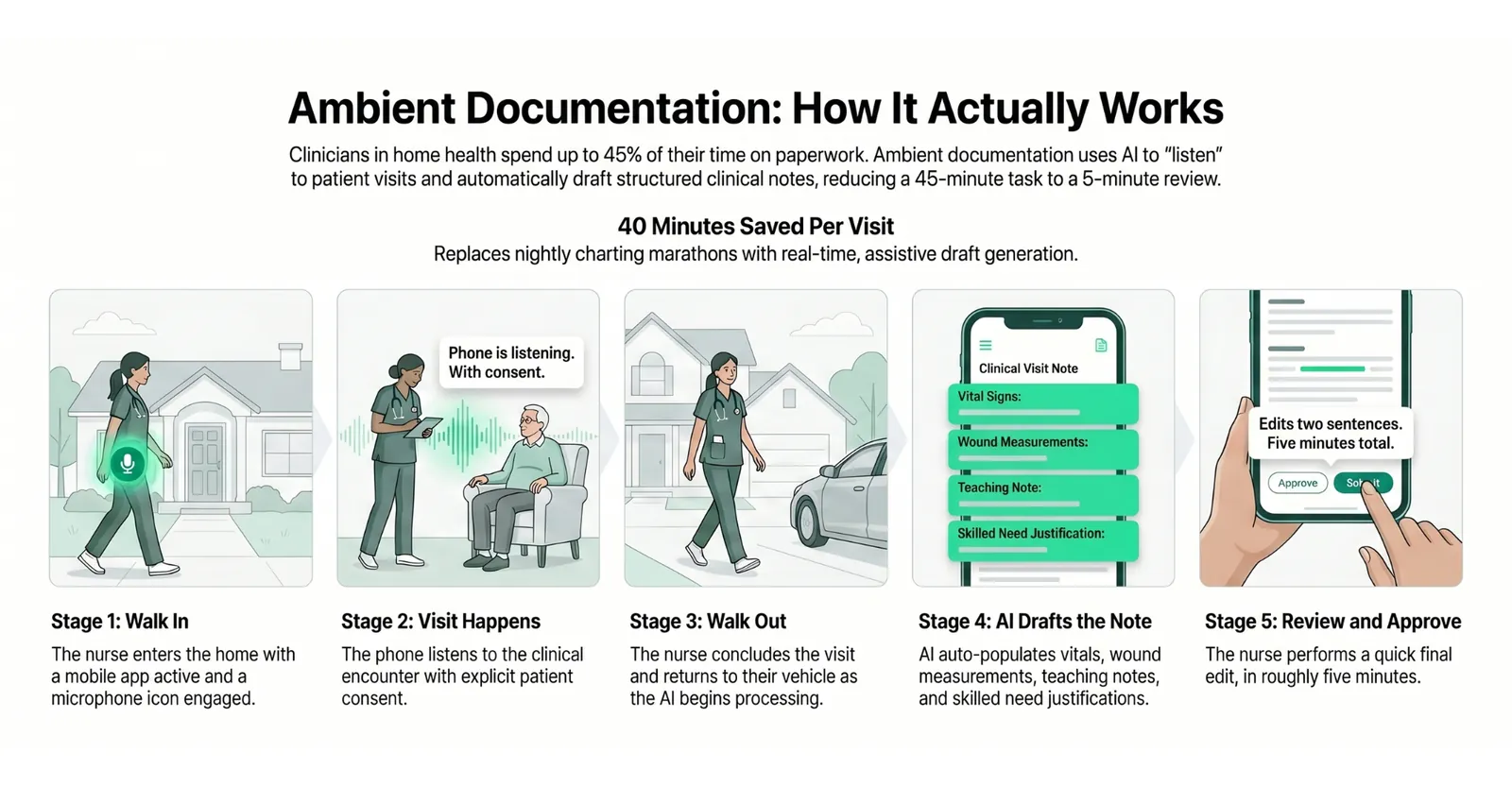
Ambient documentation in five stages: the AI listens, drafts the note, and the nurse reviews and approves.
Step 1: Capture the Conversation
The technology listens during the patient encounter through:
- Smartphones
- Tablets
- Mobile apps
- Microphones
- Virtual care platforms
Step 2: Understand Clinical Context
Artificial intelligence analyzes:
- Symptoms
- Diagnoses
- Medications
- Assessments
- Clinical decisions
- Follow-up recommendations
The AI identifies what information matters.
Step 3: Generate Documentation
The system automatically creates:
- SOAP notes
- Progress notes
- Visit summaries
- Care plans
- Assessment documentation
- Follow-up instructions
Step 4: Human Review
The clinician reviews, edits, and approves the documentation.
Human oversight remains essential for:
- Patient safety
- Clinical accuracy
- Regulatory compliance
Reclaiming Physician Time and Reducing Burnout
One of the biggest promises of Ambient AI is giving clinicians their time back.
Historically, documentation has forced physicians and nurses into hours of after-hours charting.
Platforms such as Copper Digital use advanced AI technologies to generate clinical documentation directly from conversations.
The result is often:
- Less administrative work
- Fewer hours spent charting at home
- More time for patient care
- Improved work-life balance
- Lower rates of burnout
Some organizations report saving significant amounts of documentation time each day by reducing manual note creation and post-visit chart completion.
Improving Patient Engagement
Documentation has created an invisible barrier between clinicians and patients.
Many providers spend portions of the visit:
- Looking at computer screens
- Clicking through templates
- Typing notes
- Completing documentation requirements
Ambient AI changes this dynamic.
Because documentation happens in the background, clinicians can:
- Maintain eye contact
- Listen more attentively
- Notice non-verbal cues
- Build stronger relationships
- Better explain care plans
For many providers, Ambient AI represents a return to the human side of medicine.
Streamlining Telehealth and Specialty Workflows
Ambient AI is also changing virtual care.
Telehealth visits often create documentation challenges because clinicians are simultaneously managing:
- Video technology
- Patient communication
- Documentation requirements
Ambient AI captures these conversations in real time and creates structured notes without disrupting the flow of care.
The technology is also becoming increasingly specialized.
Today, AI platforms are being designed for:
- Primary care
- Cardiology
- Orthopedics
- Behavioral health
- Home health
- Care management
As these systems evolve, they become better at understanding specialty-specific terminology and workflows.
The Rise of Ambient Clinical Intelligence
A newer term gaining popularity is:
Ambient Clinical Intelligence (ACI)
ACI goes beyond transcription by combining:
- Speech recognition
- Clinical reasoning
- Workflow automation
- EHR integration
- Documentation support
The technology doesn't simply write notes.
It helps clinicians complete documentation faster while reducing administrative burden.
How Ambient AI Benefits Clinicians
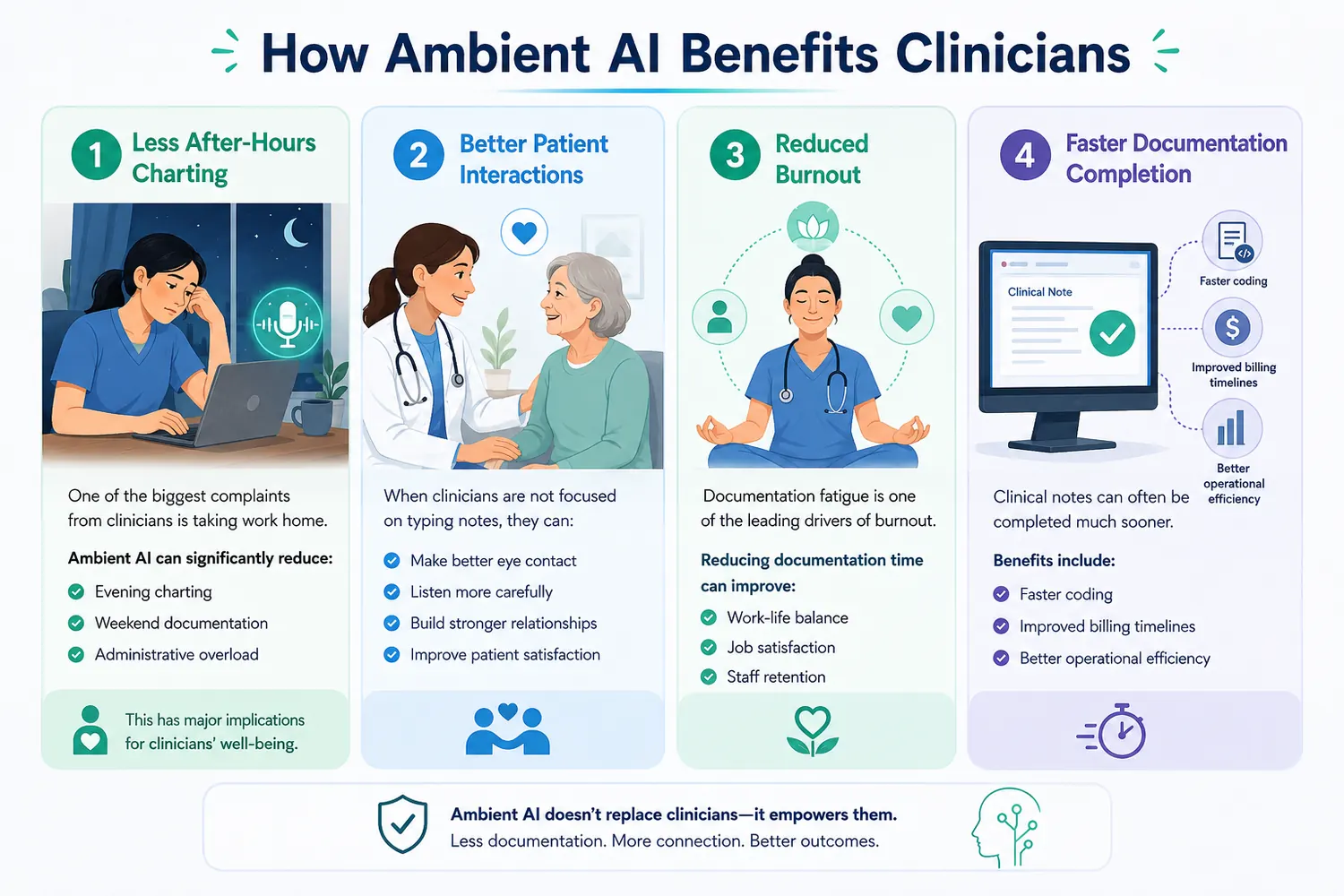
Four ways Ambient AI helps clinicians: less after-hours charting, better patient interactions, reduced burnout, and faster documentation.
1. Less After-Hours Charting
One of the biggest complaints from clinicians is taking work home.
Ambient AI can significantly reduce:
- Evening charting
- Weekend documentation
- Administrative overload
This has major implications for clinicians' well-being.
2. Better Patient Interactions
When clinicians are not focused on typing notes, they can:
- Make better eye contact
- Listen more carefully
- Build stronger relationships
- Improve patient satisfaction
3. Reduced Burnout
Documentation fatigue is one of the leading drivers of burnout.
Reducing documentation time can improve:
- Work-life balance
- Job satisfaction
- Staff retention
4. Faster Documentation Completion
Clinical notes can often be completed much sooner.
Benefits include:
- Faster coding
- Improved billing timelines
- Better operational efficiency
How Ambient AI Is Changing Home Health Documentation
Home health is one of the most documentation-intensive settings in healthcare.
Clinicians frequently manage:
- OASIS assessments
- Medication reconciliation
- Start of Care documentation
- Care plans
- Visit narratives
- Compliance requirements
Unlike clinic visits, home health clinicians often work independently and finish documentation after visits are complete.
This is why Ambient AI has enormous potential in home health.
Why Ambient AI Alone Is Not Enough for Home Health
While Ambient AI can capture conversations, home health documentation requires additional intelligence.
Home health workflows involve:
- Referral PDFs
- Medication lists
- OASIS logic
- Care plan generation
- Compliance requirements
- Structured EMR documentation
Simply generating a transcript is rarely sufficient.
Home health agencies need systems that understand:
- Clinical workflows
- OASIS requirements
- Documentation completeness
- Regulatory standards
This is where AI Documentation Agents are beginning to emerge.
These solutions go beyond transcription and help automate the entire documentation workflow.
Ambient AI vs Traditional Dictation
| Feature | Traditional Dictation | Ambient AI |
|---|---|---|
| Speech-to-text | ✅ | ✅ |
| Understands clinical context | ❌ | ✅ |
| Generates structured notes | Limited | ✅ |
| Works passively in the background | ❌ | ✅ |
| Supports workflow automation | Limited | Increasingly |
| Integrates with EHR systems | Sometimes | Often |
Accuracy Challenges and the Need for Human Oversight
Despite its promise, Ambient AI is not perfect.
AI-generated documentation can occasionally contain:
- Missing details
- Incorrect assumptions
- Incomplete clinical context
- Documentation omissions
- Factual inaccuracies
This is why human-in-the-loop review remains essential.
Clinicians should always:
- ✅ Review AI-generated notes
- ✅ Verify clinical accuracy
- ✅ Edit documentation as necessary
- ✅ Approve the final record
The goal of Ambient AI is not autonomous charting.
The goal is to help clinicians complete documentation faster while maintaining patient safety and documentation quality.
The Future of Clinical Documentation
Healthcare is moving toward a future where:
- Documentation happens in real time.
- Administrative burden decreases.
- Clinicians spend more time with patients.
- AI handles repetitive tasks.
- Human judgment remains central to care.
Ambient AI is becoming one of the most important technologies enabling this transformation.
Organizations that thoughtfully adopt these tools may see improvements in:
- Clinician satisfaction
- Documentation quality
- Operational efficiency
- Financial performance
- Patient experience
Final Thoughts
Ambient AI is not about replacing clinicians.
It is about removing friction from healthcare documentation.
The most successful implementations will combine:
- ✅ Artificial intelligence
- ✅ Human oversight
- ✅ Workflow understanding
- ✅ Clinical context
- ✅ Patient safety
As healthcare continues to evolve, Ambient AI is poised to become an essential part of modern clinical documentation, helping clinicians spend less time charting and more time caring for patients.
🚀 Curious how ambient AI works for home health documentation? Copper Digital pairs ambient capture with an AI Documentation Agent that understands OASIS, referral packets, and compliance, with a nurse reviewing and approving every note. Explore AI tools for home health nurses, or book a demo.
Bottom Line
Ambient AI listens during the visit and drafts structured clinical notes automatically, reducing after-hours charting while clinicians review and approve every record.

The Copper Clinical Team brings together nurses and clinical documentation specialists focused on home health, OASIS accuracy, and human-in-the-loop AI. They write about the tools and workflows helping clinicians reduce administrative burden and grow their careers.
Frequently asked
Frequently asked questions
AI in clinical documentation uses technologies such as speech recognition, natural language processing, and machine learning to capture conversations, identify clinically relevant information, and generate structured notes that clinicians can review and approve.
Join the conversation
Leave a comment
Related reading

The Hidden Cost of Late Nursing Documentation
Late nursing documentation is far more than an administrative inconvenience. Delayed charting increases patient safety risks, creates handoff gaps, triggers claim denials and undercoding, raises legal and audit exposure, and accelerates nurse burnout and turnover, costing healthcare organizations millions. Most delays happen because nurses lack time to chart in real time, and AI and point-of-care documentation tools can give that time back.

The Biggest Documentation Challenges Home Health Nurses Face
Home health nurses face heavy documentation challenges: delayed point-of-care charting, excessive administrative time, clunky EHRs, OASIS complexity, strict reimbursement rules, working in isolation, endless QA corrections, and after-hours charting that drives burnout. Reducing documentation burden is now essential for clinician retention, patient outcomes, and agency financial performance.
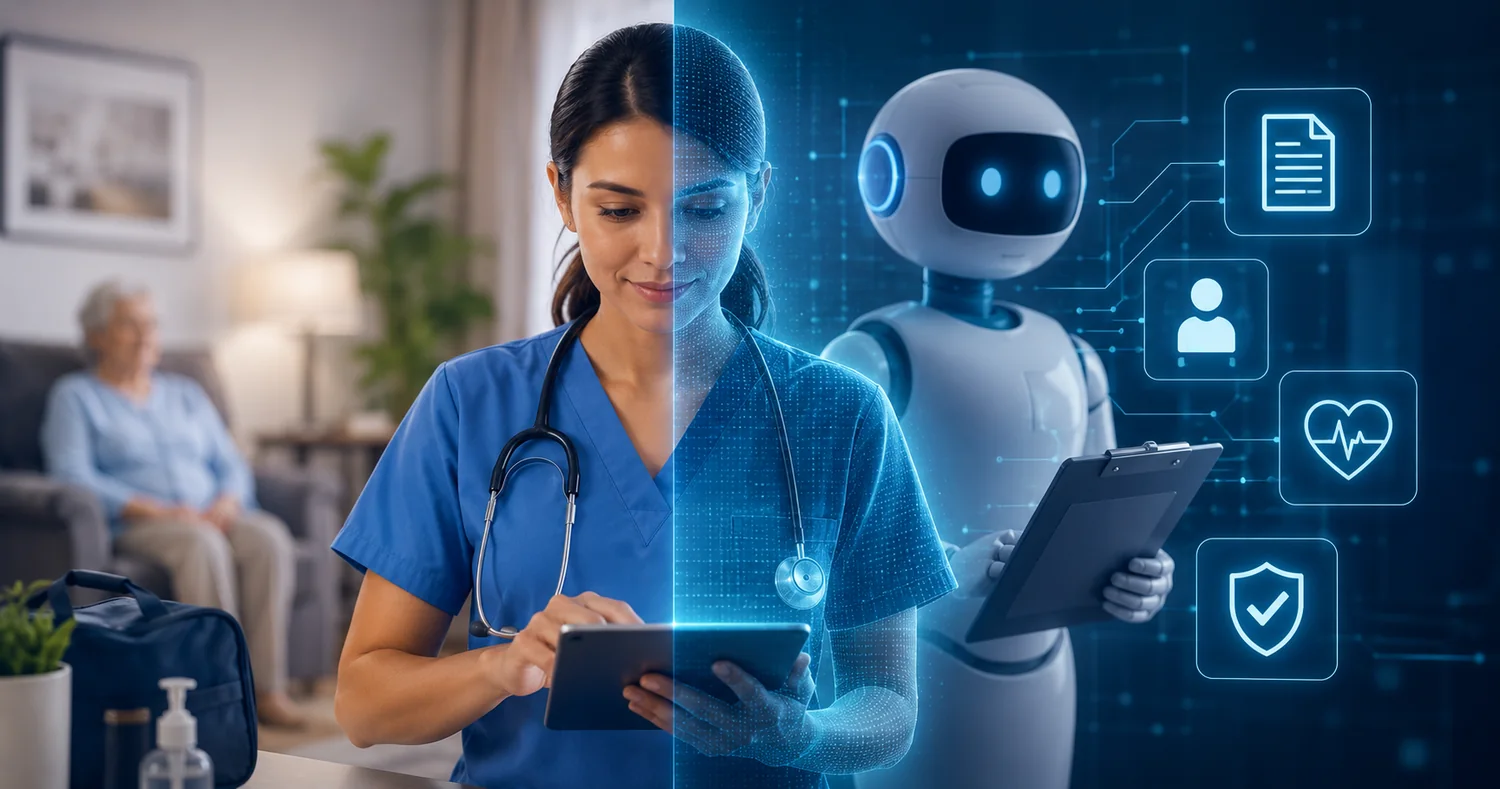
AI Scribe vs AI Documentation Agent: Which One Does Home Health Really Need?
An AI scribe transcribes conversations into notes. An AI Documentation Agent goes further: it understands clinical workflows, processes referral PDFs, drafts OASIS-E assessments, assists with medication reconciliation, surfaces missing documentation, and helps nurses complete compliant charts. For home health's OASIS complexity and referral processing, an AI Documentation Agent does more than a transcription-only scribe.