
Why Nurses Quit? The Real Reasons Behind the Nursing Shortage
Nurses are leaving the profession because of burnout, documentation overload, chronic staffing shortages, loss of autonomy, mental health strain, workplace violence, and better non-bedside opportunities. This isn't a shortage of people who care, it's a shortage of systems that support them. Solving it means reducing administrative burden and building healthcare around clinicians.

Key Takeaways
- Burnout, driven heavily by documentation, is the top reason nurses leave the profession.
- Loss of autonomy, mental-health strain, and workplace safety concerns push nurses toward the exit.
- Non-bedside careers in informatics, tech, and healthcare AI offer flexibility nurses now prioritize.
- Solving the shortage means reducing administrative burden, not just hiring more nurses.
💡 Nurses are leaving the profession because of burnout, documentation overload, chronic staffing shortages, loss of autonomy, mental health strain, workplace violence, and better non-bedside opportunities. This isn't a shortage of people who care, it's a shortage of systems that support the people providing care. Solving it means reducing administrative burden and building healthcare around clinicians, not forcing clinicians to adapt to broken systems.
Healthcare systems across the world are facing one of their biggest workforce crises in decades.
Hospitals are understaffed. Home health agencies struggle to recruit clinicians.
Experienced nurses are retiring early, and younger nurses are leaving the profession within just a few years of entering it.
The question healthcare leaders keep asking is:
Why are nurses leaving the profession?
The answer is complicated, but one thing is clear:
This isn't a shortage of people who care. It's a shortage of systems that support the people providing care.
From documentation overload to emotional exhaustion, several factors are driving nurses away from the bedside.
Let's explore the real reasons behind today's nursing shortage.
1. Burnout has Reached a Breaking Point
Burnout has become one of the biggest reasons nurses leave the profession.
Nursing has always been physically and emotionally demanding, but the last several years have pushed many clinicians beyond their limits. High patient volumes, staffing shortages, and increasing administrative responsibilities have created an environment where many nurses feel they are constantly giving without having enough support in return.
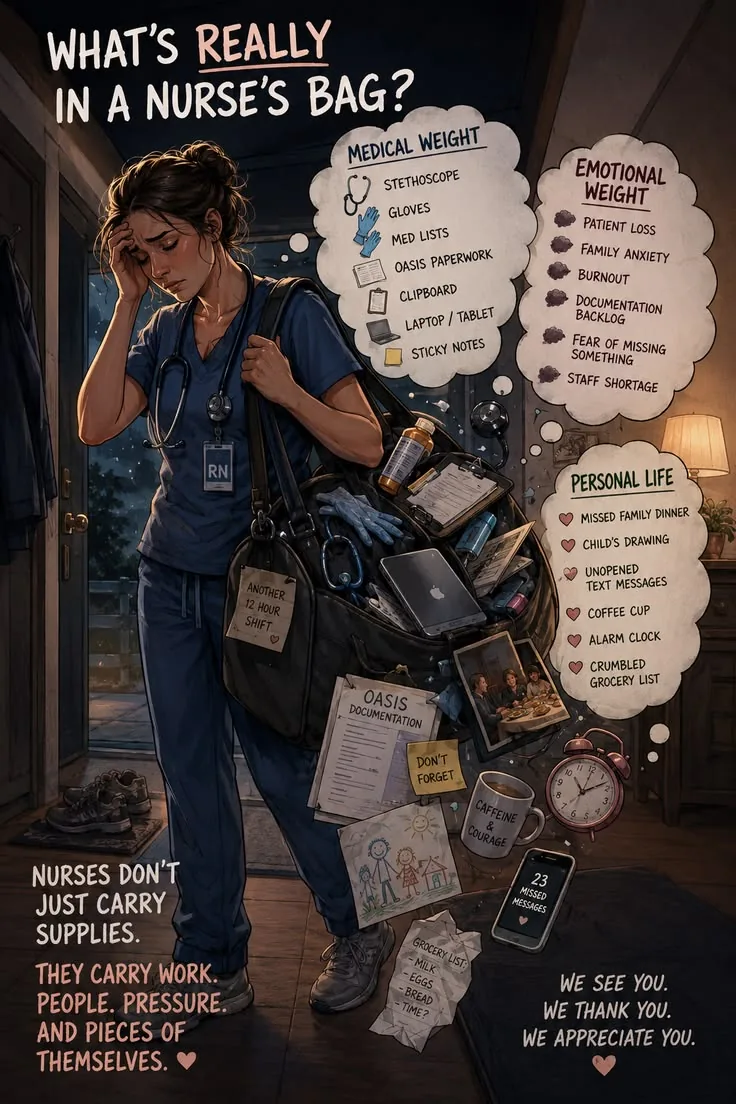
Nurses don't just carry supplies. They carry work, people, pressure, and pieces of themselves.
Burnout isn't simply about feeling tired after a long shift. It is chronic physical and emotional exhaustion that affects job satisfaction, patient care, and long-term career decisions.
Many nurses report:
- Emotional exhaustion.
- Compassion fatigue.
- Chronic stress.
- Anxiety and depression.
- Difficulty maintaining work-life balance.
The result is a workforce that increasingly feels overwhelmed and unsupported.
Many nurses don't leave because they no longer care about patients.
They leave because they can no longer sustain the pace.
2. Documentation is Taking over Patient Care
One of the most frequently cited frustrations among nurses today is documentation.
Many clinicians entered healthcare to care for people, not spend hours completing forms, updating records, and navigating complex electronic systems.
In home health, especially, documentation often extends long after the patient visit has ended.
Nurses routinely spend evenings:
- Completing visit notes.
- Updating OASIS assessments.
- Responding to QA corrections.
- Finishing compliance requirements.
- Catching up on charting after hours.
This phenomenon has become known as 'pajama time' i.e., doing documentation late at night after the workday should already be over.
For many clinicians, documentation now takes longer than patient care itself.
When every shift continues long after the patient visit ends, burnout becomes inevitable.
3. Staffing Shortages Create an Endless Cycle
The nursing shortage has become a self-perpetuating problem. As more nurses leave the profession, the workload on the remaining workforce continues to increase, creating even greater stress and accelerating burnout.
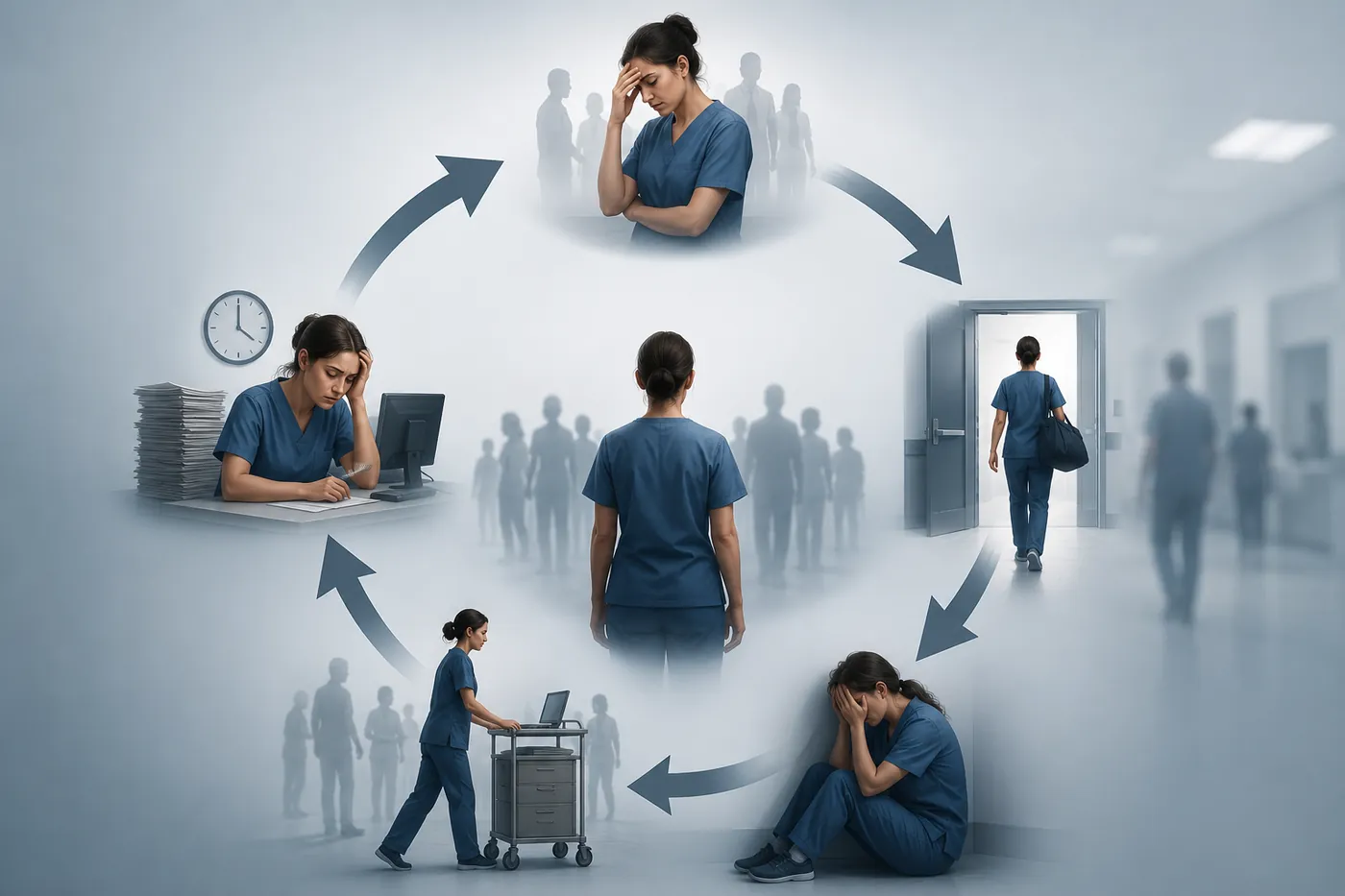
Fewer nurses lead to heavier workloads, heavier workloads lead to burnout, and burnout leads to more resignations.
Healthcare organizations across hospitals, home health agencies, and long-term care settings are struggling to fill open positions. In many facilities, nurses are caring for more patients than ever before while also managing increasing documentation and administrative responsibilities.
The consequences are significant:
- Higher patient-to-nurse ratios.
- Mandatory overtime.
- Increased emotional exhaustion.
- More missed breaks and extended shifts.
- Declining job satisfaction.
This creates a dangerous cycle.
Fewer nurses lead to heavier workloads. Heavier workloads lead to burnout.
Burnout leads to more resignations.
For many healthcare leaders, solving the nursing shortage isn't simply about hiring more people; it's about creating environments where nurses actually want to stay.
To dive deeper into this issue, our Home Health Mastermind course, Mastering the Home Health Ecosystem, includes Module 9.3: The Workforce Crisis, which explores why staffing shortages continue to worsen and what agencies can do to improve nurse retention.
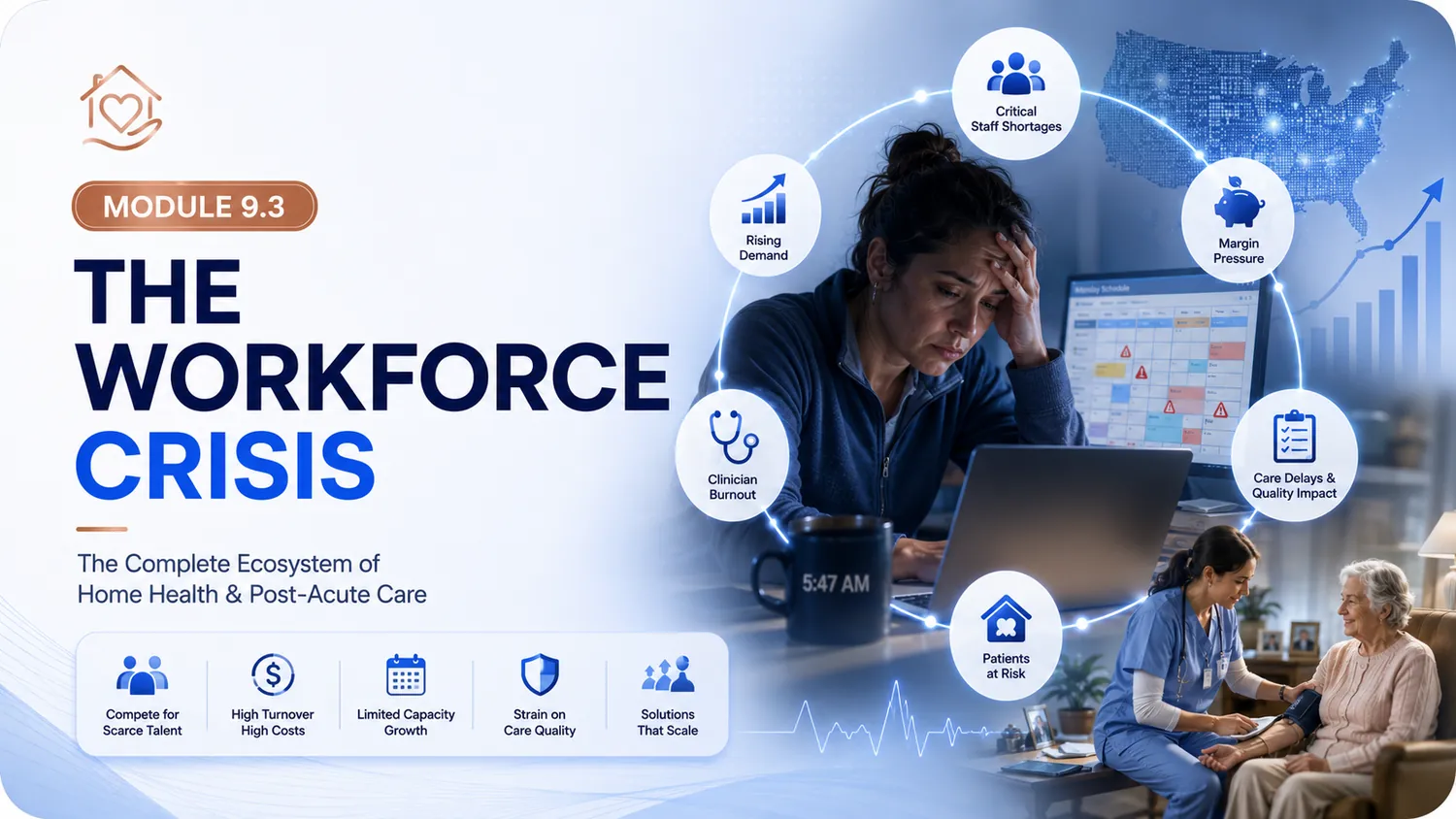
Module 9.3: The Workforce Crisis, from the Home Health Mastermind course, breaks down the staffing crisis and how agencies can respond.
Understanding the workforce crisis is essential to building a sustainable future for home health.
4. Nurses Feel they have Lost Control over their Work
One of the biggest contributors to nurse dissatisfaction is the growing feeling that they no longer have control over how they practice.

Many nurses now spend more of the day navigating systems than practicing at the top of their license.
Nursing has traditionally been a highly autonomous profession that relies on clinical judgment, patient relationships, and professional decision-making. However, many nurses now spend a significant portion of their day navigating systems, checking boxes, and meeting administrative requirements.
Instead of focusing on patient care, many clinicians feel consumed by:
- Documentation requirements.
- Productivity expectations.
- Staffing shortages.
- Compliance tasks.
- Technology frustrations.
- Administrative reporting.
The result is a growing disconnect between why nurses entered healthcare and what their daily work actually looks like.
When clinicians feel like they are spending more time serving systems than serving patients, it becomes increasingly difficult to maintain long-term engagement with the profession.
A lack of autonomy doesn't just affect job satisfaction, it affects retention.
5. Mental Health Challenges are Growing
Nursing is one of the most emotionally demanding professions in the world.
Every day, nurses witness suffering, grief, trauma, and life-changing events. They support patients and families during some of their most difficult moments while often suppressing their own emotional needs.
Over time, this emotional burden accumulates.
Many nurses report experiencing:
- Chronic stress.
- Anxiety.
- Depression.
- Compassion fatigue.
- Secondary traumatic stress.
- Emotional exhaustion.
The COVID-19 pandemic further highlighted the mental health challenges facing healthcare workers, but these issues existed long before the pandemic and continue today.
Unfortunately, many healthcare environments still lack adequate mental health resources and support systems for clinicians.
The expectation that nurses should continuously care for others without receiving care themselves has become one of the hidden drivers of the nursing workforce crisis.
Protecting nurses' mental health is no longer optional, it's essential for the future of healthcare.
6. Violence and Safety Concerns Continue to Increase
Workplace violence has become an alarming issue throughout healthcare.
Many nurses regularly face:
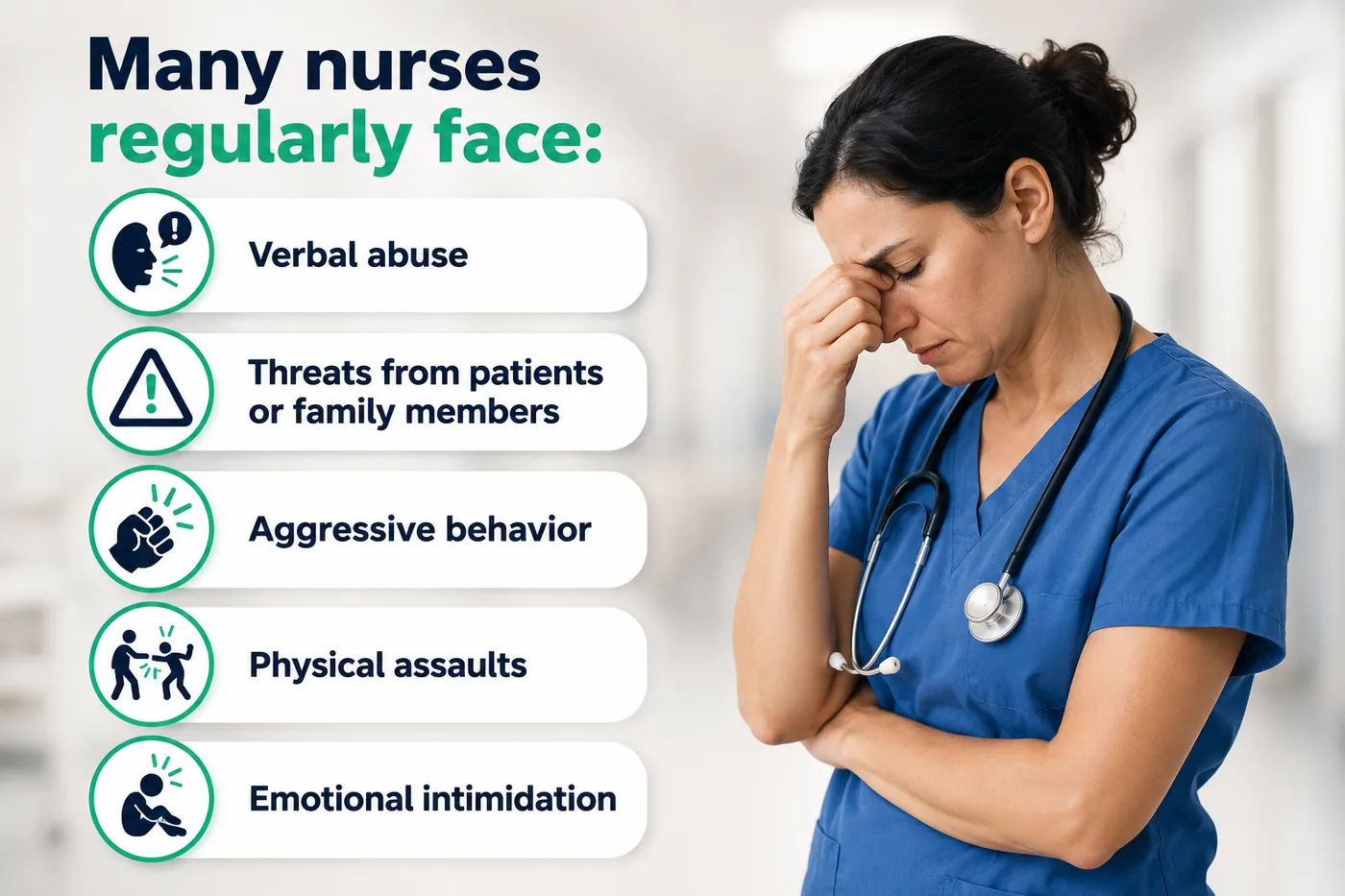
Safety concerns, both physical and psychological, significantly affect a nurse's decision to stay.
- Verbal abuse.
- Threats from patients or family members.
- Aggressive behavior.
- Physical assaults.
- Emotional intimidation.
These incidents occur across hospitals, emergency departments, home health settings, and long-term care facilities.
Safety concerns significantly impact a nurse's decision to remain in the profession.
No healthcare worker should feel unsafe while providing care.
Beyond physical safety, nurses are increasingly concerned about psychological safety; the ability to speak up, report concerns, and advocate for patients without fear of retaliation.
When nurses feel unsupported or unsafe, many begin considering careers outside traditional patient care settings.
Creating safer work environments is critical for improving nurse retention and rebuilding trust in the profession.
7. Better Career Opportunities Exist Outside the Bedside
The nursing profession has evolved dramatically over the last decade.
Today, nurses have more career opportunities than ever before, many of which offer better work-life balance, flexible schedules, and opportunities for professional growth.
Some of the fastest-growing non-bedside nursing careers include:
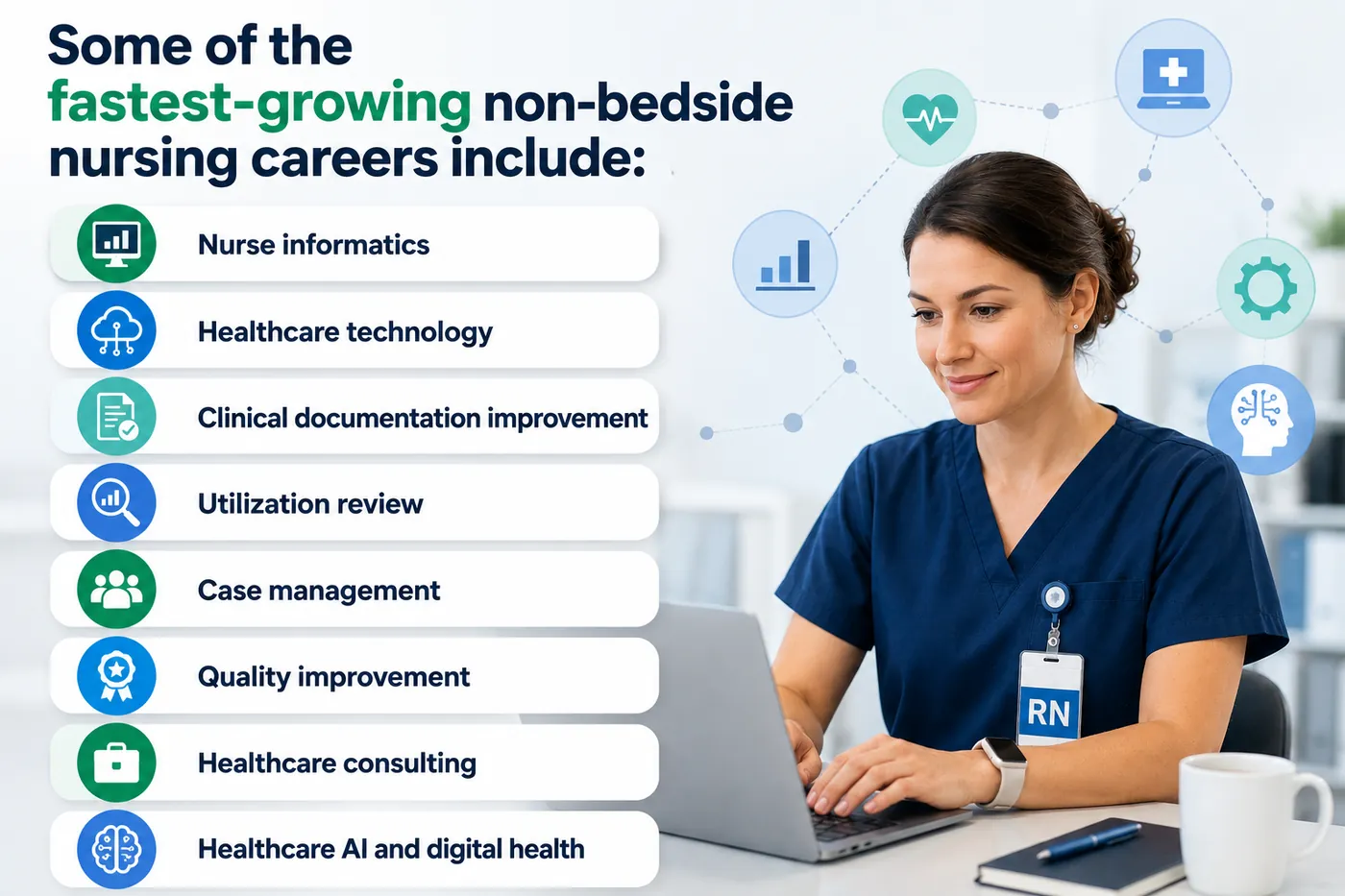
Talented nurses now have options, and many of them are non-bedside roles.
- Nurse informatics.
- Healthcare technology.
- Clinical documentation improvement.
- Utilization review.
- Case management.
- Quality improvement.
- Healthcare consulting.
- Healthcare AI and digital health.
Many nurses are discovering that their clinical expertise can be applied in entirely new ways outside traditional bedside roles.
These positions often provide:
- Remote work opportunities.
- Reduced physical demands.
- Greater flexibility.
- More predictable schedules.
- New learning opportunities.
This shift isn't necessarily a loss for healthcare innovation, but it does contribute to staffing shortages in direct patient care settings.
The reality is simple: talented nurses now have options.
And many are choosing careers that better align with the lives they want to build.
8. Generational Expectations Around Work are Changing
Today's nursing workforce has different expectations than previous generations.
Younger healthcare professionals increasingly prioritize:
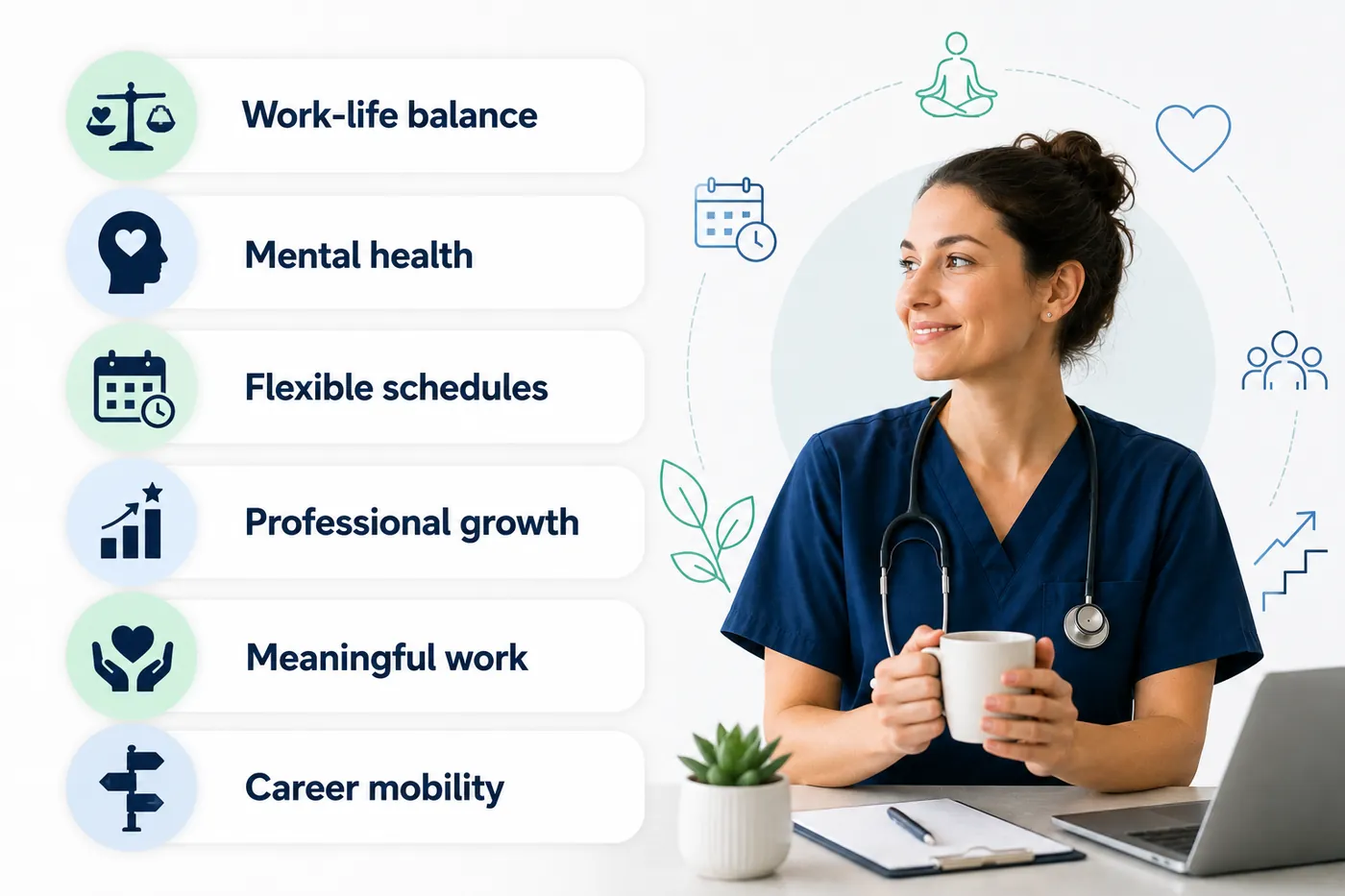
The rising workforce is redefining what a sustainable healthcare career should look like.
- Work-life balance.
- Mental health.
- Flexible schedules.
- Professional growth.
- Meaningful work.
- Career mobility.
Many are unwilling to accept the culture of chronic overtime, excessive administrative work, and burnout that previous generations often viewed as part of the profession.
This shift isn't a sign of reduced dedication.
It's a sign that the workforce is redefining what sustainable healthcare careers should look like.
Organizations that fail to adapt to these expectations may continue to experience higher turnover and greater recruitment challenges.
The future nursing workforce wants careers that are both impactful and sustainable.
Healthcare systems that recognize this shift will be better positioned to retain top talent.
9. Technology Often Creates More Work Instead of Less
Technology was supposed to make healthcare easier.
In many cases, it has done the opposite.
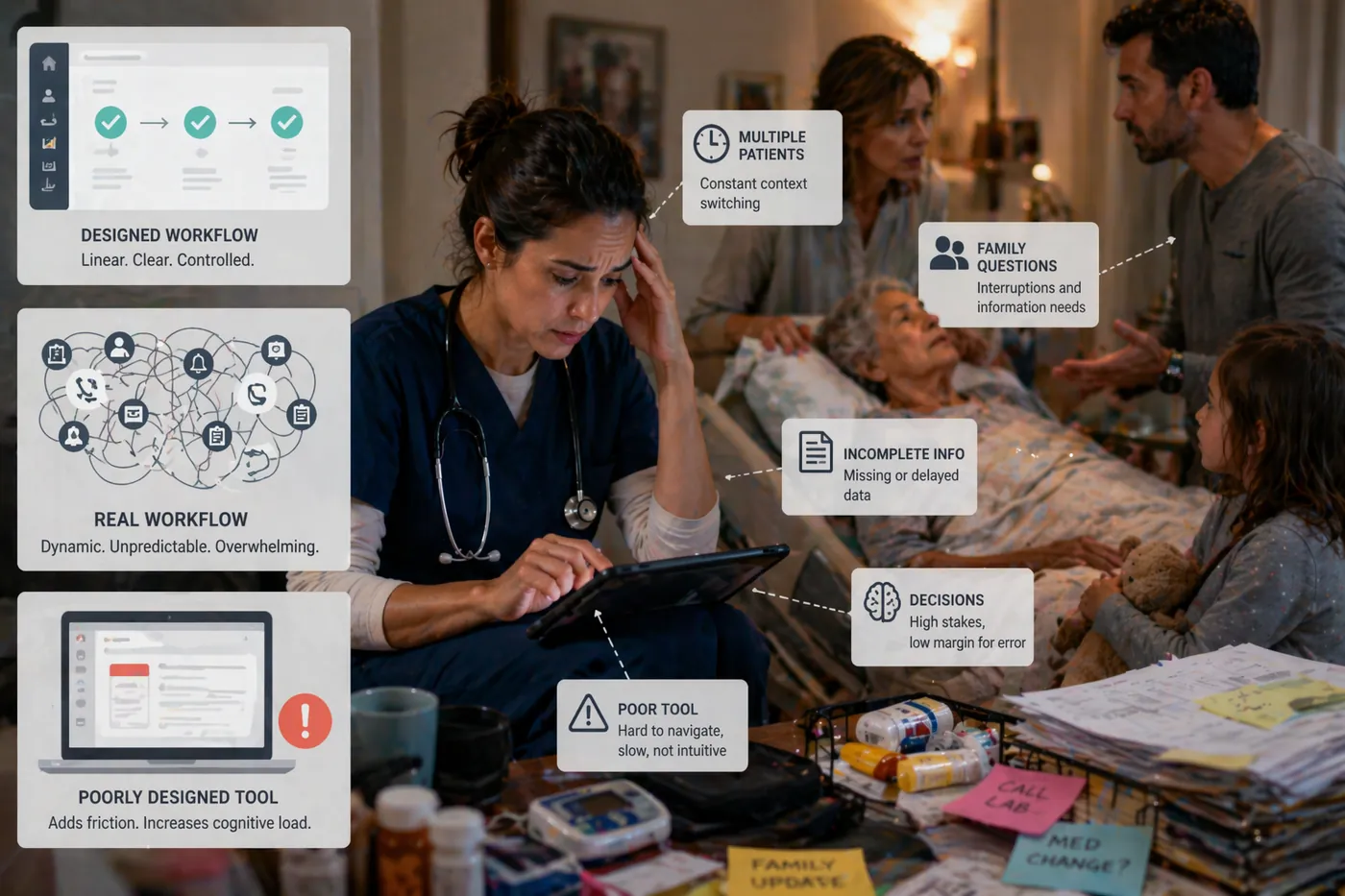
The gap between the designed workflow and the real one is where poorly built tools add friction.
Nurses frequently report frustration with electronic health records and documentation systems that:
- Requires excessive clicking.
- Force duplicate data entry.
- Lack interoperability.
- Interrupt workflows.
- Increase administrative burden.
Instead of streamlining care delivery, poorly designed systems often create additional work for clinicians.
Many nurses spend hours every week:
- Searching for information.
- Copying data between systems.
- Completing repetitive tasks.
- Correcting documentation errors.
Technology should support clinicians and not slow them down.
This is why healthcare organizations are increasingly exploring solutions such as ambient AI, documentation automation, and AI-powered clinical workflows.
10. Nurses Want to Feel Valued Again
At its heart, nursing is a profession built on purpose.
Most nurses enter healthcare because they want to make a difference in people's lives.
But over time, many begin to feel that their contributions are undervalued.
They want:
- Respect from leadership.
- Safe staffing levels.
- Better technology.
- Support for their well-being.
- Opportunities for growth.
- Time to provide meaningful patient care.
The nursing shortage is not simply a staffing issue.
It is also a recognition issue.
When nurses feel heard, respected, and supported, they are more likely to remain in the profession.
When they feel overwhelmed, invisible, and constantly asked to do more with less, many choose to leave.
The future of healthcare depends on creating environments where nurses feel valued not just for what they do, but for who they are and the essential role they play in patient care.
The Real Solution to the Nursing Shortage
The nursing shortage cannot be solved by recruitment alone.

The goal is technology and systems built around clinicians, so nurses can get back to patients.
Healthcare must address the root causes:
- Reduce administrative burden.
- Improve documentation workflows.
- Invest in better technology.
- Support mental health.
- Create flexible career paths.
- Improve staffing and retention strategies.
- Build systems around clinicians instead of forcing clinicians to adapt to broken systems.
The future of healthcare depends on keeping experienced nurses in the profession.
And that begins by listening to why they are leaving.
The question is no longer:
'Why are nurses leaving?'
The question is:
'What can healthcare do differently to help nurses stay?'
Because solving the nursing shortage starts by building healthcare systems that take care of the people who take care of everyone else.
🚀 Documentation burden is one of the biggest reasons nurses leave. Copper Digital builds AI around real clinical workflows, with voice capture, OASIS drafting, and human-in-the-loop review, so nurses spend less time charting and more time with patients. Explore AI tools for home health nurses, or book a demo.
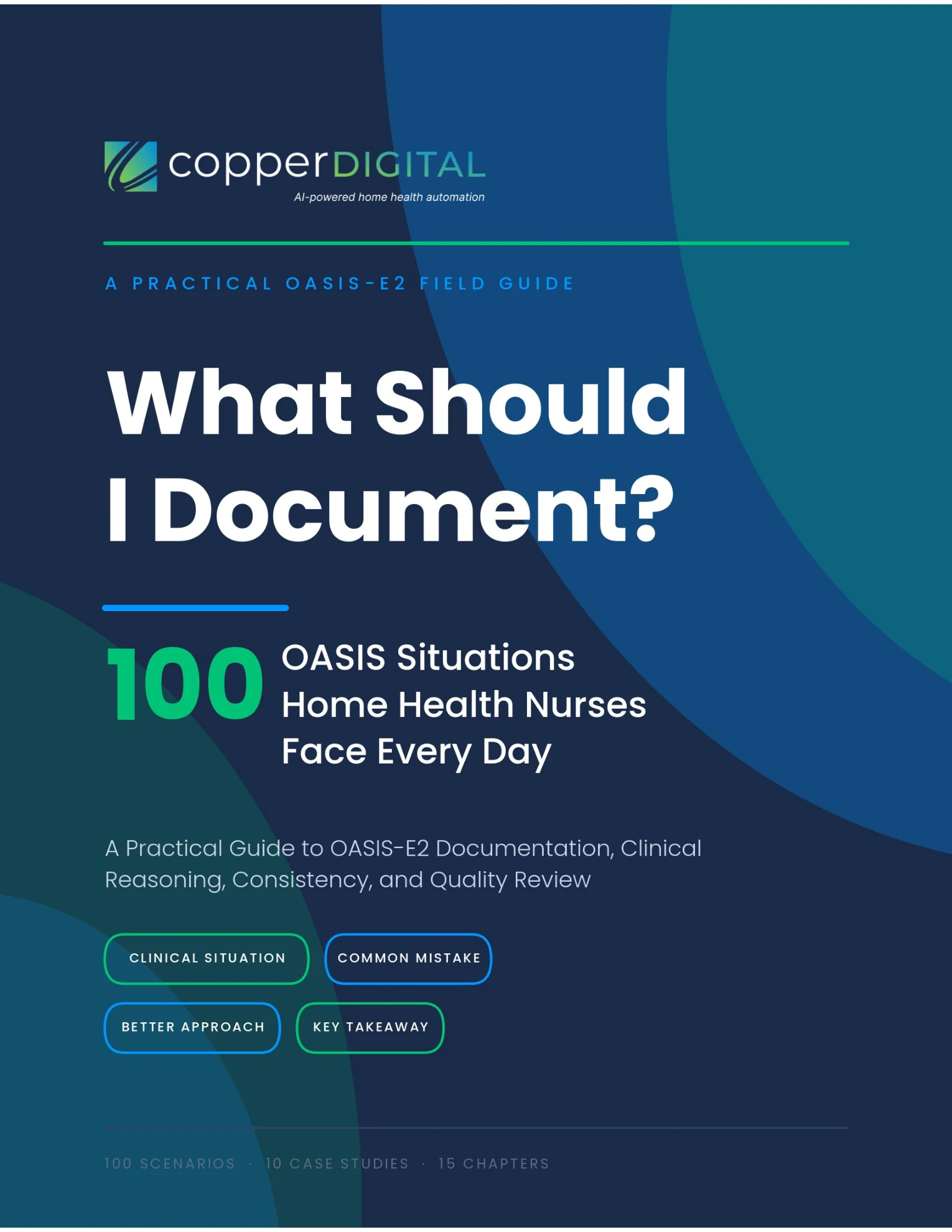
What Should I Document? 100 OASIS Situations Home Health Nurses Face Every Day
100 real OASIS scenarios, worked end to end — clinical situation, common mistake, better approach, and key takeaway. Built around OASIS-E2 (effective April 1, 2026) to turn what you assess into accurate, defensible documentation.
Bottom Line
Nurses aren't leaving because they stopped caring; they're leaving because burnout, documentation overload, staffing shortages, and lost autonomy make the work unsustainable.

Watch the Full Conversation
The Real Cost of Ignoring Nurse Burnout
Arvind Sarin and Jennifer Johnson on the real cost of ignoring nurse burnout, and what healthcare can do to keep experienced nurses at the bedside.

Jennifer Johnson, BScN, RN, known as The Intuitive Nurse, is an ER nurse and nurse-retention innovator. She focuses on the real cost of burnout and what healthcare systems can do to keep experienced clinicians at the bedside.
Frequently asked
Frequently asked questions
The biggest reasons include burnout, staffing shortages, excessive documentation, mental health challenges, poor work-life balance, and better career opportunities outside traditional bedside roles.
Join the conversation
Leave a comment
No comments yet. Be the first to share your thoughts.
Related reading
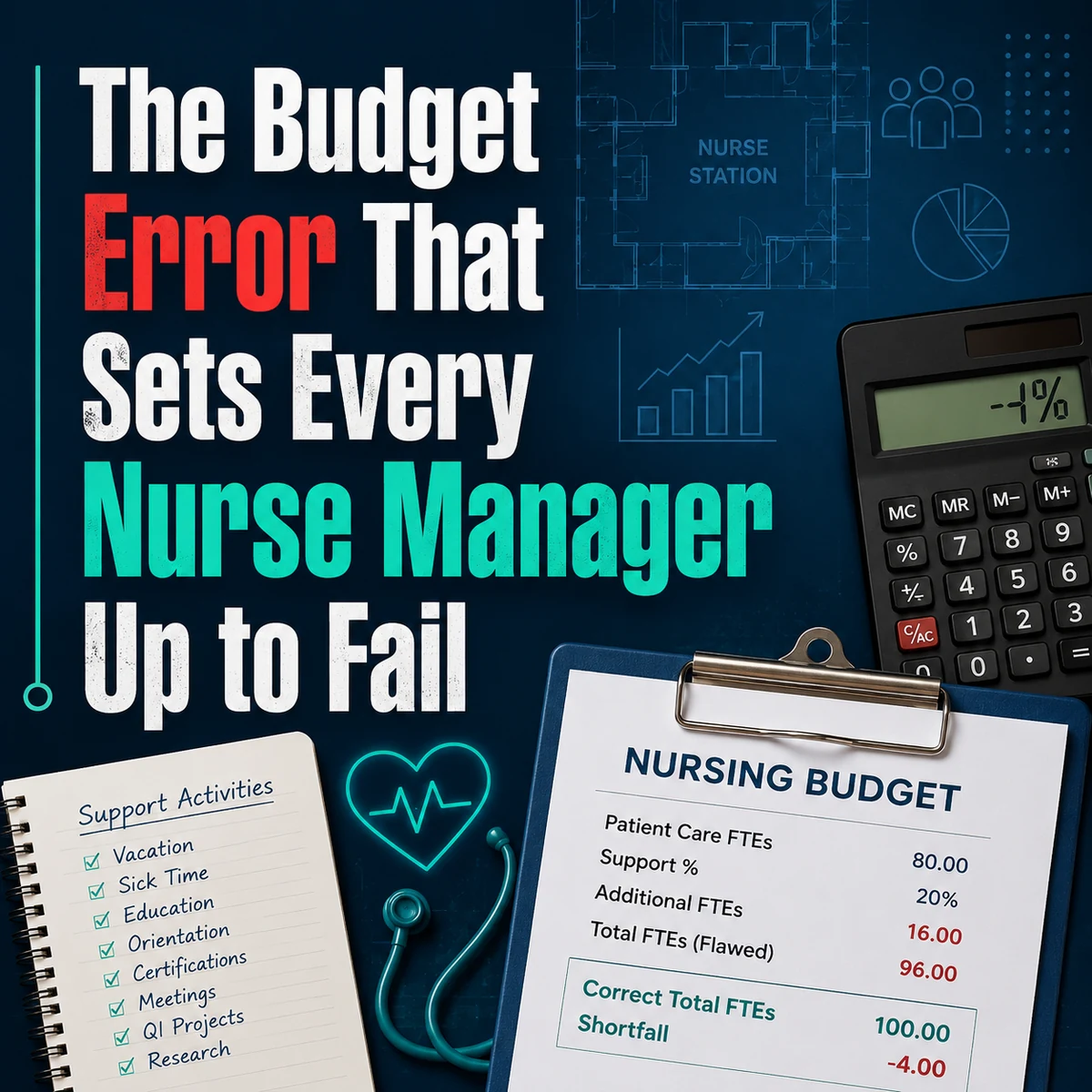
The Budget Error That Sets Every Nurse Manager Up to Fail
Most nursing budgets underestimate staffing by 2 to 6 percent before a schedule is ever built, because replacement staff are calculated from patient care FTEs instead of the total budget. Robert Wingo, RN-BC walks through the 40-year-old math error, why 'non-productive time' language makes it worse, and Care-Centric Modeling, the framework that fixes the calculation and gives nurse managers a data-backed argument with finance.
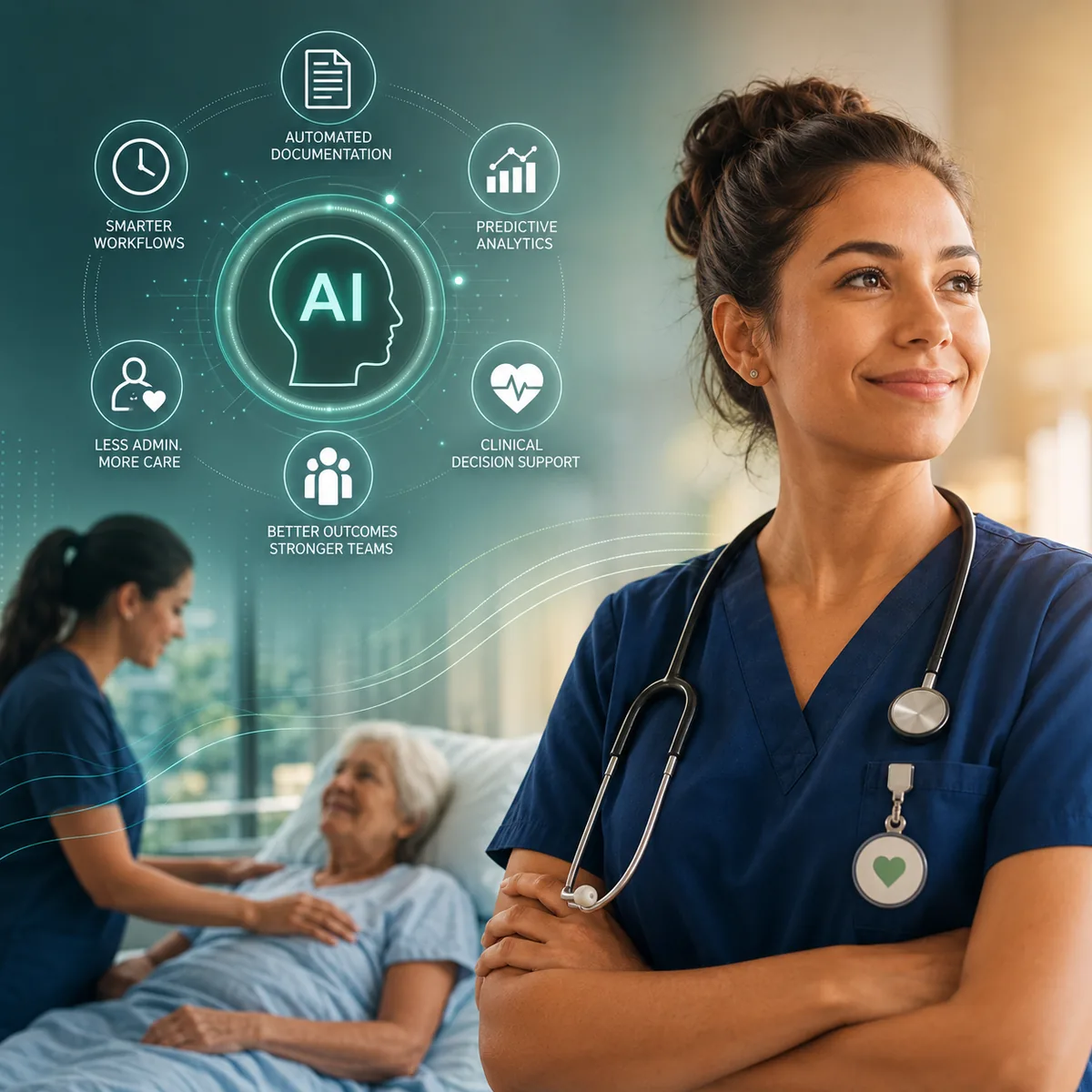
Can AI Help Reduce Nurse Burnout?
Nurses now spend nearly as much time documenting care as delivering it, and the result is unprecedented burnout. AI can help, but only when it is designed to support nurses rather than replace them. This guide breaks down how AI reduces cognitive load, ambient documentation, predictive deterioration detection, human-in-the-loop safety, and what it means for retention and home health.
The Most Powerful Skill in Nursing No One Trains
Clinical intuition is not a mystical gift. It is pattern recognition operating faster than conscious thought, and it flags patient deterioration before the monitors catch up. Critical care nurse Desiree Paige on why the system silences the most powerful skill in nursing, and why reducing documentation burden is a patient safety intervention.