
AI Tools Every Nurse Should Know in 2026
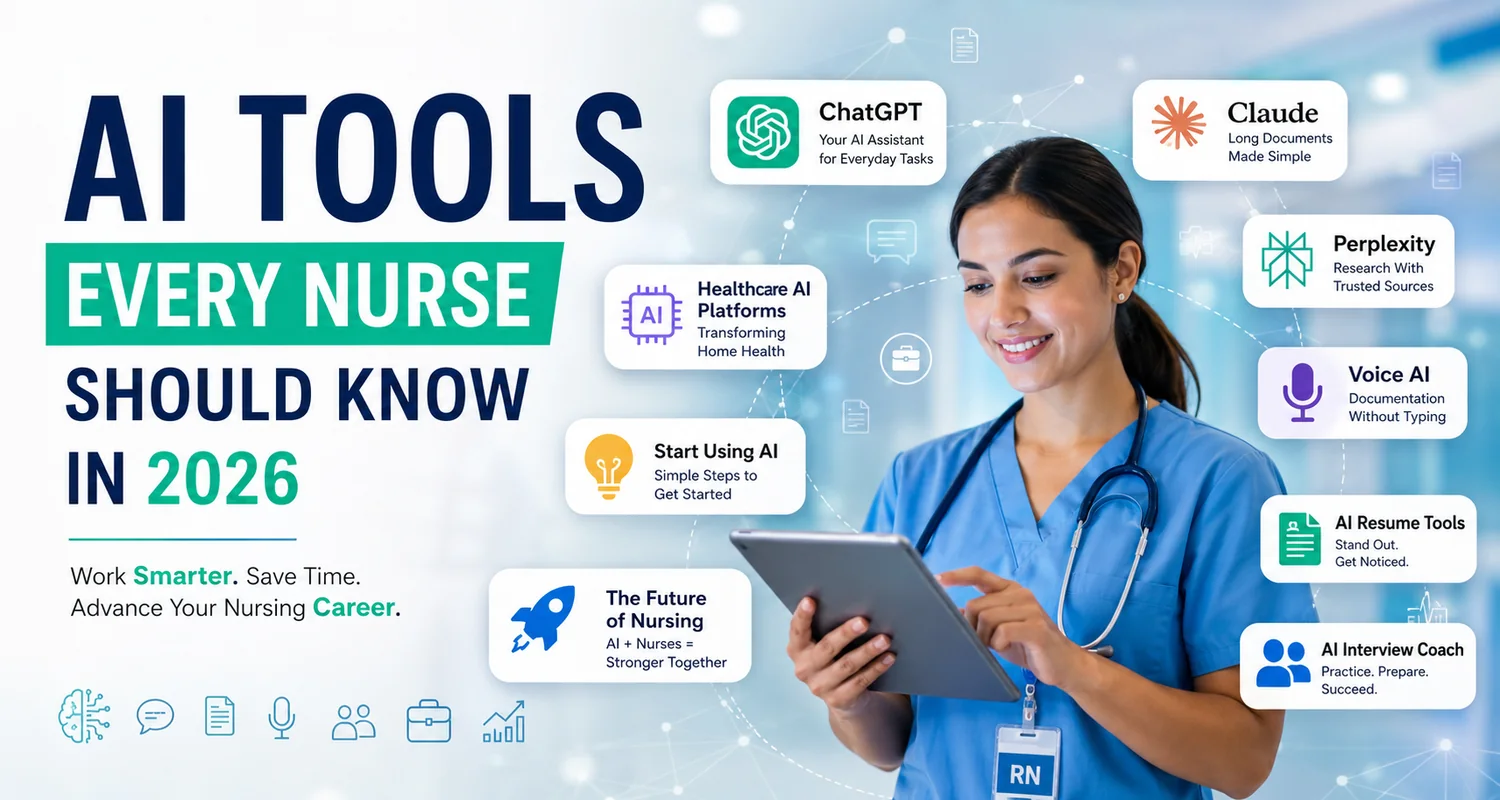
The best AI tools for nurses in 2026 include ChatGPT for learning and career prep, Claude for long documents, Perplexity for cited research, voice AI for documentation, AI resume and interview coaching tools for career transitions, and human-in-the-loop healthcare AI platforms like Copper Digital for home health documentation. You don't need a computer science degree to benefit from any of them.
Key Takeaways
- ChatGPT, Claude, and Perplexity help with learning, research, and career prep, never with PHI.
- Voice AI and healthcare documentation platforms reduce charting time.
- AI resume and interview tools help nurses move into non-bedside roles.
- Start small: a few minutes a day, follow AI leaders, join communities, and find mentors.
💡 You don't need a computer science degree to benefit from AI. The best AI tools for nurses in 2026 include ChatGPT for learning and career prep, Claude for long documents, Perplexity for cited research, voice AI for documentation, AI resume and interview coaching tools for career transitions, and human-in-the-loop healthcare AI platforms like Copper Digital for home health documentation.
Nursing is changing faster than ever. Electronic medical records changed how nurses documented care. Telehealth changed where care could happen. Now, artificial intelligence is changing how nurses work, learn, and build their careers.
The good news? You don't need a computer science degree to benefit from AI. In fact, nurses may be some of the best-positioned professionals to take advantage of this technology, because healthcare still needs people who understand:
- Clinical workflows
- Patient safety
- Documentation
- Regulations
- Communication
- Human behavior
As nurse consultant Timi Abiola shared on the Inside Home Health podcast, the future of healthcare technology cannot be built by engineers alone. Healthcare needs nurses at the table. Here are the AI tools every nurse should know.
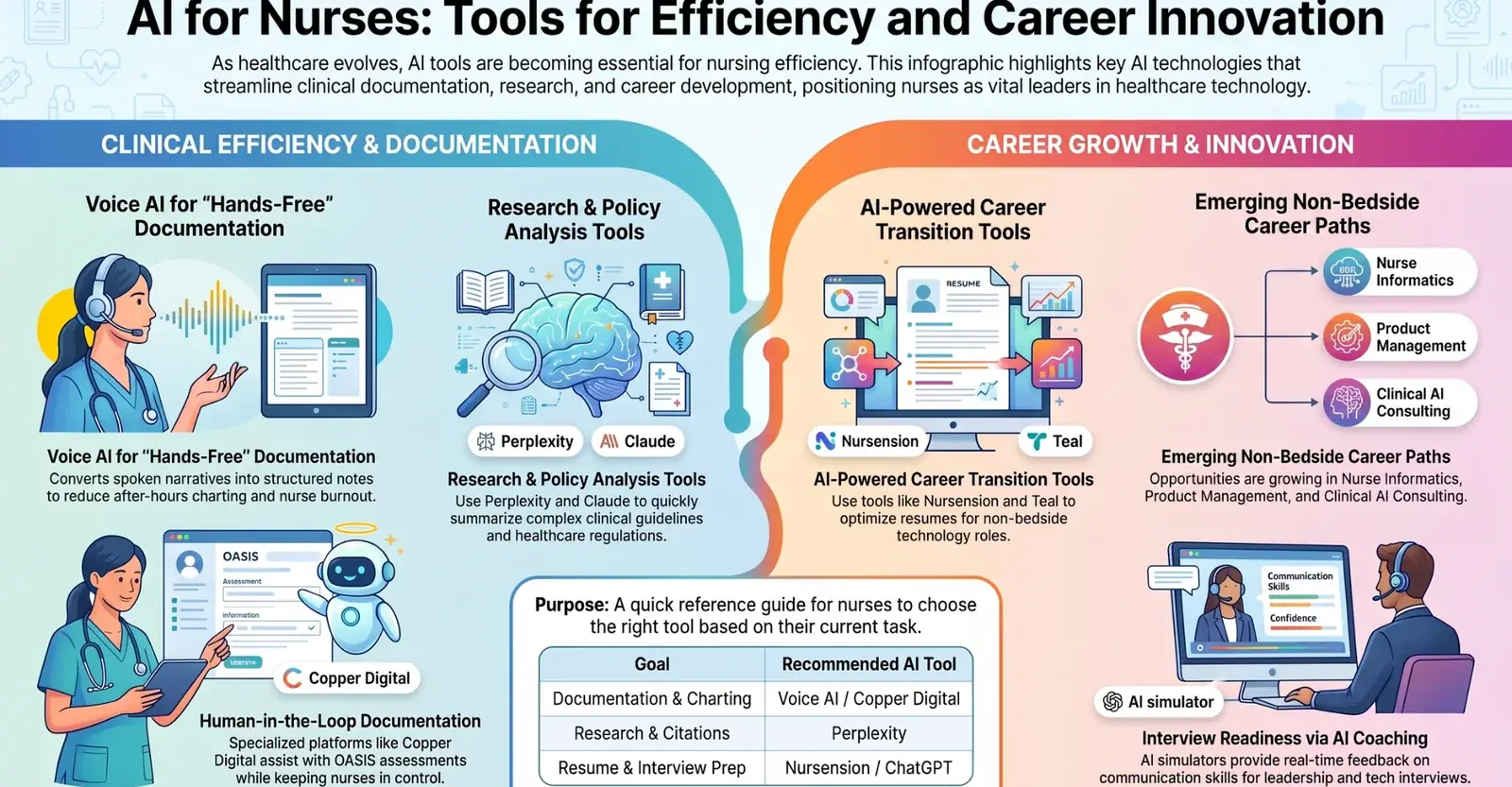
A quick reference to the AI tools reshaping both nursing efficiency and nursing careers.
1. ChatGPT: The AI Assistant Every Nurse Should Understand
Artificial intelligence can feel overwhelming at first, but ChatGPT is often the easiest place for nurses to begin. Think of it as an on-demand learning assistant that can answer questions, explain complex concepts, and help organize ideas in seconds.
While it should never be used to make clinical decisions or enter protected health information (PHI), ChatGPT can become a valuable tool for education, career development, and professional growth.
Best for: brainstorming ideas, writing assistance, learning new topics, creating study materials, interview preparation, and professional development.
For nurses, it can act as a personal assistant that helps with summarizing articles, explaining clinical concepts, creating interview questions, generating study guides, practicing behavioral interviews, and organizing ideas.
For example, a nurse preparing for an informatics interview can ask, 'What are the top interview questions for a nurse informatics role?' or 'Explain interoperability in healthcare like I'm a new nurse.' The ability to ask questions and receive immediate answers makes ChatGPT one of the most useful AI tools for nurses.
2. Claude: The AI Tool for Long Documents and Research
Nurses spend a significant amount of time reviewing policies, educational materials, research papers, and lengthy healthcare documents. Claude excels at working with large amounts of information and helping users understand complex topics. It is particularly useful when you need thoughtful explanations, summaries, or help organizing detailed information.
Best for: reading lengthy documents, analyzing reports, reviewing policies, understanding regulations, and summarizing research papers.
Nurses working in informatics, quality improvement, leadership, compliance, and education often spend hours reading policies and documentation. For example, you can upload a 50-page CMS guidance document and ask, 'Summarize the key changes that impact home health agencies.'
Claude is especially valuable for nurse leaders, educators, and informatics professionals who work with extensive documentation, and for nurses exploring healthcare innovation and non-bedside careers.
3. Perplexity: The Research Assistant for Nurses
Nurses constantly look for trustworthy information, whether it's a clinical guideline, industry trend, or new healthcare regulation. Perplexity combines AI with internet search and provides sources for its answers. That makes it particularly helpful when researching healthcare topics that require citations and current information.
Best for: research, finding sources, industry updates, and learning healthcare trends.
Instead of just generating answers, it provides sources and references. Nurses can use it to research healthcare AI trends, clinical documentation changes, new regulations, nursing informatics topics, and career opportunities. Ask, 'What are the latest CMS updates affecting home health documentation?' and Perplexity will provide an answer along with links to the original sources. For nurses who enjoy learning and staying current, it can become an everyday research assistant.
4. Voice AI: Documentation Without Typing
Many nurses don't want to spend hours typing notes after a shift. Voice AI is helping change that by turning spoken information into structured documentation and reducing administrative burden. As healthcare increasingly adopts AI-powered workflows, understanding voice technology will become an important skill for clinicians.
Best for: clinical documentation, home health charting, dictation, visit notes, and reducing after-hours documentation.
Documentation remains one of the biggest causes of nurse burnout. Voice AI allows clinicians to speak naturally and generate structured documentation. For home health nurses, this can significantly reduce the amount of time spent charting after visits. Modern voice AI can capture narratives, organize documentation, generate summaries, assist with OASIS workflows, and reduce duplicate entry.
In home health, voice-based AI documentation solutions are also helping nurses complete assessments faster while spending more time focused on patient care.
5. AI Resume and Career Transition Tools for Nurses
Nurses moving into informatics, healthcare technology, or non-bedside roles often struggle to translate their clinical experience into language recruiters understand. AI-powered resume tools can help optimize resumes, identify missing keywords, and improve applicant tracking system (ATS) performance.
Best for: resume optimization, career transitions, ATS optimization, and non-bedside nursing jobs.
Many nurses underestimate how transferable their skills are. AI resume tools can help nurses match resumes to job descriptions, identify missing keywords, improve formatting, and highlight transferable experience.
Tools to explore
- Teal HQ: resume optimization, job tracking, and ATS scoring.
- Kickresume: AI-generated resumes and cover letters.
- Rezi: ATS-focused resume builder with keyword suggestions.
- Resume Worded: resume scoring and LinkedIn profile optimization.
- Nursension: built specifically for nurses transitioning into non-bedside and technology careers, including resume evaluation and career guidance.
As Timi Abiola explained on the podcast, many nurses don't need another degree. They simply need to better position the experience they already have, and AI can help bridge that gap.
6. AI Interview Coaching Tools for Nurses
Interviewing for healthcare technology or non-clinical roles requires a different skill set than bedside nursing. AI coaching tools can simulate interviews, score responses, and help nurses communicate transferable skills.
Best for: interview preparation, career transitions, confidence building, and leadership roles.
Tools to explore
- Nursension: AI-powered interview coaching designed specifically for nurses transitioning into new careers.
- Yoodli: AI speech coach that gives feedback on confidence, pacing, and filler words.
- Interview Warmup by Google: a free practice tool with simulated questions.
- Final Round AI: AI interview copilot with mock interviews and response feedback.
- Pramp: peer-to-peer mock interviews, useful for nurses entering healthcare technology and product roles.
AI coaching tools can simulate interviews, evaluate responses, score communication, provide feedback, and identify weaknesses. That's particularly valuable for nurses transitioning into informatics, healthcare technology, product management, clinical consulting, and leadership roles. For example, ask an AI coach to simulate 'Tell me about a time you led a change initiative,' and the tool can give feedback on clarity, structure, and communication.
As Timi Abiola shared on the podcast, mentorship and preparation often accelerate career transitions more than credentials alone.
7. Healthcare AI Platforms Like Copper Digital
While many AI tools focus on productivity and career development, nurses also need tools that directly improve their daily workflow. In home health, documentation is one of the biggest contributors to burnout. Completing OASIS assessments and visit notes often extends far beyond the end of the shift. AI-powered documentation platforms are beginning to change that.
Best for: home health documentation, OASIS automation, clinical workflow optimization, and AI-assisted documentation.
Healthcare AI is most effective when it's built around clinical workflows. Platforms like Copper Digital's AI Documentation Agent are designed specifically for home health nurses. The platform helps clinicians generate documentation drafts, complete OASIS assessments faster, reduce after-hours charting, capture information through voice, photos, or tapping, and identify missing documentation.
Most importantly, it follows a human-in-the-loop approach. The nurse remains responsible for reviewing and approving the final documentation. AI assists. The clinician stays in control.
Why Nurses Have a Huge Opportunity in AI
One of the most powerful messages from Timi Abiola's podcast episode was simple: stop saying, 'I'm just a nurse.' Nurses understand things that technology companies desperately need:
- How care is delivered
- How clinicians think
- What patients need
- Where workflows break
- Why documentation matters
The future of healthcare AI will require nurses to help design, implement, and improve these technologies. There are growing opportunities in nurse informatics, clinical AI consulting, product management, healthcare technology, AI implementation, clinical documentation innovation, and digital health startups. The nurses who start learning AI today may help build the healthcare systems of tomorrow.
How to Start Using AI as a Nurse
You don't need to quit your job. You don't need another degree. Start small.
Learn AI fundamentals
Spend 15 minutes a day exploring tools like ChatGPT.
Follow healthcare AI leaders
Read about how AI is being used in healthcare.
Join communities
Networking often creates more opportunities than job applications.
Find mentors
Every major career leap often happens after learning from someone who has already walked that path.
The Future of Nursing and Artificial Intelligence
Artificial intelligence is not replacing nursing. It's creating entirely new opportunities for nurses. The future belongs to clinicians who can combine clinical expertise, technology, communication, and innovation.
The best time to learn AI was yesterday. The second-best time is today.
Work smarter, save time, and advance your nursing career with the right AI tools.
🚀 Curious how AI documentation works for home health nurses? Copper Digital builds AI around real clinical workflows, with nurses at the table and human-in-the-loop review at every step. Explore AI tools for home health nurses, or book a demo to see it in action.
Bottom Line
Nurses can use AI without coding: ChatGPT, Claude, and Perplexity boost learning and careers, while human-in-the-loop documentation platforms cut charting time (never enter PHI).

The Copper Clinical Team brings together nurses and clinical documentation specialists focused on home health, OASIS accuracy, and human-in-the-loop AI. They write about the tools and workflows helping clinicians reduce administrative burden and grow their careers.
Frequently asked
Frequently asked questions
ChatGPT is often the best starting point because it is easy to use and can help with learning, research, and career development. For long documents use Claude, for cited research use Perplexity, and for home health documentation use a human-in-the-loop healthcare AI platform.
Join the conversation
Leave a comment
Related reading

AI Careers for Nurses: How to Transition Beyond the Bedside
Nurses can transition into AI careers without learning to code. Clinical experience with workflows, patient safety, and documentation makes nurses valuable in roles like nurse informaticist, clinical AI consultant, healthcare AI product manager, and AI educator. The future of nursing isn't leaving healthcare, it's expanding what a healthcare career can look like.
Nursing Intuition vs Clinical Judgment: What's the Difference?
Every experienced nurse has felt it: the vital signs look normal, the labs haven't changed, but something feels wrong. Is that intuition or clinical judgment? They're two distinct but complementary skills. This guide explains how each works, how intuition develops, why clinical judgment turns a gut feeling into safe action, and what AI can and can't do about it.
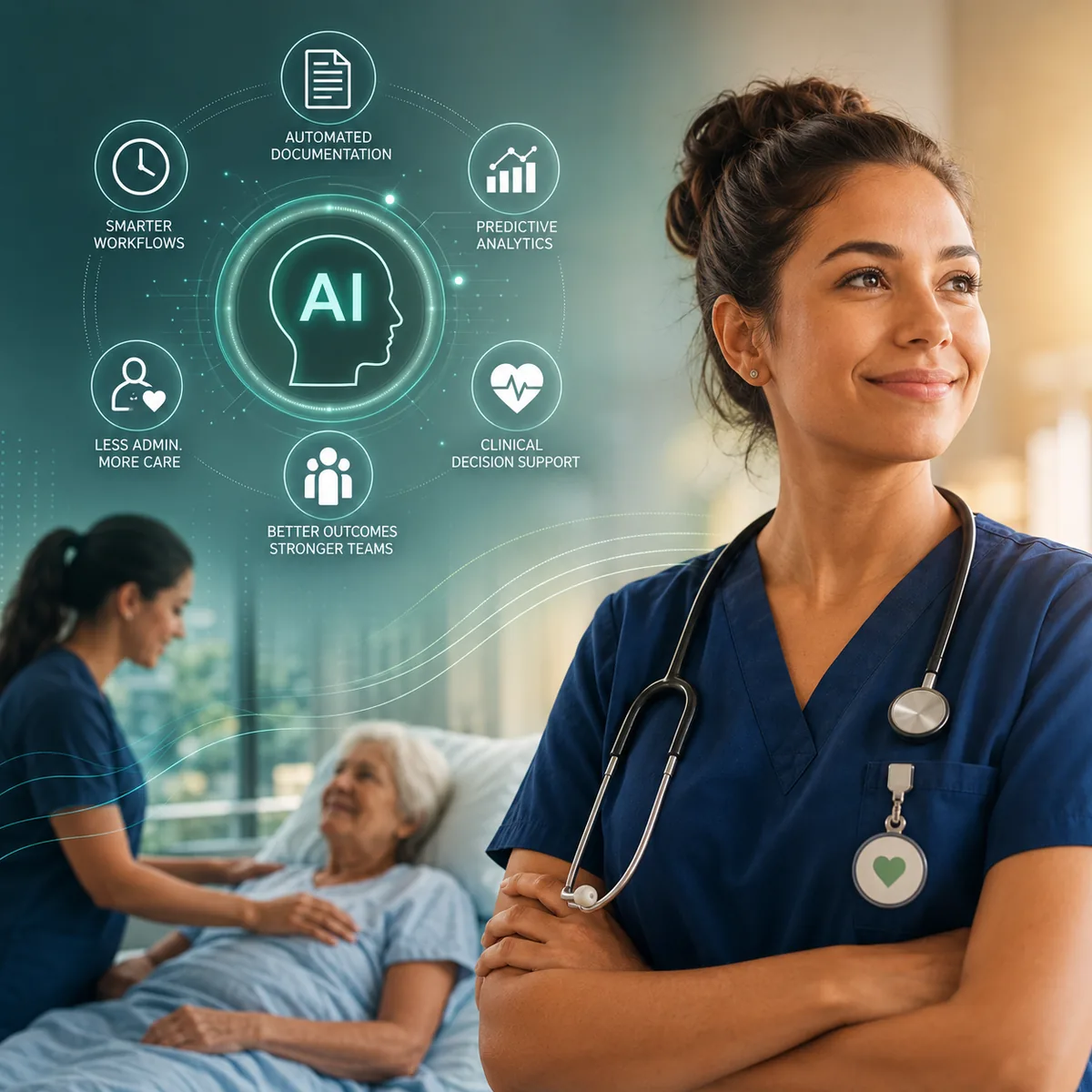
Can AI Help Reduce Nurse Burnout?
Nurses now spend nearly as much time documenting care as delivering it, and the result is unprecedented burnout. AI can help, but only when it is designed to support nurses rather than replace them. This guide breaks down how AI reduces cognitive load, ambient documentation, predictive deterioration detection, human-in-the-loop safety, and what it means for retention and home health.