
The Most Powerful Skill in Nursing No One Trains
Clinical intuition is not a mystical gift. It is pattern recognition operating faster than conscious thought, and it flags patient deterioration before the monitors catch up. Critical care nurse Desiree Paige on why the system silences the most powerful skill in nursing, and why reducing documentation burden is a patient safety intervention.
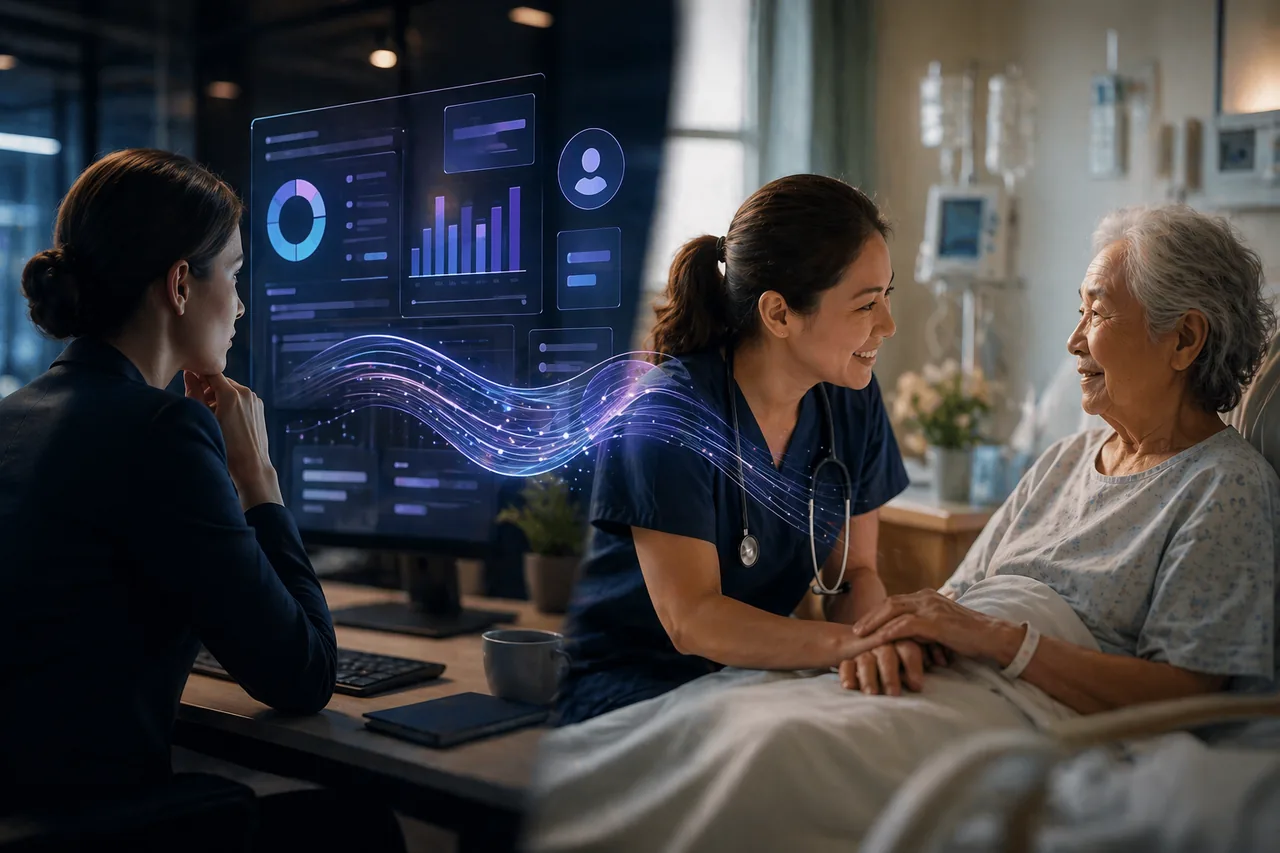
Key Takeaways
- Clinical intuition is real pattern recognition, not guesswork.
- Rigid systems and documentation burden suppress the instinct that catches deterioration early.
- Protocol and intuition are complementary, not opposites.
- Reducing charting burden protects patient safety by freeing clinical attention.
Ask a nurse why she went into nursing and listen for the word. You will almost always hear it: feel, or felt. I felt called to it. It felt right. Something in me just knew. We enter this profession following an instinct, and then we spend years in training environments that teach us to distrust the very thing that brought us here. I want to name it clearly, because I have spent 14 years watching it save lives and watching the system treat it like it does not exist.
Clinical intuition is not a mystical gift. It is not a sixth sense. It is not the exclusive territory of experienced nurses, although it does get sharper with experience. It is pattern recognition operating faster than conscious thought, and it is one of the most powerful patient safety tools in clinical practice. The problem is that we have built almost no professional language around it, almost no formal training for it, and almost no institutional support for the nurse who acts on it.
📊 93% of nurses have experienced moral distress. That number represents the gap between what a nurse knew and what she was able to do about it. A lot of that gap is the intuition gap.
What Intuition Actually Is
The word gets dismissed the moment people assume it means guessing. Intuition is knowing before the logic catches up. That is all it is. Your brain has been storing patterns from every patient you have ever assessed: every vital sign, every facial expression, every change in the way a person finishes a sentence or holds their body or breathes. You are not consciously cataloguing all of this; your central nervous system is doing it automatically. And when the pattern breaks, when something is off, your brain flags it before you can articulate what you saw. That flag is intuition. It is not a feeling separate from clinical knowledge. It is clinical knowledge moving faster than language.
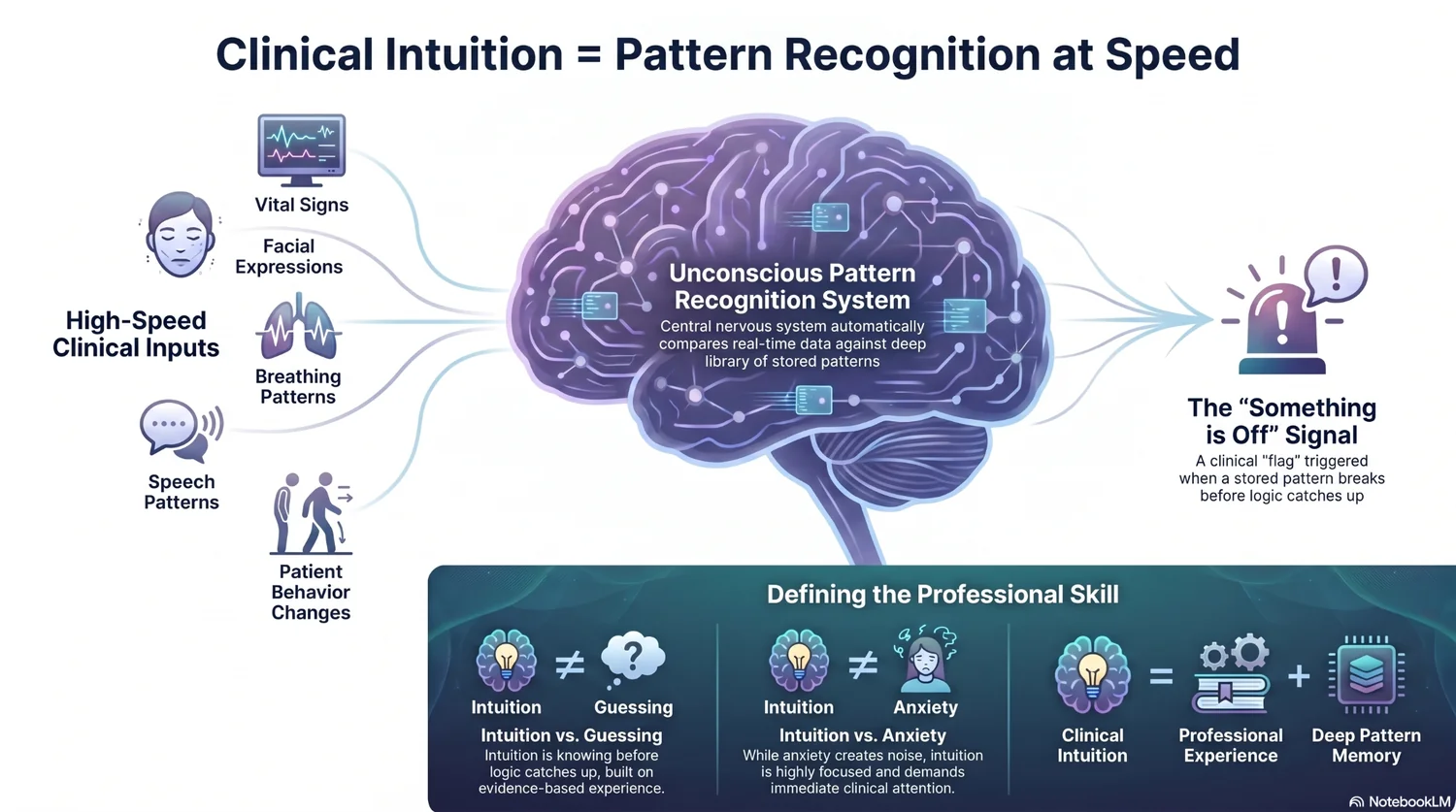
Clinical intuition is pattern recognition at speed: the brain flags a broken pattern before logic catches up.
The research on expert clinical decision-making supports this. Studies on pattern recognition in nursing and medicine consistently find that experienced clinicians identify patient deterioration through subtle, pre-monitor cues that newer clinicians miss. The difference is not access to better data. It is the depth of the pattern library the clinician is drawing on and the sensitivity of their detection system, and we can train that detection system. Intuition is not anxiety. It is not hypervigilance. It is very focused and it will call your attention immediately. The first thing we need to teach nurses is to tell the difference, because one saves lives and the other creates noise.
The Night I Learned to Listen
My first nursing job was at a high-security correctional facility. The standard patient presentation there is loud, boisterous, looking for any reason to leave the cell and take a walk. You learn quickly to calibrate your clinical radar to that baseline. One night a patient came in who was completely outside that pattern. Calm. Quiet. Direct. He looked me straight in the face and said, my chest hurts. No sweating, no grimace, no shortness of breath. Just those three words, delivered with an unusual stillness.
I was a brand new nurse. The EKG was unremarkable. Every objective finding was normal. But something in me said, there is more here. This is outside the pattern. Stay with it. I ran the protocol, I called the PA, and I advocated clearly for what I was observing: this patient is not presenting the way patients here present, his affect is completely outside his baseline, and I need someone else to look at this. We transferred him to the hospital that night. He underwent a quadruple bypass.
It felt like a question: do I trust this, or do I wait for the monitor to catch up? I chose to trust it, and I have been thinking about that choice for 14 years.
How the System Silences It
I do not think the system silences clinical intuition on purpose. The silencing is structural. It happens through omission. We have no professional language for clinical intuition, no formal curriculum. When a nurse walks into a care conference and says, I know something is wrong but I cannot point to a specific data point yet, there is no shared framework for what to do with that information. The more junior the nurse, the less likely she is to push. The busier the unit, the faster the concern gets dismissed. The more times a concern goes nowhere, the quieter she becomes.
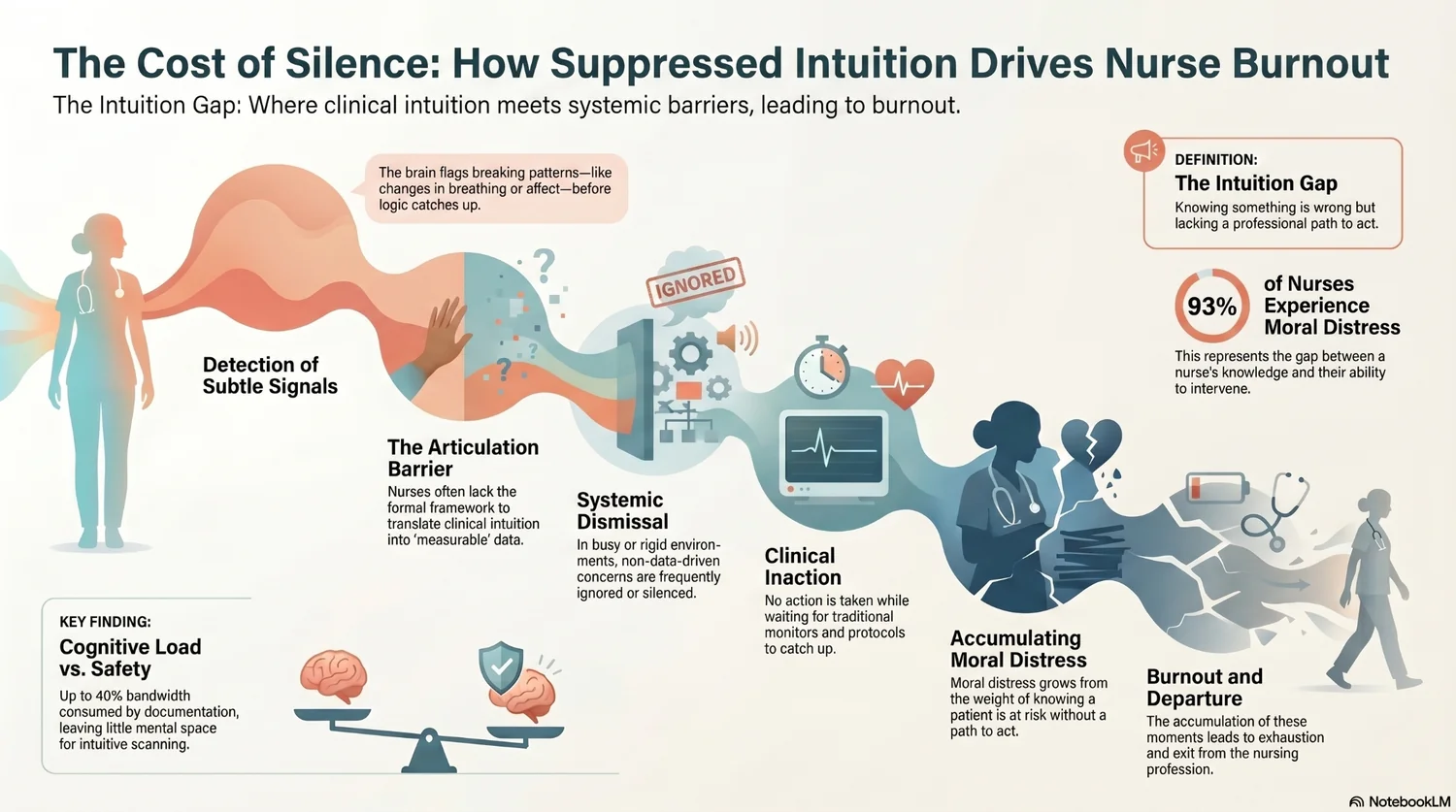
The intuition gap: subtle signals get detected, then hit an articulation barrier and systemic dismissal, and the accumulated moral distress becomes burnout.
This is where moral distress originates. Not from dramatic ethical dilemmas, though those happen too, but from the accumulation of moments where a nurse knew something and the system gave her no path to act on it. She goes home carrying it. There is also the boy-who-cried-wolf problem: nurses who raise concerns without the articulation skills to communicate precisely why can develop a reputation for over-escalating, and over time not escalating at all becomes the path of least resistance. The solution is not to stop noticing. It is to teach nurses the difference between intuition and anxiety, and how to communicate what they are seeing in language that gets heard. If you speak up and you are wrong, what happened? Someone got an extra set of eyes, and you sharpened the skill for next time.
What the NICU Taught Me About Trust
I became a mother to a daughter with complex medical needs. She spent time in the NICU, and being on the family side of the bed gave me something 14 years of practice had not. I spent those weeks noticing which nurses I trusted and which I did not, not consciously at first, just as a feeling: I feel safe when this nurse is here, I am more anxious when that nurse is here. It was not about competence in any objective sense. Both were qualified. Both followed their protocols. The difference was something else.
The nurses I trusted were attuned. They could read where I was emotionally without my saying anything. They explained what they were seeing in language that gave me a framework for understanding my daughter's condition. They were present in the room in a way that was qualitatively different from completing tasks. The nurses I did not trust as quickly were task-focused: they came in, completed their assessments, documented, and left. Nothing was wrong with what they did, but they were managing the chart, while the others were managing the whole room. The nurses the families trusted were the intuitive ones, because they were picking up on signals from the patient and the family simultaneously and responding to the whole picture. That is an advanced clinical skill. We do not teach it by name. We should.
The Specific Challenge of Home Health
When I spoke with Arvind at Copper Digital, he raised something that stopped me. In home health, the nurse is alone. There is no charge nurse down the hall, no colleague she can pull in for a second opinion, no team reading the room with her. If she picks up a signal, the decision to act on it or dismiss it is hers alone. That is a profoundly different environment than the ICU or ER, and it changes the stakes on both sides of the intuition question. If she over-escalates, she carries a reputation across a caseload and a referral network. If she under-escalates, there is no one to catch what she missed.
I think the best partner to the home health nurse in those moments is the family, not as a second clinical opinion but as a baseline source. The family knows this person. They know what normal looks like. When the nurse senses something is off and the data has not caught up, the question to ask is: does this feel like her to you? Is this how she usually is? That question takes seconds and it can be the difference between a signal that gets investigated and one that gets dismissed. Families are not trained clinicians, but they carry something no chart can hold: a deep pattern library for this specific person. The nurse who learns to use that resource is more clinically equipped, not less.
Documentation Burden Is a Patient Safety Problem
Arvind told me home health nurses spend around 40 percent of their cognitive bandwidth on documentation: a 23-page OASIS assessment, more than a thousand field codes, hours that come out of the clinical visit or get pushed to the kitchen table after dinner. I want to sit with what that means for intuition. The signals that precede patient deterioration are subtle. A patient who is not completing sentences quite the way she was yesterday. A man who is not drinking as much without any obvious reason. A color that is slightly off. An energy that is quieter than usual. These are easy to miss under normal conditions and nearly impossible to catch when the nurse's attention is split between the patient and a screen.
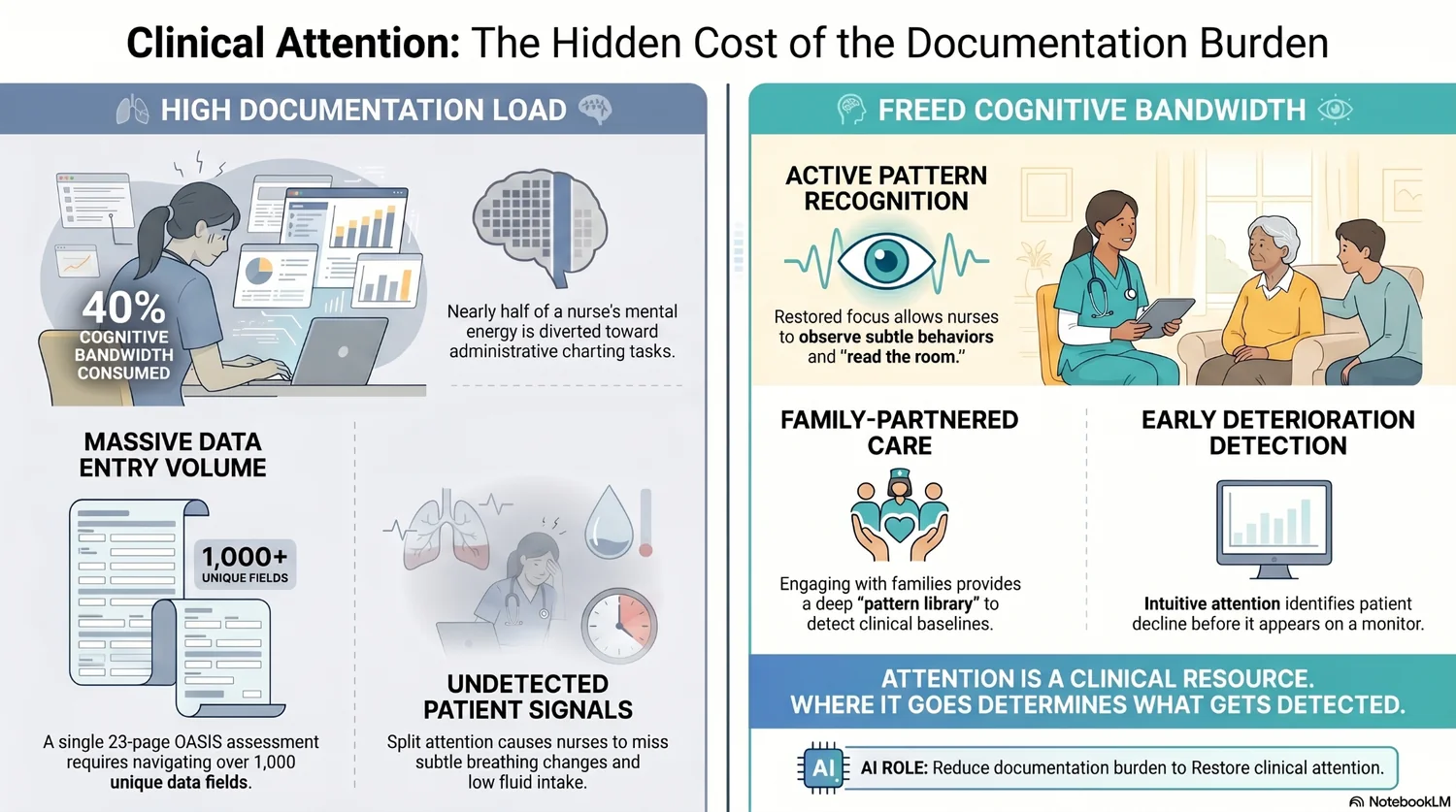
Attention is a clinical resource. Where it goes determines what gets detected, so reducing documentation burden is a safety intervention.
This is not a criticism of documentation. It is essential: it is how we communicate across the care team, justify skilled need, protect the patient legally and clinically, and earn the reimbursement that keeps the agency viable. But there is a real cost to the volume and timing of it, and that cost is not just nurse burnout. It is patient safety. When I heard what Copper Digital is building, reducing the documentation burden through AI so the nurse is not starting from a blank screen or re-entering data that already exists in the referral, I understood it immediately as a clinical safety intervention, not just an efficiency tool. If you give a nurse back the cognitive space that documentation was occupying, you are giving her back the space where intuition lives.
Why Protocol and Intuition Are Not Opposites
People ask how I hold my military training together with the clinical judgment that emergency and critical care require. The military taught me protocol, chain of command, standard operating procedures. The ER taught me to trust myself in situations where the protocol has not caught up to what is happening in front of me. I do not experience those as opposites. I experience them as sequential. Protocol is the foundation. Intuition is what you build on top of it once you have internalized the protocol deeply enough to know when the situation has exceeded it.
The strongest teams I have worked with in emergency and critical care were the intuitive ones. Not the ones with the most credentials, but the ones where every person was reading the room simultaneously, communicating precisely, and acting ahead of the deterioration rather than in response to it. In the most intense trauma situations, barely any words were exchanged. Everyone knew what was needed because everyone was that attuned. That is what clinical intuition looks like at its highest level. It is not a solo skill. It is a team skill, and it builds trust in a way nothing else does.
What We Need to Change
If I could change one thing about how nursing students are trained, I would make trusting themselves a formal curriculum item. Not a sidebar. A full, serious, woven-in segment on recognizing what they feel clinically, understanding which intuitive signals they are strongest at picking up, learning to scan appropriately when a signal fires, and learning to articulate what they are observing in language that moves a team to action.
We recruit nurses by their instincts and then spend years teaching them to suppress those instincts in favor of only what is measurable. We do not do this to mechanics or pilots. We do it to nurses, and I think it is one of the reasons we lose so many of them.
Clinical intuition is not more important than evidence-based practice, and it is not a replacement for clinical judgment. It is what happens when evidence-based practice, clinical experience, and human attunement operate together in real time. It saves lives. We know it saves lives. The conversation about how to protect, train, and resource the nurses who carry it is long overdue.
🎧 Desiree appeared on the Inside Home Health podcast with Arvind Sarin. To see how Copper Digital gives nurses back the cognitive space where intuition lives, explore AI tools for nurses, pricing, or more resources. For related reading, see Home Health Is Not What Most People Think It Is and Why Home Health Documentation Is Driving Your Best Nurses Out the Door.
Bottom Line
Clinical intuition, the pattern recognition built from experience, is one of nursing's most powerful safety tools, yet documentation burden and rigid systems keep silencing it.

Watch the Full Conversation
AI vs Intuition: What Nurses Know Before the Monitors Do
Arvind Sarin and Desiree Paige on clinical intuition, patient safety, and what nurses know before the monitors do.
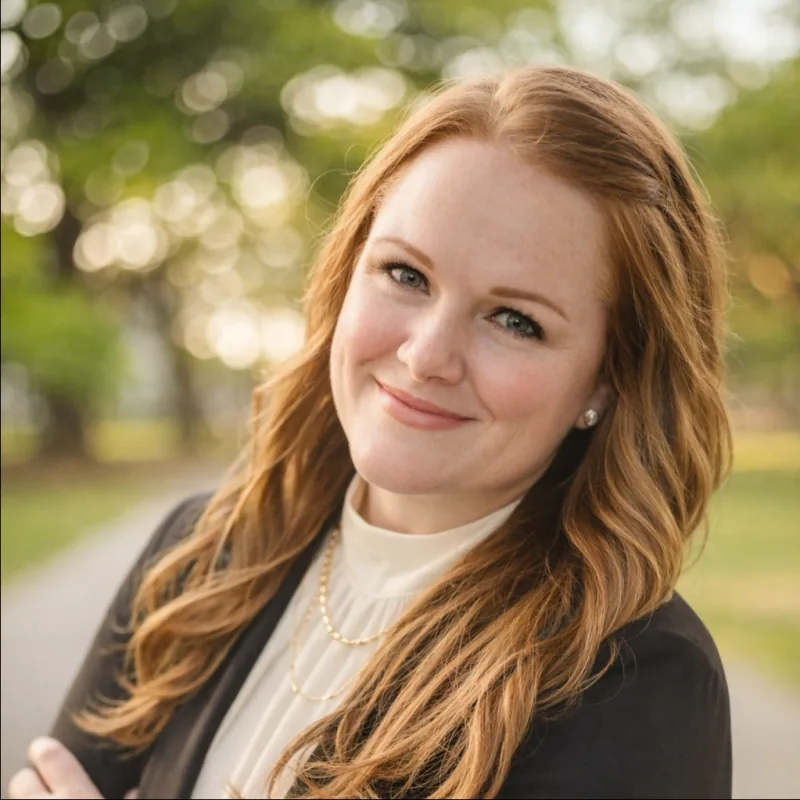
Desiree Paige, RN, is a critical care nurse, Air Force veteran, and author with 14 years of nursing experience across emergency, ICU, correctional, and neonatal intensive care. The mother of a daughter with complex medical needs, she works to build professional frameworks that acknowledge clinical intuition as a trainable skill and to create space for it in nursing education and practice.
Frequently asked
Frequently asked questions
Clinical intuition is pattern recognition operating faster than conscious thought. A nurse's nervous system automatically stores patterns from every patient she has assessed, and when a pattern breaks, it flags that something is off before she can articulate what she saw. It is not guessing or a mystical sixth sense; it is clinical knowledge moving faster than language, and it often detects patient deterioration before measurable data does.
Join the conversation
Leave a comment
Related reading
Nursing Intuition vs Clinical Judgment: What's the Difference?
Every experienced nurse has felt it: the vital signs look normal, the labs haven't changed, but something feels wrong. Is that intuition or clinical judgment? They're two distinct but complementary skills. This guide explains how each works, how intuition develops, why clinical judgment turns a gut feeling into safe action, and what AI can and can't do about it.
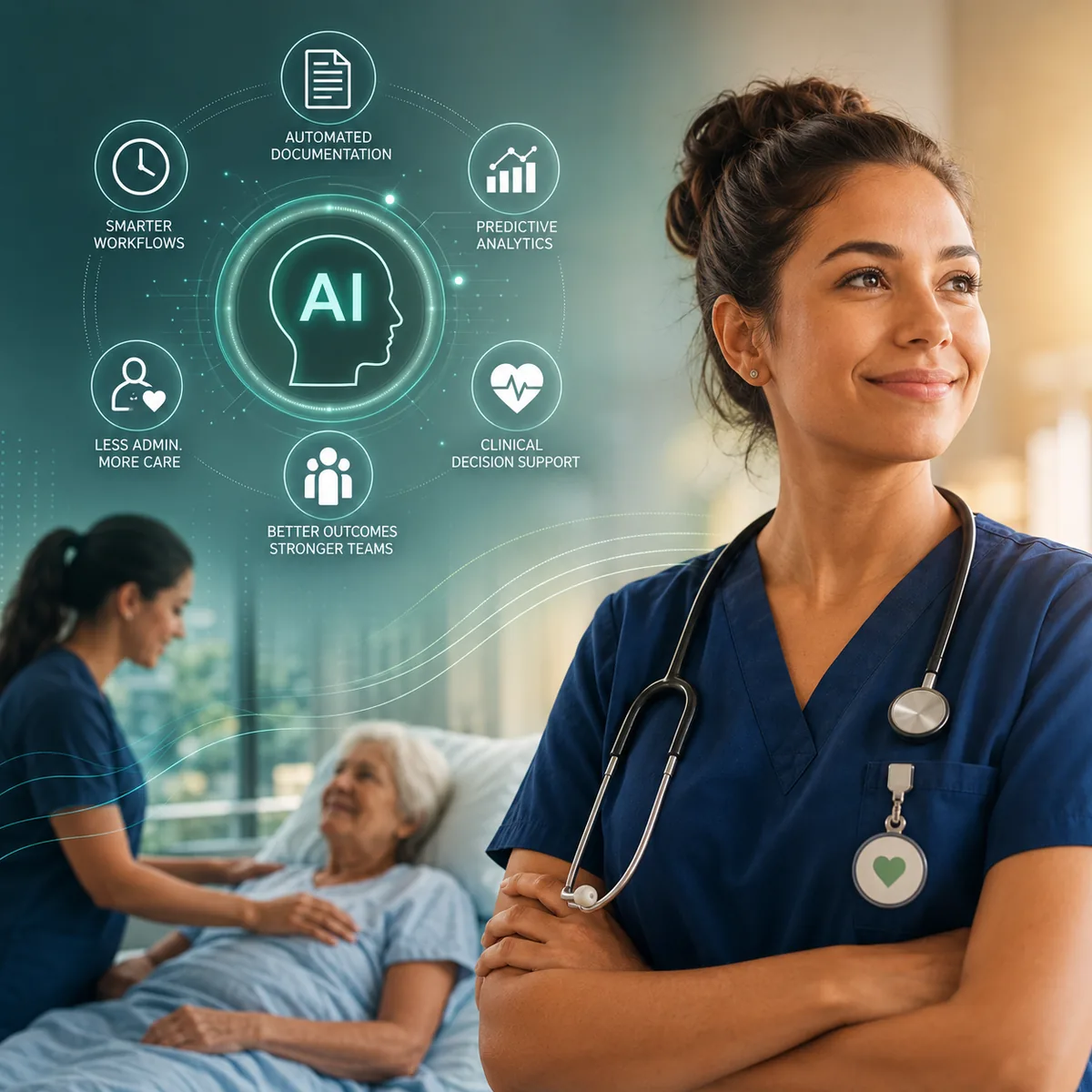
Can AI Help Reduce Nurse Burnout?
Nurses now spend nearly as much time documenting care as delivering it, and the result is unprecedented burnout. AI can help, but only when it is designed to support nurses rather than replace them. This guide breaks down how AI reduces cognitive load, ambient documentation, predictive deterioration detection, human-in-the-loop safety, and what it means for retention and home health.
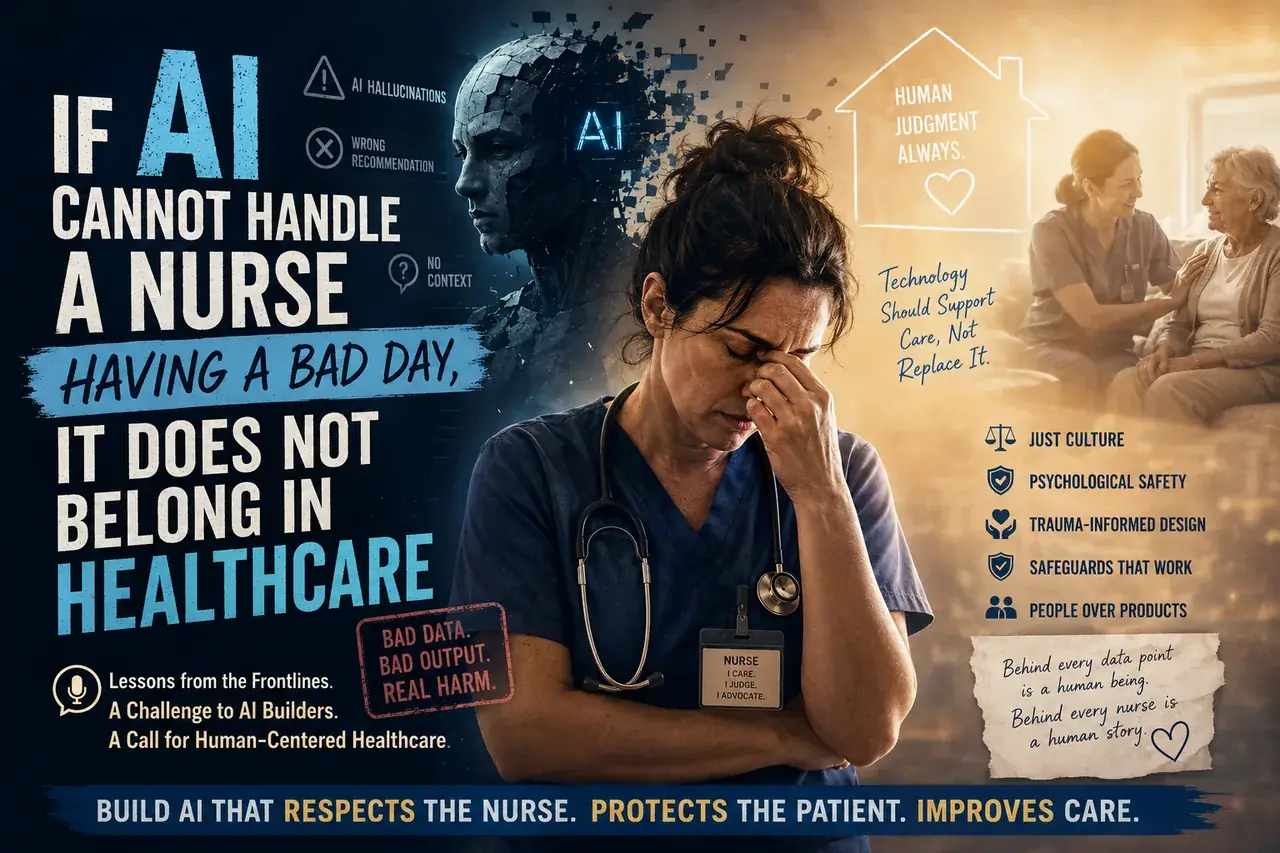
If AI Cannot Handle a Nurse Having a Bad Day, It Does Not Belong in Healthcare
AI is advisory. The nurse's judgment is sacred. Susie Branagan, RN, who calls herself AI's clinical conscience, on applying Just Culture to AI, the real danger of hallucinations in home health, trauma-informed design, and why deploying technology into a broken culture only gives it more efficient ways to do harm.